

Guitar Legends Who Didn't Start Out On The Instrument That Made Them Famous
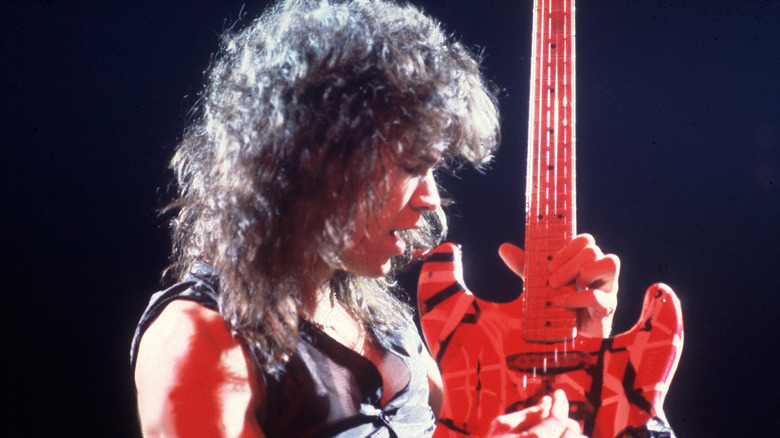
Rock history is full of individuals who became massive stars and music legends just on the strength of their otherworldly prowess at playing the guitar. And while it definitely seems like they were destined to have picked up and mastered the instrument that brought them huge levels of fame, fortune, and acclaim, it surprisingly wasn't the first thing they learned how to play.
Similar to how other musicians became huge stars after they switched genres, these virtuosic, shredding axe-wielding icons helped establish the sound of their genre, creating the foundations of the classic rock and popular music of the '60s, '70s, and '80s. And it all very well could've never happened. We're all lucky they found the right path and the right formula after ditching their initial instrument, or re-focusing their attention, in favor of the guitar. Here are five undeniably skilled and gifted guitarists who came to the instrument relatively late, and only after abandoning their initial musical instrument training.
Carlos Santana
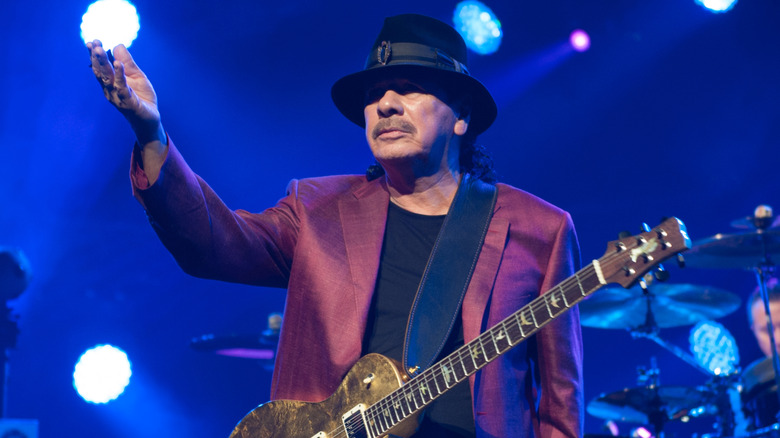
With his band Santana, guitarist Carlos Santana combined Latin jazz fusion with psychedelic rock and created a wholly new kind of music embraced by Boomers in the late 1960s and early 1970s. Santana's music and influence persisted through the decades, culminating in his 1999 duets album "Supernatural" paired the guitarist with younger pop stars and which generated the No. 1 smash hits "Smooth" (featuring Rob Thomas) and "Maria Maria" (with The Product G&B). Carlos Santana's uniquely soulful and lyrical style of play have made him virtually synonymous with the guitar, an instrument he pursued after a childhood in Mexico saturated in violin music.
His father was a professional violin player and he attempted to get his son involved in the profession. Santana was sent to an extracurricular music academy, where he struggled with the violin and brass instruments until he was given a juvenile-sized violin that was easier to handle. Then Santana got tough private lessons from his father. "My dad was a good teacher, but he wasn't necessarily gentle. He would push me, and then the shouting would come, and I would start crying," Santana wrote in his memoir, "The Universal Tone." "The salt from all those tears started discoloring part of the violin."
Prince
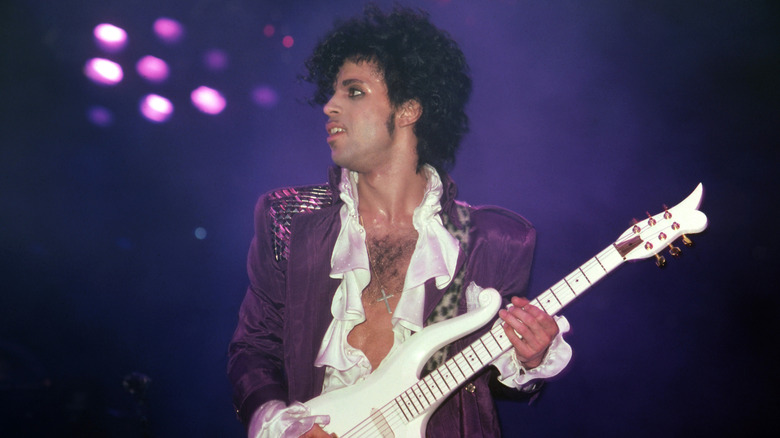
Prince had a preternatural gift for music. On his first album, 1978's "For You," he played 27 different instruments. But he was an undeniable expert on the guitar, regarded as such by other incredible guitarists. Billy Gibbons of ZZ Top has spoken about how the opening riff of "When Doves Cry" continually astounds him, and at the 2004 Rock & Roll Hall of Fame induction concert, he completely stole a jam of the Beatles and Eric Clapton's "While My Guitar Gently Weeps" from fellow guitarists Jeff Beck and Tom Petty.
But Prince's first instrument of choice — as well as his last, it would turn out, was the piano. In the months before his death in April 2016, Prince mounted the "Piano and a Microphone" tour, in which he played songs and told stories with just that one instrument to play. At one such show, he recalled being transfixed by his father's piano when he was just 3 years old. After his parents divorced when he was 7, Prince's father, the leader of a Minneapolis jazz trio, left a piano behind, giving the future star a chance to teach himself to play. It was on those keys that Prince played his first songs, figuring out the tunes to 1960s TV shows like "The Man from U.N.C.L.E." and "Batman," according to Becoming Prince.
Eddie Van Halen
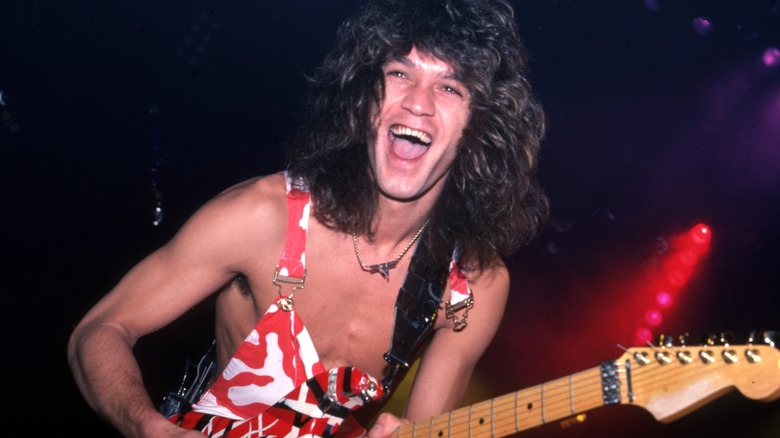
One of the most influential and distinctive guitarists ever, Eddie Van Halen took the band he named after himself and his drummer brother to the top of the hard rock world in the late 1970s and early 1980s. He did it with a technique called finger-tapping, wherein Van Halen played a guitar's fretboard like they were keys, rapidly moving along fingers from both hands. That made Van Halen a particularly fast, precise, and experimental guitarist, but to audiences, it just sounded like mind-boggling shredding.
Van Halen didn't have any formal guitar training, but he most definitely applied what he learned as a childhood piano prodigy. "I took piano lessons, classical piano lessons from the age of 6 when we lived in Holland," the eventual guitarist told Spinner, as published by Forbes. After his family emigrated to Southern California, Van Halen kept at it. "I was really good at it, so was my brother. I actually won three years in a row at Long Beach City College, which had this contest thing they would put you in."
Nils Lofgren
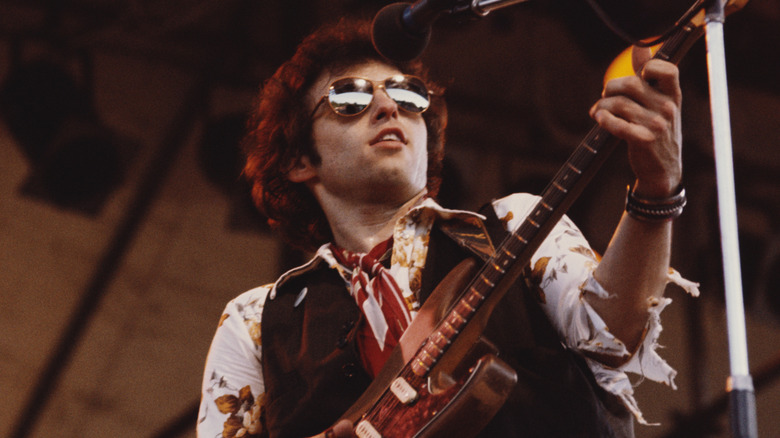
Guitarist Nils Lofgren played in Neil Young's support band, Crazy Horse, in the 1970s before permanently joining Bruce Springsteen's E Street Band in the mid-1980s. His guitar also fueled the work of the band Grin and more than two dozen solo projects. Lofgren has a reputation as a prolific, consistent, and versatile guitarist, built up over more than five decades of recording and playing live, but learning music on the accordion was part of the process.
After watching the Beatles perform on "The Ed Sullivan Show" in 1964, Lofgren was inspired to start playing an acoustic guitar he found in his childhood home, and his brother taught him how to play. "I had 10 years of classical piano and accordion training from the age of 6," Lofgren told Premier Guitar. "So I had a musical background, and never would have become a rock guitarist if it weren't for that training." When he was a member of Crazy Horse, Lofgren was tasked with arranging piano sections for some songs, relying more on his classical accordion background than piano-playing ability.
Mick Mars
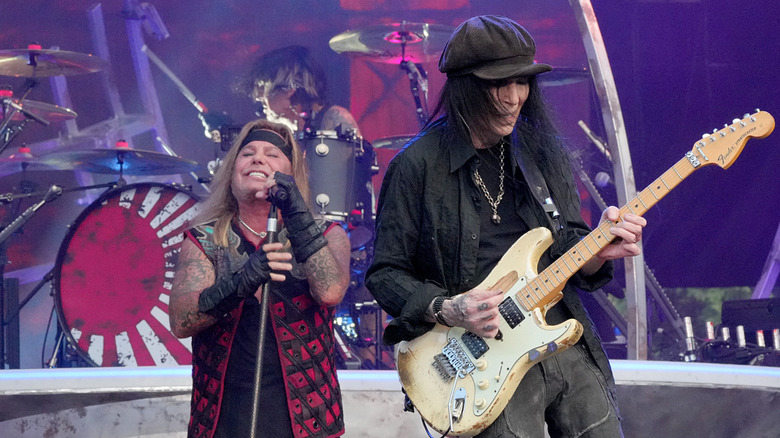
Assertively heavy and grimy metal licks with a pop sensibility is what rock in the 1980s was all about, and that hair metal sound was pioneered by Motley Crüe and its lead guitarist, Mick Mars. Founders Nikki Sixx and Tommy Lee found the journeyman Mars after he put a classified ad in a Los Angeles alternative newspaper in 1981, proclaiming himself available for a band. He spent decades with the Crüe before leaving in 2022 due to medical reasons.
While still living life under his real name of Bob Deal, the future Motley Crüe guitarist went to a rock show in the mid-1960s near his hometown in Indiana, and it made him want to play an instrument and form a band. At age 14, Deal gained entry into a group called the Jades that focused on cover versions of Beatles songs, and he played the role of Paul McCartney — the bass guitarist.