

'70s Bands Boomers Are Still Waiting For Younger Generations To Discover
The 1970s saw a rapid proliferation of new bands onto the music scene, so it's no surprise that a few boomer favorites were eventually lost in the noise. The decade saw the mainstream rise of reggae, soft rock, heavy metal, disco, and other nascent styles, and for every lasting standout within their genre, myriad other bands slipped into obscurity. Now, when younger generations have almost the entirety of music history at their fingertips, more of them than ever have been able to turn backward and discover some of the decade's greatest. But there is more to find than just the hits, and likewise more to find than just the hitmakers.
Here we unearth a few of those hidden gems for the world to once again marvel at. Some, like Foghat, managed at least a single hit. Others never climbed far on the charts at all, instead making their mark in the form of cult followings or by influencing their more successful peers. Here then are some of the bands who rocked the '70s hard but have yet to be discovered by the younger generations.
Little Feat
Perhaps the most certifiable feat, all puns intended, for '70s funk-boogiers Little Feat these days is a Jimmy Page Rolling Stone interview from the band's heyday in which he praises them as his "favorite American group." (And in typical rock star braggadocio, he adds that "the attorney general staying one floor above [at the Plaza Hotel] complained about me playing Little Feat records too loud last night." He really was a fan). Aside from that, the group has not managed the staying power of other jazzy swamp rockers of their age like the Allman Brothers or the Marshall Tucker Band, which is too bad, because Little Feat truly rocks.
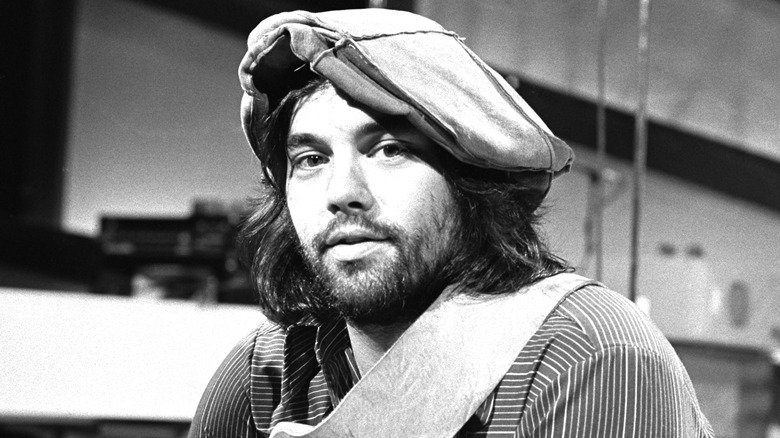
It should be noted that Little Feat formed in '69, but the band's most prominent, six-piece lineup formed in '72, and it was this lineup that would be the band's far-too-early undoing. Frontman Lowell George began losing interest in the group over time, and coupled with frictions with fellow members like Bill Payne and his own failing health, he went solo in '78 before tragically dying a year later. During the years with Lowell, Little Feat released an album almost every year, and though critics and fellow musicians praised the work, album sales and an almost complete lack of charting singles kept the act from true stardom. As a case study, one could examine Little Feat's fun-loving original, "Dixie Chicken," which released as a single in '73 and never charted at all. When Garth Brooks recorded a cover 20 years later, the song wasn't even a single and still managed to chart at No. 73.
Foghat
While Foghat's 1975 mega-hit "Slow Ride" has endured well into the modern era, its longevity is a textbook case of a song itself enduring without the band that created it. Despite neither Foghat nor its members being household names (ask a stranger if they know who Gene Simmons is and then try asking about Foghat frontman Lonesome Dave Peverett), the group's biggest single is absolutely everywhere to this day. "Slow Ride" is a staple of classic rock radio, has appeared in multiple movies and TV series, has been featured in the "Guitar Hero" video games, and has graced innumerable commercials. To most of the world, it's the extent of Foghat's existence.
Undoubtedly, "Slow Ride" deserved its laurels for providing an anthem to a particular slice of '70s life, but there is much more on offer in Foghat's long discography. Other singles like "I Just Want to Make Love to You" and "Fool for the City" have all the energy, catchiness, and inventive structure of "Slow Ride," and the band's deeper catalogue offers more besides. Non-singles like "Home in My Hand" and "Fly by Night" seem almost destined to be hits despite never managing it, demonstrating how much more than a one-hit wonder Foghat could have been. Sadly, with only one original member left, any future recognition the act receives will be almost entirely posthumous.
Big Star
In hindsight, Big Star is one of the more ironically named bands in the classic rock canon (as is the group's abysmally selling debut "#1 Record"). That's not because the members didn't deserve to be stars themselves, but because a number of external factors conspired to keep the pop/proto-alternative rockers from their well-deserved recognition. When "#1 Record" was released, critics ate it up. But thanks to a combination of mismanagement by record label Ardent and distributor Stax, the album received little marketing and failed to even reach many of the record stores that might have otherwise sold it out. From there, problem after problem beset the group, including member departures and subsequent albums suffering the same label-driven fumbles as before. By the end of the '70s, Big Star had ended, too.
Despite a wealth of songwriting talent, especially from members Alex Chilton and Chris Bell, Big Star died before its time. Nonetheless, the band's spirit lived on in the form of influence on a host of future groups, most blatantly with the Replacements, which released a song titled simply "Alex Chilton." Acts as disparate as Primal Scream, Counting Crows, and Kiss have cited Big Star as direct influences. R.E.M. guitarist Peter Buck explained the band's impact best when he said (via Concord.com), "Big Star served as a Rosetta Stone for a whole generation of musicians."
Klaatu
The story of Canadian space-rock band Klaatu is one of the strangest and most unbelievable of its age, even stranger than the group's otherworldly, progressive style. The act's 1976 debut album, "3:47 EST," drew enough comparison to the Beatles to earn the band the nickname "the Canadian Beatles," which would normally be a blessing or a curse, depending on the context. For Klaatu, it was both and more.
Owing in part to their admittedly very Beatles-esque sound at times (see "Sub-Rosa Subway" and "All Good Things," among others) and the unusual amount of mystery surrounding the band members' names and backstory, a bizarre fan theory arose, claiming that Klaatu actually was the Beatles making a go under a new name. Though it led to an initial boost to Klaatu's album sales, the rumor eventually became a major factor in the band's undoing. Upon discovering their real identities, various outlets and fans labelled the band as scam artists and hoaxers. Record sales sank steadily until the band dissolved in '82.
It's a shame that the bulk of Klaatu's media coverage through the years has been about the "secret Beatles" rumors because behind it all was a talented band who took infectious, charming pop-rock and seamlessly blended it with outer space psychedelia. Songs like "True Life Hero" and "Madman" showcase the group's ability to take listeners on journeys into the farthest cosmos before returning home to genuinely catchy, clap-worthy choruses. Klaatu's relatively obscure catalogue has been waiting for far too long for broader discovery.
Wishbone Ash
Wishbone Ash is one of those rock bands that guitarists and other musicians may know, but the public largely does not. That unawareness only seems to grow as the decades go on and the group drowns amid their own, more successful heirs. The story of Wishbone Ash's rise, influence, and cult status has always been tied to the act's guitar-playing, in particular the twin lead guitars of Ted Turner and Andy Powell.
It was Powell's playing that drew the attention of guitar legend Ritchie Blackmore, whose connections scored Wishbone Ash its first record deal. Powell's and Turner's dueling style helped create at least one masterpiece with 1972's "Argus" and eventually inspired the likes of Iron Maiden, Judas Priest, Thin Lizzy, and more. Despite all that, Wishbone Ash, affectionately dubbed "the Ash," has only ever maintained a modest following of diehards, largely owing to the usual '70s music industry cocktail of drugs, feuds, and legal disputes.
For anyone in the younger generation, and especially guitarists, looking for a hidden gem from which to mine inspiration, the Ash's "Argus" is a perfect start. Songs like "Sometime World" have all the fevered precision of Rush at their best, while tracks like "The King Will Come" somehow evoke both King Crimson and Lynyrd Skynyrd. The Ash's DNA seems to have spread throughout the rock world, both as integral and as invisible to the naked eye as actual DNA.