

5 Classic Rock Songs That Bring Boomers Back To Their First Day Behind The Wheel
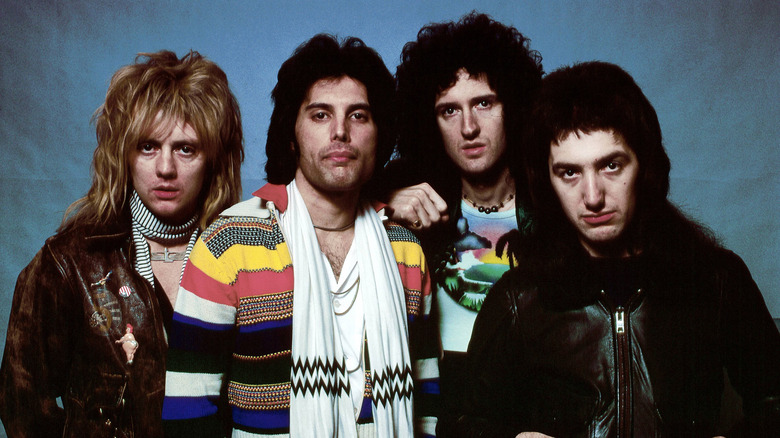
Music can invoke memory that allows people to time-travel back to their very first day in the driver's seat, and in this trip down memory lane, we picked a few tunes specific to boomers' nostalgia for that rite of passage.
Growing up in newly built, sprawling suburbs, boomers came of age with American car culture. Their environment necessitated a car to get around, but boomers also forged emotional ties to cars and the emerging sense of identity and yearning for freedom they represented. Classic rock kept pace with this cohort, producing songs like Deep Purple's "Highway Star" that celebrate muscle cars and the open road.
The songs we've chosen were released between 1971 and 1975, and were likely blasting on car radios and eight-track decks when younger boomers turned 16. These tunes focus on sounds, like the roar of an engine, or details, like the feel of the steering wheel, to evoke memories and emotions of the satisfaction and thrill of finally slipping into the driver's seat.
Golden Earring — Radar Love
With crashing cymbals and George Kooymans' spare, deliberate four-part guitar riff, Golden Earring's "Radar Love" opens with a drawn-out tease, guaranteed to elicit boomer memories of the unbearable urge to get behind the wheel. As Rinus Gerritsen's bass chugs like an engine turning over, singer-lyricist Barry Hay kicks into gear with gravelly swagger: "I've been drivin' all night, my hands wet on the wheel / There's a voice in my head that drives my heel."
Any automotive novice snapping up their first set of car keys could relate to Hay's reference to sweaty palms on the steering wheel, but "Radar Love," the veteran Dutch rock band's 1973 U.S. breakthrough and No. 13 Billboard hit, offers much more. With an epic, multipart structure, the song earns its six-minute-plus running time. A mysterious storyline, with a perilous all-night drive, and a telepathic link between lovers, boasts enough grandly dramatic heft to captivate a teenager eager to roll down the windows, blast the radio, and hit the road. Drawing on Hay's interest in ESP, the tune's storytelling reaches a tragic but mystic conclusion.
"The guy actually dies," Hay tells American Songwriter, but the lovers' psychic connection, their "radar love," remains undimmed by death. With dark romance and a touch of adolescent masochism worthy of "Romeo and Juliet," "Radar Love" is the perfect soundtrack for a teenage boomer's nascent nighttime drive, where imagined risk lurks behind every curve and the possibilities are as boundless as the open road.
Deep Purple — Highway Star
Roger Glover's throbbing bassline and Jon Lord's percussive Hammond organ stabs shudder like a V8 revving before a drag race. Then, as Ian Gillian wails like an engine's whine, "Highway Star" peels out and burns rubber: "Nobody gonna take my car / I'm gonna race it to the ground / Nobody gonna beat my car / It's gonna break the speed of sound." After Lord unleashes arpeggiated runs like tires spitting gravel, Ritchie Blackmore lets fly a descending neo-classical guitar solo, which has drawn comparisons to Jimi Hendrix and Johan Sebastian Bach.
It's likely that no boomer, recalling their eagerness to put the pedal to the metal for the first time ever, had a take-off as powerful as the 1972 track from Deep Purple's sixth studio album "Machine Head." Fittingly, the song was written on the highway. According to a 2003 interview in Guitar Magazine, when journalists aboard the band's tour bus asked how the band wrote songs, Glover told them, "Ritchie said, 'Like this!' and started chugging out this riff. Before long, we just forgot about the journalists and the song came out."
The synergy of sophisticated rock and Gillian's direct lyrics summons the rush of breaking the speed limit and careening toward the guard rail, before regaining control. For boomers, "Highway Star" evokes the exhilaration that comes with obtaining a driving license, and the euphoric adrenaline rush of seeing the white dividing line unfurling below, as their "killing machine" heads straight into the vanishing point ahead.
Queen — I'm in Love with My Car
Many car-centric rock songs entice listeners with instruments mimicking rumbling motors, but Queen's "I'm in Love with My Car" — one of their best songs you may have never heard — opens with the real deal — engine sounds from Roger Taylor's Alfa Romeo. Amid Brian May's cascading guitar and Freddie Mercury's contrapuntal piano, drummer Taylor adopts a stately, hard rock groove. With the irresistible beat of racetrack fans stomping in the grandstand, and a driver stepping on the gas, the song was initially released in 1975 as the B-side of "Bohemian Rhapsody."
The tune's songwriter Taylor sings the praises of his dream machine, "With the pistons a-pumping / And the hubcaps all gleam." With macho bombast, he transports boomers to the moment they first grabbed the wheel and sensed power and sex appeal at their fingertips — but the song undercuts teens' hormone-fueled desire to impress the opposite sex with satire: "Told my girl I'll have to forget her / Rather buy me a new carburetor."
Taylor told Mojo he penned the song after noticing men lavishing more attention on their cars than their wives. "It's a valid lyric," he said, "but kind of tongue in cheek, too, obviously." "I'm in Love With My Car" counterpoints teens' need for status and speed with a reality check. A boy might grab a girl's attention with his clean machine, but if he pays too much attention to grease guns and gear shifts, his route to romance will be a dead end.
The Who — Going Mobile
Songs that evoke a boomer's first touch of the steering wheel can trigger a maelstrom of remembered emotions, including satisfaction, power, and pride. The Who's "Going Mobile," however, appeals to a loftier feeling. Propelled by John Entwistle's rolling bass and Pete Townshend's rippling acoustic guitar and upbeat vocals, the 1971 track conveys the sense of freedom that bounding unfettered down the highway can bring: "Out in the woods / Or in the city / It's all the same to me / When I'm drivin' free, the world's my home." Recorded without vocalist Roger Daltrey, it's the most sprightly tune off the band's fifth studio album, "Who's Next."
Written by Townshend as part of his aborted science-fiction rock opera "Lifehouse," "Going Mobile" posits a future where citizens are barred from driving by the government. '[People] had been told, 'You have to stay where you are,'" Far Out quotes Townshend. "But people have got this lust for life and adventure, and a bit of color."
"Going Mobile" promises a liberating getaway for boomers uncertain if they wanted to follow in society's — and their parents' — materialist footsteps: "I'm an air-conditioned gypsy / That's my solution / Watch the police and the tax man miss me / I'm Mobile!" Today, the ebullient tune still captures the feeling of watching the weight of school, work, and responsibilities receding in the rear view mirror.
Kraftwerk — Autobahn
On the surface, "Autobahn," the title cut from the Düsseldorf foursome's 1974 album, and 1975 No. 25 U.S. Billboard hit, is a straightforward travelogue on Germany's super highways. The 22-minute epic's hypnotic Motorik rhythm pulls listeners into an infectious fusion of transcendence and technology, where electronics simulate horns honking and vehicles zooming by.
Many U.S. boomer kids misheard the tune's repetition of the German word for driving, "fahr'n, fahr'n, fahr'n," as "fun. fun fun," but the song's co-writer Ralph Hütter said "Autobahn" simply reflects the band's early touring days, where they drove everywhere. "It was an environmental composition, a sound painting," he told The Guardian.
Far from cold and robotic, the tune's electronics sound warm and sunny. It's a celebration of the most obvious benefit of having a car — mobility and the agency to hit the road and join life's flow. For young boomer women, the song was an engrossing way to embrace the lure of the highway, the siren's cry to move on and experience more, without hard rock's macho bombast. On "Highway Star," Deep Purple sing about the speed of sound, but on "Autobahn, Kraftwerk creates the sound of speed.