

'70s-Era Rock Bands Almost Ruined By A New Frontman
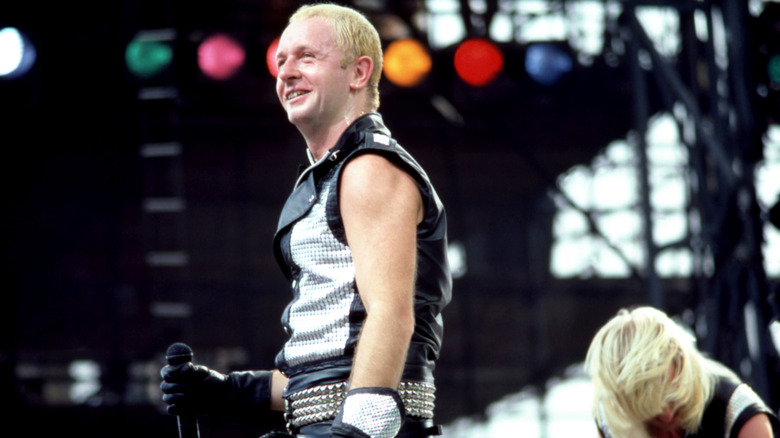
The kiss of death for a rock band often comes from a new set of lips, and plenty of '70s bands almost met their doom when, for whatever reason, they decided to replace their lead vocalist. It's a risky endeavor that sometimes spoils that indescribable musical dynamic that made it special in the first place. Even worse, they could ruin that delicate relationship they have with their fans. If the new singer is too different from the old, then those once familiar songs will now sound slightly off, turning even the most revolutionary of rockers into a mock tribute act to themselves — the ultimate humiliation. But if these groups do it right, they can avoid tarnishing their careers when a new face steps into the spotlight.
After all, a new singer isn't that bad. Such a lineup change could usher in a new musical direction, turning a band once beloved by scuzzy bikers into yacht rock superstars. It could turn one-hit wonders into radio legends. Or, it could be a temporary fix, helping beleaguered metal gods from self-destructing long enough to make amends with their estranged frontman. As you'll see with this list of '70s-era rock bands, a lot is on the line when a band bets on a new frontman, and sometimes, the gamble pays off.
The Doobie Brothers
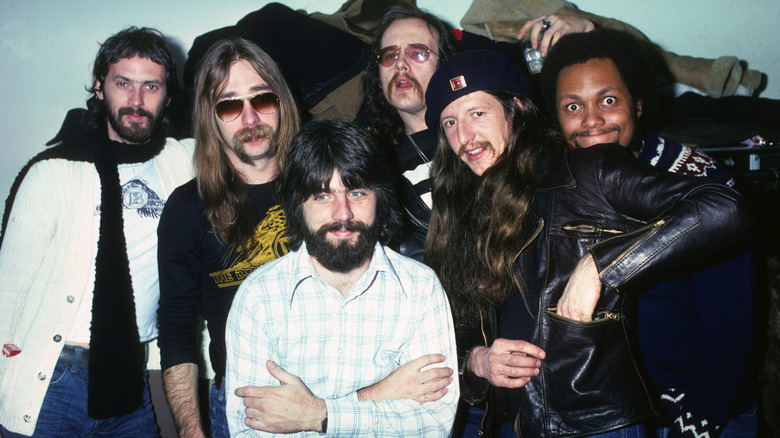
How many people have been members of the Doobie Brothers since they formed in 1970? A lot — like, double the number you're probably thinking. But they've changed their lead vocalist twice, starting with when Michael McDonald stepped in for Tom Johnston in 1975. "I was just kind of hired on for the summer," he told Newsweek, filling in as Johnston took a break from the band to recover from severe stomach ulcers.
By that point in the mid-70s, the Doobie Brothers were certified rock stars. As bassist Tiran Porter told Rolling Stone in 1979, they began playing for "beer-crazed bikers." But soon, they racked up a couple of Top 40 hits on the Billboard Hot 100 with "Listen to the Music" and "Jesus Is Just Alright" before going to No. 1 with the southern rock classic, "Black Water." When McDonald joined, he brought in some smooth R&B sensibilities. His song, "Takin' It To The Streets," became the title track for the Doobies' 1976 LP and a Top 20 hit, and the band scored another No. 1 in '79 with "What a Fool Believes."
The Doobie Brothers notched a few more radio hits before they split up briefly in 1982. They reunited five years later, with Johnston back as lead vocalist. McDonald embarked on a successful solo career, but he reunited with the band for their 50th anniversary tour. And in 2025, the Doobie Brothers released their sixteenth album, "Walk This Road."
Judas Priest
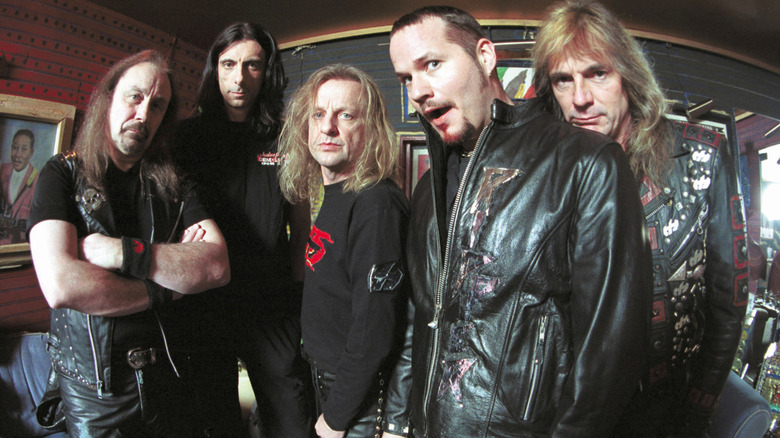
Judas Priest tempted the devil — twice! — with changing their lead singer after playing their first gig in 1971. The group's original vocalist was Al Atkins, who co-founded the group two years prior. That incarnation went bust, leaving Atkins with a cool band name but no one to play with. When he learned K.K. Downing, Ian Hill, and John Ellis' band needed a vocalist, he suggested they ditch their name (Freight) for Judas Priest.
Atkins left the band in 1973. "I was now the only one married with a small daughter, and money was always tight ... so without that record deal or financial backing, I decided to leave," he told MusicRealms (via Blabbermouth.net). Rob Halford (Ian Hill was dating Halford's sister at the time) stepped in and sang on the band's debut LP, 1974's "Rocka Rolla." It was the second coming of Judas Priest's second coming. This time, it worked: Halford and Priest began a heavy metal legacy that included now-classic albums like "British Steel," "Screaming For Vengeance," and "Sad Wings of Destiny."
Priest wasn't as lucky when they recruited Tim "Ripper" Owens in '96, replacing Halford after he and the group parted ways. Halford eventually blamed the split on a "communication breakdown" while speaking to France's Heavy1 and said that he never wanted to leave the band (via Blabbermouth.net). Owens, who was singing in a Judas Priest tribute group when he got the gig, recorded two albums with his heroes: "Jugulator" and "Demolition." Though they weren't well received at the time, they have received a positive reappraisal in recent years. And in the mind of the metal faithful, "The Ripper" carried the torch during the dark times, helping keep Priest going long enough for Halford to rejoin in 2003.
The Cars
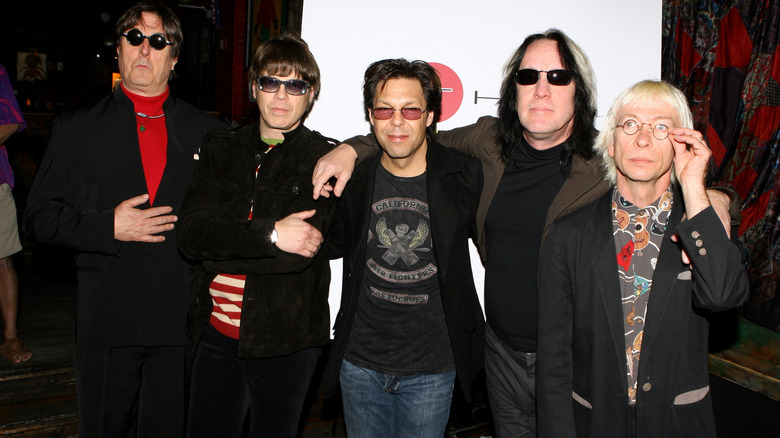
Whereas a lot of '70s-era rock bands made switches to new frontmen in the '70s and '80s, the Cars waited nearly 20 years after their breakup in '88 to nearly ruin their legacy. In 2005, two original members — lead guitarist Elliot Easton and keyboardist Greg Hawkes — wanted to get the band back together. There was just one problem: Lead singer Ric Ocasek was adamantly against reuniting the Cars. So Hawkes and Easton recruited Todd Rundgren to sing instead.
This was an odd pairing. The Cars formed in 1976, creating revolutionary synth-heavy rock dubbed "new wave." They were all over rock radio with Billboard Top 40 hits such as "Just What I Needed," "Let's Go," and "My Best Friend's Girl." Rundgren also came up in the '70s after a short stint fronting the '60s psychedelic band Nazz. Later, he developed a legacy as a multifaceted artist who dabbled in all styles from power pop to progressive rock to bedroom pop. "I can adapt to a lot of different styles of music, if not actually ape [Ocasek]," Rundgren explained to Cleveland Magazine.
Except, it stalled out. The band, dubbed the New Cars, released one album, 2006's "It's Alive." which contained 18 songs, 12 of which were live recordings of Cars tracks, two Nazz songs, and four New Cars originals. Both the album and the 2006 tour with Blondie failed to win over critics. But if the New Cars did anything, it primed the pump. In 2011, Ric Ocasek changed his tune and joined Hawkes, Easton, and original drummer David Robinson for a proper Cars reunion. They recorded their final studio album, "Move Like This," and embarked on a tour, which was just what fans needed.
Survivor
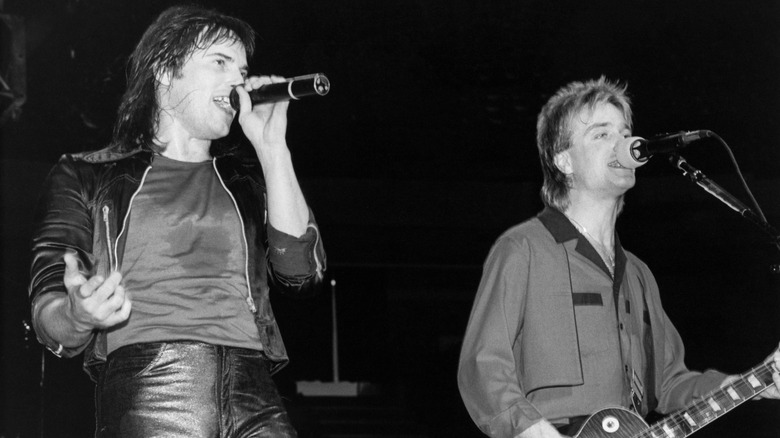
Surprisingly, Survivor formed in the late '70s — not right before the release of "Rocky III," the film that propelled their song "Eye of the Tiger" to No. 1 on the Hot 100 for six weeks in '82. Even more startling, they had more hit singles with their second singer, Jimi Jamison, than their first, Dave Bickler, the voice on "Eye of the Tiger."
Jim Peterik and Frankie Sullivan co-founded the group in '78. They had a minor radio hit in '81 ("Poor Man's Son"), and Sullivan told Classic Rock that the head of Survivor's record label, producer and actor Tony Scotti, "played cupid between [Sylvester] Stallone and us" when the actor was looking for an original song for the third "Rocky" movie. Thus, "Eye of the Tiger" was born. But while that was a hit, Survivor looked like they wouldn't go the distance — 1983's "Caught in the Game" tapped out at No. 82 on the Billboard albums chart with no hit singles. Making matters worse, Bickler had to take a break from the band to recover from vocal surgery. So, Survivor made a hard decision.
"[Bickler] and the band came to a parting of the ways," Jimi Jamison, the band's then-new singer, told the LA Times in '85. Jamison previously sang for the glam-rock band Cobra, and he helped take Survivor to new heights. 1984's "Vital Signs" was a commercial success (going to No. 16), and it produced a handful of Top 20 hits on the Billboard Hot 100: "I Can't Hold Back," "High on You," and "The Search Is Over." Survivor enjoyed another Stallone-related knockout when their song "Burning Heart" (from "Rocky IV") went to No. 2 on the Hot 100. And they had a massive Top 10 hit with "Is This Love" in '86, proving that Survivor wasn't ready to go down without a fight.
Black Sabbath
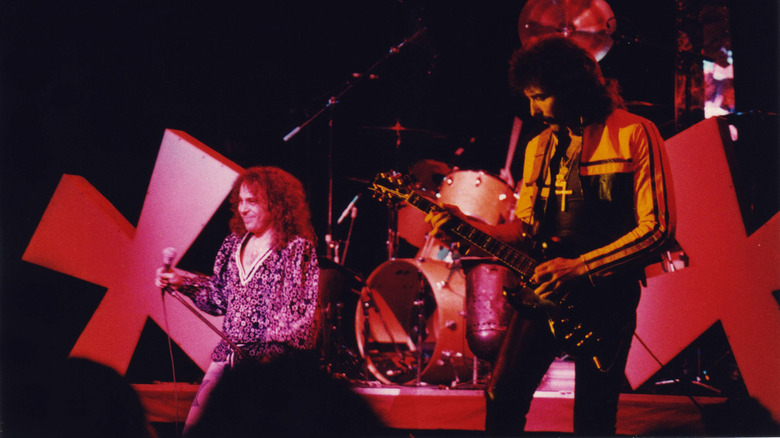
Most casual fans would say that Ozzy Osbourne was the voice of Black Sabbath, but the heavy metal pioneers had a handful of frontmen. Former Deep Purple vocalists Glenn Hughes and Ian Gillan recorded a pair of maligned albums (Hughes with 1986's "Seventh Star," Gillan with 1983's "Born Again"). Tony Martin fronted Black Sabbath for nearly a decade, singing on five well-revered albums ("The Eternal Idol," "Headless Cross," "Tyr," "Cross Purposes," and "Forbidden"). But the man who really helped Black Sabbath lay the groundwork for a life after Ozzy was Ronnie James Dio.
By the late '70s, Dio was established as a powerful singer, fronting Richie Blackmore's band, Rainbow. Then one night, Dio crossed paths with Sabbath's guitarist, Tony Iommi, at a party. Tony, who pitched an idea of him and Dio working on a side project, and that was that — until Black Sabbath had to fire Ozzy over his drug use and unreliability. "When Ozzy went, the first person I got in touch with was Ronnie," Iommi told Kerrang. Tony would credit Ronnie James with giving Sabbath a much-needed "new lease on life" after a few commercially and creatively disappointing albums.
Though the first albums with Dio on vocals, "Heaven and Hell" and "Mob Rules," were different from Ozzy-era Sabbath, they had a heaviness that resonated with fans and are considered heavy metal classics. But Ronnie James Dio eventually left Black Sabbath in 1982, partially due to his deteriorating relationship with Iommi and bassist Geezer Butler and partially to his preexisting solo deal with Warner Bros. (which gave us in "Holy Diver," one of the best metal albums of all time).