

The No. 1 Song On July 8, 1965 Sounds So Much Cooler Today
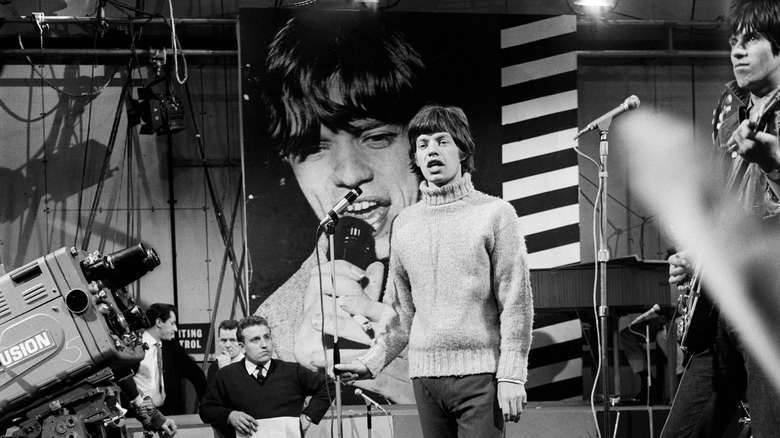
Welcome to the third edition of The No. 1 Song on This Day, a biweekly column where we discuss the No. 1 songs from decades ago that are way cooler today.
Come sing along to everyone's shared crisis: "I can't get no satisfaction / I can't get no satisfaction / Cause I try, and I try, and I try and I try." Not only do these lyrics belong to one of the Rolling Stones' most universal, catchiest, and enduring songs (about 940 million Spotify listens), they belong to a song that hit No. 1 on the Billboard Hot 100 the week of July 8, 1965. You'd never guess it came out in '65, though, as the song sounds vastly more modern and even cooler today.
Originally released as a standalone single, "(I Can't Get No) Satisfaction" later got added to the U.S. version of the Stones' 1965 album, "Out of Our Heads," as "Satisfaction," yet it was omitted from the U.K. version. Why the dumb move for such a killer, groovy, singable, memorable track? As the album name says, Decca Records might have been out of their heads. So while Brits experienced dissatisfaction at missing out on hearing Mick Jagger cry about not having any satisfaction, the song went to No. 1 in the U.S. and stayed there for four weeks. This is four years before the Apollo 11 moon landing, for context.
Much like another Stones' song, "Paint It, Black," which went to No. 1 on June 10, 1966, "(I Can't Get No) Satisfaction" stands out because of its core song and lyric writing. Its riff-focused structure, the Stones' ever-present attitude, and its universal lyrics have only grown cooler and more relevant over time.
The lyrics of (I Can't Get No) Satisfaction
You might think that there's not a lot of depth to a song where Mick Jagger harps about not getting any satisfaction about a hundred times. But would anyone say they've never felt this way? It's not only universality that makes "(I Can't Get No) Satisfaction's" lyrics work so well, though it's all the verse vignettes that describe specific, everyday moments related to the song's meaning. These vignettes help the song avoid becoming too conceptual, and they have only become more relevant over time.
Each of "(I Can't Get No) Satisfaction's" three verses paints a portrait of the emptiness of then-modernity and celebrity through a different vehicle: radio, TV, and rock star lifestyle. In the first verse, Jagger talks about "that man comes on the radio / And he's telling me more and more / About some useless information / Supposed to fire my imagination." The second verse, which ought to make anyone fed up with ads snicker, talks about, "And a man comes on and tells me / How white my shirts can be / Well, he can't be a man 'cause he doesn't smoke / The same cigarettes as me." Finally, the third verse talks about the loneliness of touring around the world, when "I'm doing this and I'm signing that / And I'm trying to make some girl."
All in all, the song's lyrics characterize life as bombarded by hollow distractions and devoid of real connection. Coming from the mid-'60s, an era of cultural upheaval mingled with rampantly rising global consumerism, the lyrics ring true. Coming from a modern perspective, they're practically prophetic. Plus, we can't omit Jagger's swagger, which shoots the song's coolness through the roof.
The music of (I Can't Get No) Satisfaction
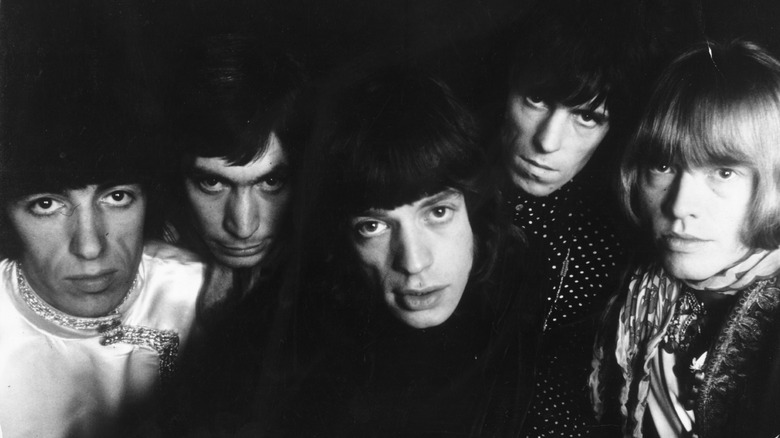
Whether you've ever realized it or not, the Rolling Stones are big fans of these little, repeating musical vamps, a unit of music that loops again and again. Contrast this way of songwriting to the Beatles and a song like "Help!" that came out in 1965, which develops over time into a longer melodic sequence rather than relying on shorter phrases. That doesn't mean that the Stones' music is dumb, but it means that they tend to sound like a riff-focused band (i.e., rock and metal guitar-centered vamps).
This is the point to keep in mind when listening to "Paint It, Black," "Sympathy for the Devil," and yes, "(I Can't Get No) Satisfaction," all of which sound fantastically ahead of their time as a result. The songs settle into a core loop and bang on it again and again. It just so happens that the Stones' core loops are really, really good. They're so good that a song like "(I Can't Get No) Satisfaction" not only doesn't get tiring, it sounds great nowadays and even cooler in comparison to its mid-60s peers. The song relies on a simple, seven-note lead guitar riff (nine-note with hammer-ons and slides) that sounds more like it came from the Led Zeppelin full '70s, not the mid-60s. It uses standard tuning, has no fancy picking, and is 100% rock 'n' roll.
As Keith Richards wrote in his biography, "Life," "(I Can't Get No) Satisfaction's" brilliance came to him in the middle of the night, and he doesn't even remember it happening. "I wrote 'Satisfaction' in my sleep," Richards said. "I had no idea I'd written it." He found his tape recorder when he woke up with "the bare bones of the song. But the bare bones is all you need."