

The Classic Rock Band That Somehow Sounds Much Cooler Today
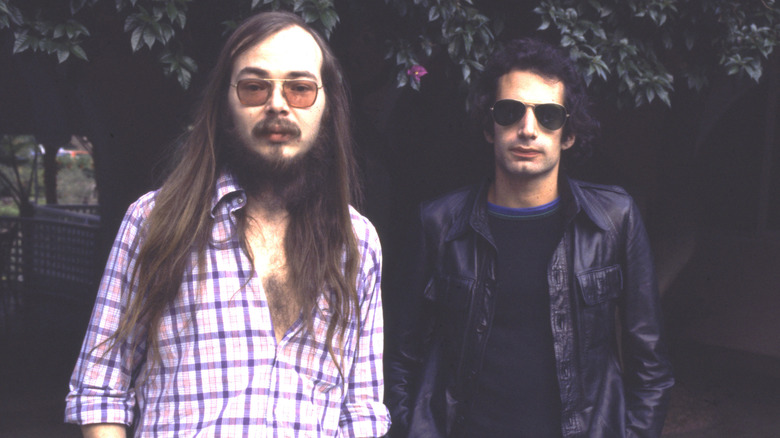
Steely Dan could only have happened in the '70s. Only that decade could have fostered their mélange of progressive rock, jazz, and pop styles, and only it could have inspired their impressionistic, if jaded, world-weary lyrics. But on iconic albums like "Aja," "Pretzel Logic," and "Gaucho," you hear music that's aged like fine wine and become timeless, its aromas and textures blossoming every time you put on headphones. Like few of their peers, Steely Dan sound even cooler and more vital today than in their heyday.
The songwriting collaboration of Walter Becker and Donald Fagan gained popularity in the '70s, but were they actually "cool" then? It's up for debate. Though "Aja" peaked at No. 3 on the Billboard 200 in 1977, it polarized audiences and critics. "'Aja' will continue to fuel the argument by rock purists that Steely Dan's music is soulless," wrote Michael Duffy in Rolling Stone, "and by its calculated antithetical to what rock should be." It probably didn't help that they'd become a strictly studio project in 1974: the perfect fodder for record collectors and nerdy rock fans.
But thanks to hip-hop samples (as in Kanye West's use of "Kid Charlemagne"), TikTok accounts and memes, crowded Reddit forums, and critical reappraisal, waves of Millennial and Generation Z have become Dan heads. Whether pulled in by their obsessive approach to songwriting and studio work, or the cynical worldview depicted in their tongue-in-cheek lyrics, they are proof that the world is still catching up to Steely Dan.
Reelin' In the Sounds
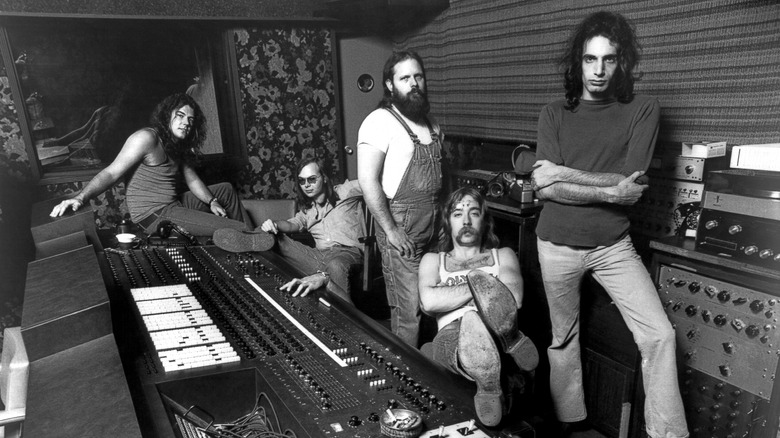
Even in a decade defined by studio excess, Steely Dan's intense, controlling, and detail-oriented approach to recording has become the stuff of '70s rock legend. While recording "Aja" in 1977, Walter Becker and Donald Fagan cycled through countless session players to get the sound they wanted. It took at least seven guitarists — each playing for hours — for Walter Becker and Donald Fagan to get the 25-second guitar solo they wanted for "Peg." What emerged is studio work that is groovy, catchy, and easy to listen to, while being meticulous, tight, and well-constructed: a band working extra hard to get us to chill out. Perhaps it's this pop perfectionism, this obsessiveness and hidden complexity that gives Steely Dan staying power.
Add to that the fact that Becker and Fagan were more willing than most to slide between genres and musical styles. "Even now, mapping the album's melodic and harmonic shifts is impossible to do with confidence," wrote critic Amanda Petrusich in a 2019 reappraisal of "Aja" in Pitchfork. While the blending of progressive rock, R&B, blues, jazz, and pop turned off some rock purists in the '70s, this disregard for conventional categories anticipated the eclecticism of popular music today. In an era of trap beats in country music, auto-tune, samplers, and drum machine beats in rock, or pop-punk pop stars like Avril Lavigne, the Dan makes a lot more sense.
What the Deacon Says

Beyond their musical invention, Steely Dan capture fans because of the jaded worldview depicted in their lyrics. Walter Becker and Donald Fagan weren't trying to save or change the world; they knew that rock stars couldn't do that. In fact, their early hit "Only a Fool Would Say That" from 1972 is a diss directed at a Beatle, a kind of rejoinder to the false piety and preachiness of John Lennon's "Imagine." Singing about the hypocrisy of a rich rocker lecturing others about materialism, Fagan and Becker's lyrics cut like a knife: "I heard it was you / Talkin' 'bout a world where all is free / It just couldn't be." The sentiment is more punk rock nihilism than Woodstock idealism.
Depicting a cavalcade of characters (from "Peg" to "Kid Charlemagne") or stories of love or parties gone astray, Dan lyrics thrive on clever detachment. For those raised in the '90s and '00s against the backdrop of economic crashes, housing bubbles, social unrest, and constant war — long after the Summer of Love — that self-awareness resonates more than hippie ideals. So, perhaps Steely Dan were Millennial-coded the whole time, just waiting for their cynicism to gain purchase. Many younger fans started out "ironically" listening to Steely Dan, celebrating the studio excesses and quirky sonic structures that the rock purists hated. But, as critic Alex Pappademas put it in the LA Times, that's "a gateway drug to appreciating them sincerely." Whether you think they're kind of funny or musical savants, you know you can't help tapping your foot, bobbing your head, and singing along every time "Rikki Don't Lose That Number" comes on.