

The 5 Best Rock Albums Of 1970
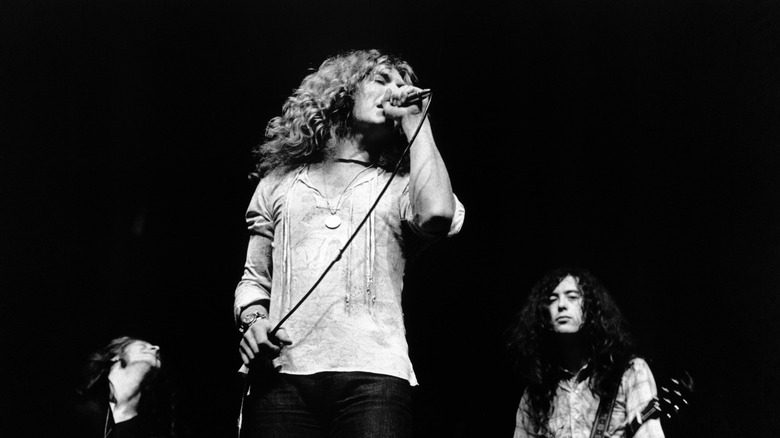
Following the star studded 1960s, which brought folk, rock 'n' roll, and more to the mainstream, the year 1970 had big shoes to fill. However, it undoubtedly kept up the momentum and delivered some of the most classic albums of the decade to come. Many of the most recognizable rock acts of the era released full albums, from the Beatles (with their final record as a group), the Rolling Stones, Led Zeppelin, and many more. The most notable trend within rock was the stars' influence from folk music specifically, which blended with late '60s aesthetics to bring folk rock fully to the mainstream. Many of rock's best albums were heavily of this folk rock style, but alternative and mainstream rock also achieved impressive heights in 1970.
In this list, we'll highlight the very best rock albums of the year, most of which recorded by the legendary figures atop the genre in the '60s, '70s and beyond — including members of the Beatles, legendary rock groups, and collaborative supergroups. Most of these records are from storied collaborators, specifically bands and supergroups, who captured enough raw creativity to create a long list of memorable albums and songs.
All Things Must Pass — George Harrison
In the final year of the world's biggest band, this solo album from one of its members hit shelves just a few months after their official breakup in April. George Harrison had already been on his own musical path for years by 1970, and this work culminated in "All Things Must Pass," the album that generally reflects the height of Harrison's career. Blending the popular rock 'n' roll styles of the '60s Beatles with Harrison's own meditative folk rock, this record cemented itself at the top of rock in 1970 because of its catchy, consistent sound across its lengthy track list.
Obvious highlights include hits like the title track and "My Sweet Lord," the latter of which spent four weeks atop the U.S. singles chart at the end of 1970. Other memorable tracks include "Behind That Locked Door," "I Live For You," and "I'd Have You Anytime," which showcase the height of Harrison's soft-rocking power. Harrison's voice is a noticeable highlight throughout, lofty and reassuring on most songs of this warm album. Filled also with catchy melodies and memorable guitar licks, "All Things Must Pass" is a defining statement of early '70s music, and takes its unique hold on folk rock to the tune of one of the very best rock albums of 1970 itself.
Loaded — The Velvet Underground
The follow up to the alternative rock phenoms' stellar self-titled record, this was the final record from the band's original run featuring Lou Reed. "Loaded" was released in November of 1970 without much chart success from its singles, and it didn't place on the Billboard 200 albums chart either, though its sound was noticeably more mainstream. Still, "Loaded" still captures the magic of the Velvet Underground's peak, delivering catchy but complex arrangements that are exemplary takes on the coolness of late '60s and early '70s rock 'n' roll.
"Loaded" is an album best experienced in its entirety, with 14 songs over 55 minutes, but there are plenty of songs that sound great on their own, including "Oh! Sweet Nuthin'," "Sweet Jane," "Who Loves The Sun," and "New Age." On these tracks and more, "Loaded" makes clear it's among 1970's best work thanks to its blend of avant garde influences with its summery, often carefree sound that any rock fan can enjoy. Though it may not measure up (compared to the band's prior albums) to some original fans, "Loaded" finds an excellent middle ground of style and is a fun, serenading listen.
Déjà Vu — Crosby, Stills, Nash & Young
The debut record from folk rock's premier supergroup of the 1970s met and exceeded all expectations, with the official addition of Neil Young providing just what the group needed. "Déjà Vu" released on March 11 of 1970, and it soared to No. 1 on the U.S. albums chart, as well as producing multiple hit singles. Of the concise ten songs and 36 minutes of the tracklist, there isn't much wasted, but highlights include "Teach Your Children," "Helpless," "Woodstock," and "Our House." Each song of the tracklist has a fair argument to be included here, which is a chief strength of the album.
"Helpless" has become a staple of the Crosby, Stills, Nash & Young discography, especially with a legendary performance of the song during The Band's farewell at The Last Waltz, and "Our House" is the foremost showcase of the group's memorable and innovative melodies. "Déjà Vu" is fit for any kind of listen, without any dull moments or skips despite its delves into multiple distinct sounds — certainly the type of album to own on vinyl. The inherent chemistry of Crosby, Stills, Nash & Young pushes the already great songs over the edge in these live-feeling recordings, recordings that are clearly among the best rock 'n' roll music had to offer in 1970.
Led Zeppelin III — Led Zeppelin
Among a hot streak of similarly titled albums, the third entry in the storied career of Led Zeppelin was on the cutting edge of what rock music could be in 1970. Beginning with one of the most iconic song openings of the era on "Immigrant Song," "Led Zeppelin III" makes an immediate impression. The song itself reached No. 16 on the charts, and the album spent four weeks atop the Billboard 200. At only ten songs, "Led Zeppelin III" continues the trend of brevity among the year's top releases (with the notable exception of "All Things Must Pass"), and leaves a memorable impression during each of its 43 minutes.
Other essential tracks include "Since I've Been Loving You" and "Tangerine," now staples of the band's catalog. The collective efforts of the legendary bandmates feels cohesive and singular across the project, making it an expected and deserved smash hit. It may have soon been topped on the unforgettable "Led Zeppelin IV" in 1971, but "Led Zeppelin III" makes a clear statement at the top of rock 'n' roll in 1970.
Let It Be —The Beatles
George Harrison's solo work was among the best of 1970's rock music, so it's no surprise that his collaboration with the rest of his band yielded similarly compelling results, though with a noticeably different sound. "Let It Be" was the final studio album released by the Beatles, releasing in May after the band's official breakup the month prior. Its sound is moving and mature, with each of its legendary members showcasing their final collaborative ideas before going their separate ways. The album, which also soundtracks a Beatles documentary of the same name, spent four weeks at No. 1 on the U.S. albums chart in the early summer.
At 12 songs and 35 minutes, the record certainly doesn't overstay its welcome, blending the band's traditionally short songs with a handful of more developed ideas. Its title track is among the Beatles' most iconic — though a great number make an argument to be there — and other standouts include "Across The Universe," "Get Back," and "The Long And Winding Road." It may not be the Beatles' very best album, but even in a stacked year of rock 'n' roll, "Let It Be" is a surefire entry into the top of the year. Their iconic melodies and knack for anthems is simply too hard to top for most other artists.