

Not Buffalo Springfield, Not CSN: Stephen Stills' Supergroup That Time Forgot
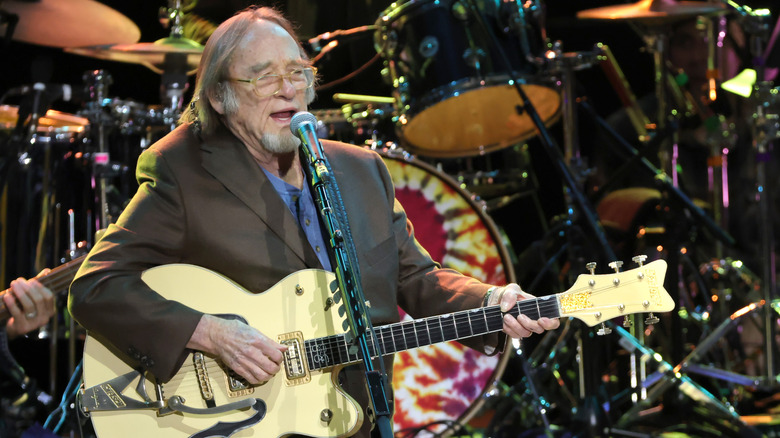
In the annals of rock 'n' roll, Stephen Stills' name will forever be connected to his bands Buffalo Springfield and Crosby, Stills & Nash (CSNY) — David Crosby and Graham Nash — plus the later incarnation that included Neil Young. But he himself has claimed that his first album with another supergroup was better than those he made with his more famous bands, including the seminal records "Crosby, Stills & Nash" and "Deja Vu." In the early 1970s, on the heels of the breakup of CSNY (one of many over the coming years, as Young was a serial quitter with a successful solo career), Stills formed a new band, Manassas.
While the name might not ring a bell today, after Stills joined forces with Chris Hillman of The Byrds and The Flying Burrito Brothers, along with several other musicians, Manassas was a big deal. The band's self-titled double album went to No. 4 on the Billboard 200 and quickly went gold (500,000 records sold). They also toured the world to sell-out crowds.
The band included guitarist Al Perkins and fiddler Byron Berline of The Flying Burrito Brothers, as well as drummer Dallas Taylor, bass player Calvin "Fuzzy" Samuels from CSNY, percussionist Joe Lala (who played with both The Byrds and CSN), and keyboardist Paul Harris (who had recorded with B.B. King, The Doors, and Nick Drake). Even the Rolling Stones' Bill Wyman played on a song, along with many others. Together, this collection of ultra-talented musicians seamlessly combined rock, folk, country, bluegrass, Latin, and blues into a rich sonic gumbo. But, unfortunately, the band was short-lived.
What happened to Manassas?
Like the tangled story of Crosby, Stills, Nash & Young, the story of Manassas revolves around issues of substance use. The band's first album was not only a commercial success but also warmly received by many critics. But when the second album, "Down the Road," came out in the spring of 1973, the response was lackluster at best. Even with Eagles guitarist Joe Walsh on slide guitar and Derek & the Dominoes keyboardist Bobby Whitlock sitting in, the album didn't do as well as their initial release, peaking at No. 26. Since then, however, the album's quality has been positively reassessed.
During the recording of the second album, alcohol and drugs began to wreak havoc on the band. This, in combination with Stills' tendency to be a relentless taskmaster, helped drive a wedge between him and the rest of the band, and led to the demise of Manassas by the fall of 1973. After the breakup, Stills would return to his former band, CSN.
In 2009, Rhino Records released "Pieces," a compilation of unreleased recordings by Manassas from between 1971 and 1973 that gave fans one more taste of what this supergroup could pull off, but also left a wistful pang about what the band might have achieved if they'd stayed together. Like CSNY, one of the greatest supergroups in history, Manassas deserves to be remembered as an important band that burned brightly for a brief moment before fading out all too quickly.