

5 Confessional '70s Songs That Hit Even Harder Today
Some of the most underrated soft rock songs of the '70s also happen to be confessional tunes that break hearts and reveal relatable truths. Emotions run deep and heavy in these tracks, which helped make the '70s a notably expressive era. Singer-songwriter sensibilities turned these highly personal pieces into mainstream success, with musicians eager to share their experiences in hopes their audiences could relate. Love, loneliness, and the greater struggles we all face in life became the material of some of the decade's finest music and set the tone for the confessional songwriters of today.
Our picks for the most hard-hitting confessionals songs of the '70s include a few about the heartbreak of love, for sure — some read like journal entries, and others like dialogs where tea is spilled and tears are shed. But there are also tunes with an existential bent that explore the difficulty of forging connections with others and how painful the deeper lessons of our humanness can be. It wouldn't be a complete set without a rumination on life and death, one frequently mistaken for a track about a lost romance but really reflects on the bond between father and son. All in all, we've put together a set of confessional tunes with lasting impact and honesty that's only grown truer through the decades.
Everything I Own — Bread
Rather than crafting just another romance-gone-wrong song, David Gates wrote a stunner of a confessional for his band Bread to release in 1972, one that can easily be mistaken for a tune about the aftermath of a breakup. But it's actually a tribute to Gates' father, who died in 1963, which makes the chorus — "Would give up my life, my heart, my home / I would give everything I own / Just to have you back again" — exponentially more affecting than the lovesick alternative. This is a guy admitting his willingness to sacrifice literally everything just to get more time with the man who set his life in motion ... and we were all dedicating it to our baes for decades to get them back. Oof.
Gates was something of a confessional troubadour already, tapping into healthy masculinity with a career full of tender tunes that didn't hold back. But "Everything I Own" was a pinnacle moment in both his time with Bread and as a solo artist. It demonstrated the multiple meanings a confessional song could have when created by an artist who knows how to give just enough lyrical detail without overshowing their hand. In the world of confessional songwriting, that sort of talent for universal resonance doesn't always land, and it's even rarer that it lasts beyond its era. "Everything I Own," though, is a gem that never loses its heart-aching sheen.
Desperado — The Eagles
Is "Desperado" a sad-as-anything song about a cowboy riding solo out on the range, or is it a self-reflective warning about keeping too much emotional distance from the people in your life? When '70s icons the Eagles package it with as much shoulder-slumping sensitivity as a Western-themed torch song, it's more the latter than the former. It's also a tune that never fails to grab you by the heart and twist, stirring up personal failings and reminding us all that life is a ride we take together. Too much solitude can leave us lonely and alone, wishing we'd reached out sooner, a message songwriters Don Henley and Glenn Frey deliver in this piano-driven classic.
"Desperado, why don't you come to your senses?" Don Henley pleads in his inimitable whiskey-soaked tones in the 1973 ballad, "You've been out ridin' fences for so long now." It's easy to imagine him singing into a mirror, warning himself that life on the road doesn't make for a fulfilling existence. And when the tension climbs at the end until it reaches a crescendo with, "You better let somebody love you before it's too late," we all get chills, and we all take personal inventory of the relationships we may be compromising by keeping our feelings at bay. In an era marked by loneliness and digital connections that don't quite tie together as expected in real life, this sort of open-hearted expression strikes all the nerves.
At Seventeen — Janis Ian
Janis Ian summed up the dispiriting experience of the average adolescent in 1975's "At Seventeen." This biting commentary on the cruelty and loneliness of such an uncomfortable phase of life broke through the shiny-happy gleam of teen pop music from previous eras, where the most brutally honest missive to high school angst was Leslie Gore's "It's My Party." As an adult looking backward with unvarnished honesty, Ian pulled back the curtain and exposed what things were — and still are — for pre-adults who don't fit in with the pretty people.
"I learned the truth at seventeen / That love was meant for beauty queens," Ian begins, a commentary that stands as one of the most bracingly painful opening lines that ever gained radio play. The clear-eyed confession gets even more brutal: "Those of us with ravaged faces / Lacking in the social graces / Desperately remained at home / Inventing lovers on the phone / Who called to say, 'Come dance with me.'" The insight expressed here is stark and unflinching. And yet, Ian delivers the song in a resigned whisper that's almost seductive. Her guitar gently plucks a modified samba rhythm smooth enough to be mistaken for a Brazilian tune for sweethearts to swoon to. The contrast only makes the angst more palpable, especially for anyone who's ever felt like an outsider in their own skin.
Here Come Those Tears Again — Jackson Browne
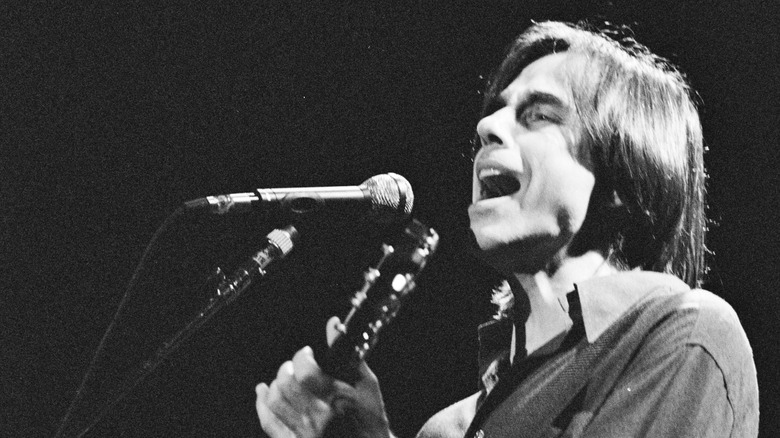
Jackson Browne was a teenage songwriting prodigy who'd become a confessional king by the time "Here Come Those Tears Again" showed up on the radar. Needless to say, he wastes no daylight cutting to the heart of the matter here. "Here come those tears again / Just when I was getting over you, Browne sings in the opening lines, which tells you what's coming through the rest of the song ... or does it? He drops a bombshell a few lines later: "But you always walk back in like you did today / Acting like you never even went away." The source of the sadness comes clear before the chorus delivers satisfying self-protection: "Well I don't know if I can / Open up and let you in baby / Here come those tears."
Multi Grammy-winning rocker Bonnie Raitt and Rosemary Butler lend emotional electricity on backing vocals, aiming their piercing "Don't know if I can" harmonies like a combined lightning strike. It sends a jolt of electricity through the song just when you think things are ready to calm down, doubling the impact of the lyrics and proving that confessional tunes can rock. It's a standout on Browne's 1976 classic LP, "The Pretender," an album laden with so much masterful confessional songwriting that Browne could have published the lyrics as a journal and made a mint. Thankfully, he did it in musical form so we could all sing along.
Just When I Needed You Most — Randy VanWarmer
The literary clarity of one-hit wonder Randy VanWarmer's "Just When I Needed You Most" paints an unmistakable confession of someone realizing what he's losing as his partner leaves. His pop soprano tones are just sorrowful enough to deliver the goods: "I miss you more than I missed you before / And now where I'll find comfort, God knows / 'Cause you left me just when I needed you most." It's one of those singles that aches from start to finish, both lyrically and musically, with slide guitars weeping and electric piano tones falling like tears. The emotional depth and confessional, goodbye letter-like composition stops listeners dead in their tracks as they realize just how thoroughly VanWarmer is opening his heart. It's a tune that calls for an instant second listen to make sure you understand you're feeling it all the way it was intended.
A songwriter of uncommon sensitivity, VanWarmer wrote the tune when he was just 18 years old, though it would be several years before the song was released in 1979. But the universal truths being explored here aren't entirely of a romantic nature. While it's true that a breakup sparked VanWarmer's inspiration here, it was helped along by the breakdown of his car. It takes a true talent to merge the magnificent and the mundane into a gut-clenching confessional song that hits the bullseye, even if it's a one-hit wonder.