

The Wildest Album Packaging Gimmicks That Cost Too Much To Last
As rock 'n' roll music matured and got inventive, artists realized they needed a properly grand and costly presentation to let fans know they were holding something special. Thus was born the phenomenon of the novelty album sleeve — and, later, special compact disc cases and other new and unique types of physical media on which music was distributed. Unfortunately, more often than not, these experiments in the place where commerce meets art were too complicated, expensive, or even destructive to stay in production for much longer than their initial run, if that.
Many classic rock vinyl covers have lots of unnoticed details, but some of them have been lost to time with subsequent runs because musicians were forced to change their LP sleeves. They were all discontinued quickly, but the package made a great album inside stand out nonetheless. Here are some of the wildest and silliest album covers ever attempted, which ultimately didn't work out.
Sticky Fingers — the Rolling Stones
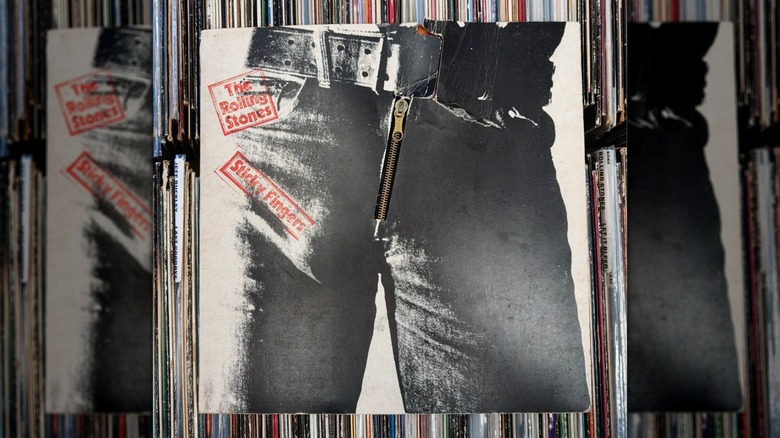
The Rolling Stones' classic album "Sticky Fingers" helped make 1971 the best year ever for music, and its cover is among rock's most famous. Conceived by Andy Warhol, it's primarily a close-up photograph of the front of a man in very tight jeans. The zipper on the pants was a real one; and, when lowered, it showed off what looked like underwear. Metal teeth designed to move proved damaging to the fragile vinyl LP beneath, so designers acted to change the design to be less destructive before getting rid of it altogether.
School's Out — Alice Cooper
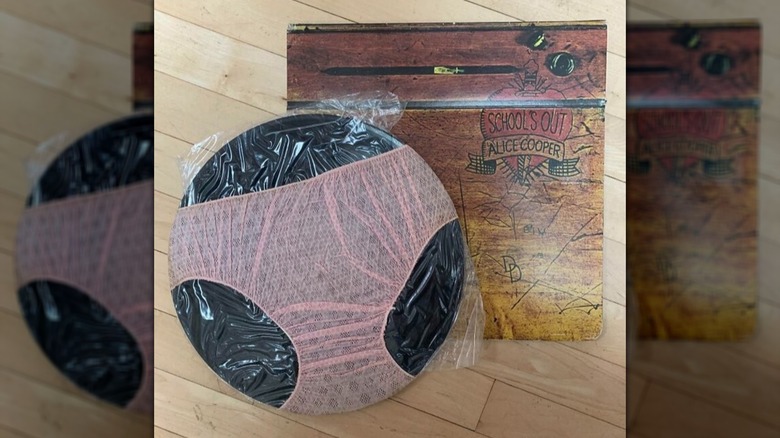
For their 1972 album "School's Out," the shock-rockers in the band Alice Cooper developed an interactive sleeve in relation to the title. The package opened like an old-fashioned school desk, and the actual record was placed not in the usual paper sleeve, but a re-creation of women's underwear. The initial line of 100,000 copies of "School's Out" was quickly recalled by the Federal Trade Commission because of safety issues: The faux-panties tended to catch fire.
Odessa — the Bee Gees
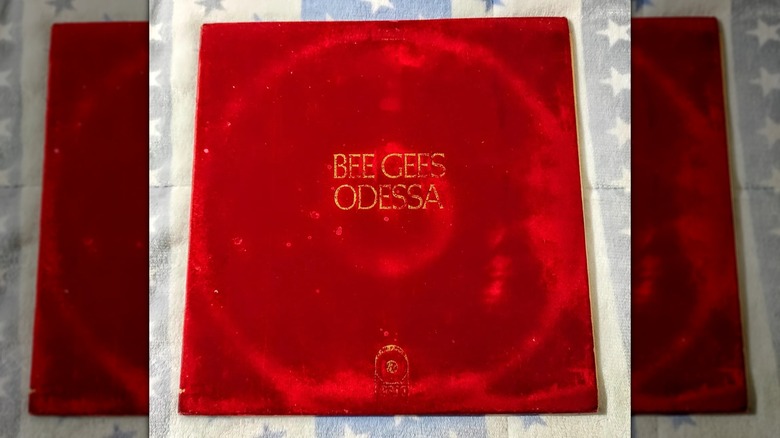
An extensive double album originally intended to be a concept album, the Bee Gees' 1969 release "Odessa" maintained some ambitious grandeur on the outside. When it was first issued, the entire extra-large package was papered in fancy red felt cloth with raised gold letters. When folded open, a listener could gaze upon a painting. The material used to make that flocked cover was mildly toxic, however, and the employees who manufactured it suffered from rashes. In subsequent pressings, the felt disappeared.
Ogdens' Nut Gone Flake — the Small Faces
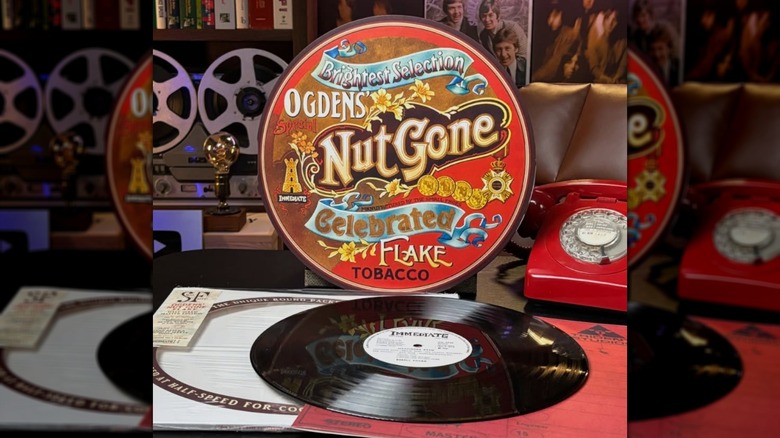
With a concept album that was a response to the Beatles' "Sgt. Pepper's Lonely Hearts Club Band" and the Who's "Tommy," the Small Faces ensured that the music-buying public would instantly know that 1968's "Ogdens' Nut Gone Flake" was a quirky adventure from just its container. With a title alluding to an old tobacco brand, the album really looked like it held some of that, concealed in a round metal tin that opened in the middle. It's reportedly the first time an LP hadn't been produced in a much less expensive-to-produce square sleeve.
The Velvet Underground & Nico — Nico and The Velvet Underground
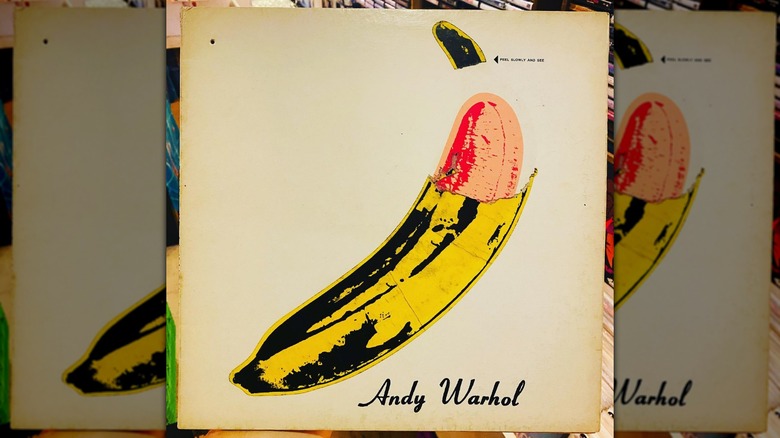
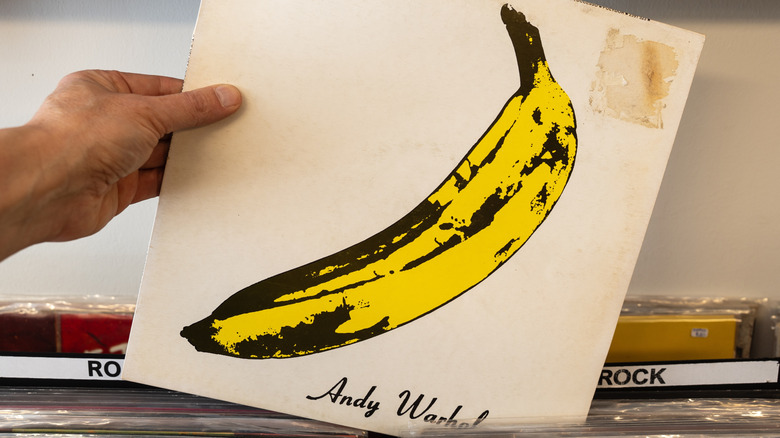
Artist Andy Warhol produced the first album by the Velvet Underground, and he was so famous that he could get away with not mentioning the group or the title on the front cover of the 1967 release. "The Velvet Underground & Nico" also featured a Warhol original artwork: a yellow banana sticker designed to be peeled away, uncovering pink flesh. Manufacturing the cover required dedicated equipment, adding to the expense of an album that didn't sell very many copies, and the sticker version of the sleeve was retired in favor of one with a static image.
Very — Pet Shop Boys
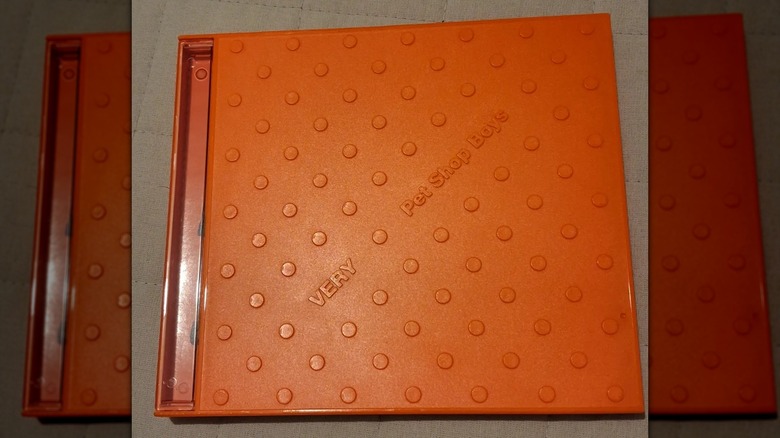
By the 1990s, most CDs came in a thin, cheap, transparent plastic case. For their 1993 album "Very," synth-pop duo the Pet Shop Boys presented its wares in a thick, bright orange-colored plastic box (technically injection-molded polystyrene), which was covered in bumps. Likened to a manhole cover or a giant flat Lego, each copy cost an extra $0.50 or so to manufacture versus the standard jewel case with a picture of the bumpy orange cover. The latter was used after the initial pressings.
Ladies and Gentlemen We Are Floating in Space — Spiritualized
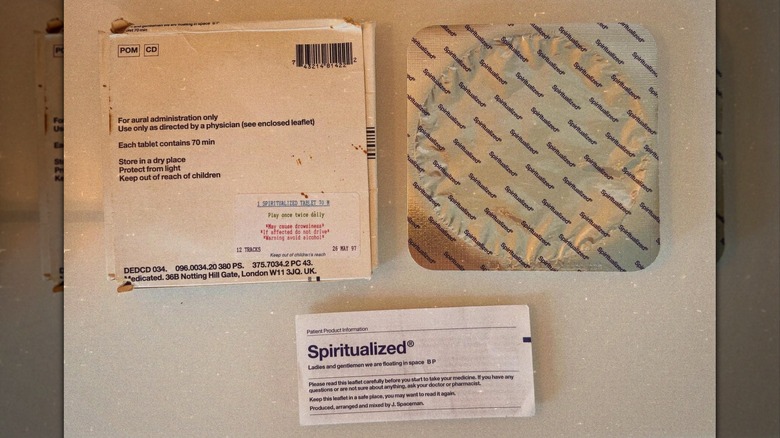
With 1997's "Ladies and Gentlemen We Are Floating in Space," trippy U.K. band Spiritualized released one of the decade's most adored albums. It was sold both on standard compact disc and as a set of 12 miniature CDs, each holding one song. Those were bound in blister-pack style packaging, so that the physical media looked like an array of pills. As it cost far more to produce 12 small CDs than one regular one, the band's label committed to only 200 copies of the special version of "Ladies and Gentlemen We Are Floating in Space."
Various 2011 releases — the Flaming Lips
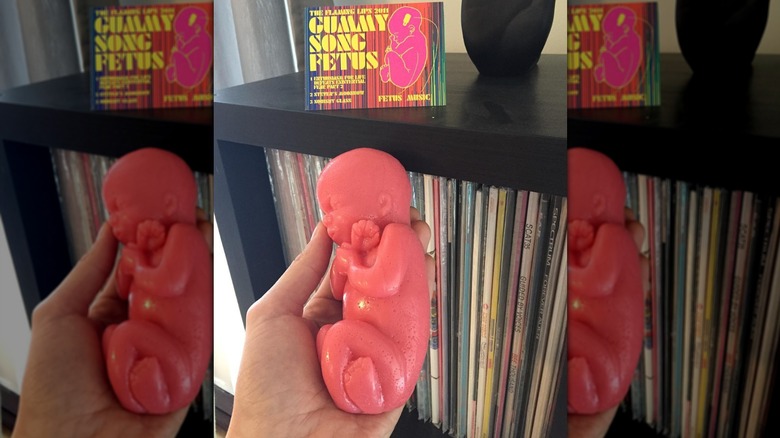
Experimental rock band the Flaming Lips issued new music every month of 2011. Two of those releases consisted of a few songs placed on a finite amount of USB thumb-drives, ensconced inside of ready-to-eat gummy candy rendered in odd shapes. April's "Gummy Song Skull" featured a gummy brain and skull, costing $150. June's "Gummy Song Fetus" involved a developing human fetus made of gummy candy. Only 13 copies were made for October's "24 Hour Song Skull," comprised of a drive including the 24-hour long song "7 Skies H3," found inside of an authentic human skull — which was available for purchase for $5,000.