

5 Classic Albums That Define '60s Bubblegum Pop
In the 1960s, A.M. radio ruled, and by the end of the decade, it had come to be dominated by bubblegum pop. This was a genre of music that produced an array of tunes that, like their namesake, were gooey and sugary sweet and had a habit of sticking with you. Much of this genre of music was created by producers and record execs focused on selling shorter 45 RPM records aimed at younger audiences. This was in contrast to bands like the Beatles and the Rolling Stones (towards the latter end of the decade), who defined classic rock with longer songs that were more often heard on college F.M. radio stations of the era.
While many of the best-known purveyors of bubblegum pop like the Monkees and the Archies were manufactured, other bands like Tommy James & The Shondells and the Cowsills formed somewhat more organically (with Ohio Express falling somewhere in between). Even so, all these bands shared certain traits, as did their best albums. The music was light, shimmering pop, short on deep thoughts, and heavy on danceability and a knack for worming its way into listeners' brains.
These bands, in our opinion, exemplify the genre, and while their careers were built on singles rather than albums, we've gathered together the records that best illustrate the bubblegum aesthetic as showcased by these various groups. So pop in a wad of gum, blow a few bubbles, and prepare to have five earworms fight over your brain.
Tommy James & The Shondells — I Think We're Alone Now
The single "I Think We're Alone Now" wasn't the first hit for Tommy James & The Shondells — they reached No. 1 on the Billboard Hot 100 a year earlier with "Hanky Panky" — nor would it be the last by far (Tommy James has had 23 gold singles), but this song, and the album of the same name, were different. "'I Think We're Alone Now' was the first of what became known as our bubblegum hits," James told The Guardian in 2019. It wasn't just the first bubblegum hit for the band, but it also helped birth the genre. The upbeat song about teenage romance featured jangly guitar, a piercing electronic keyboard, sweet harmonies, and dynamic vocal shifts.
The song came about when the Ohio-born Tommy James and his band began working with Bo Gentry and Ritchie Cordell at Roulette Records (a record company that was a Mafia front), sped up this ballad, and turned it into a No. 4 Billboard hit. While this tune dominates the album of the same name released in 1967, there are some other bubblegum pop gems on the record, including "Mirage," another Top 10 hit. This driving song about lost love brings high drama into the mix. Two others, "I Like The Way" and "Let's Be Lovers," are also worth mentioning. Both are super catchy, with the former rich in harmonies and the latter featuring an ad-libbed spoken-word section during the instrumental breakdown.
The Archies — Everything's Archie
The Archies may be the quintessential bubblegum pop band. Dreamed up by producer Don Kirchner, one of the architects of the genre, this fictitious band was made up of characters from the Archie comics, which were turned into an animated TV series in 1968. On the show, the cartoon characters Archie Andrews and his friends performed songs that were actually made using studio musicians. The music was shiny pop that was as sweet as a handful of Smarties and equally lacking in depth, but just as addictive. The exemplar of the band's music was "Sugar, Sugar," which appeared on their second album, "Everything's Archie."
The single "Sugar, Sugar" was a No. 1 Billboard Hot 100 hit that stayed at the top for four weeks and beat out giants like the Beatles, Rolling Stones, Marvin Gaye, and Elvis Presley, among others, to become Billboard's single of the year for 1969. It was also an international hit. While "Sugar, Sugar" is the centerpiece of the album, there are some other prime examples of bubblegum pop aimed at pre-teens. There's "Kissin'," which is about exactly what the title states. Then there's "Bicycles, Roller Skates and You," with lyrics like "I ain't got a dime / (Ah) But I'm the richest guy you'd ever find / Cause I've got / Bicycles roller skates and you / My baby (My baby)." Kirshner obviously knew his audience.
Ohio Express — Ohio Express
Like Don Kirshner, Jerry Kasenetz and Jeff Katz of Super K Productions were equally important in creating bubblegum pop, and the duo even lays claim to coming up with the genre's name. Among the bands they produced was Ohio Express, which was a regional Ohio band, and Sir Timothy and the Royals, which Kasenetz and Katz rechristened Ohio Express. Because Kasenetz and Katz owned the rights to the band's name, they could and did switch out musicians in the group, used various groups under the Ohio Express moniker, and mainly relied on studio musicians to record.
The band's biggest hit, "Yummy Yummy Yummy," reached No. 4 on the Billboard Hot 100 in 1968 and was a million seller. Like much of their output, the fast-paced song has a driving beat, silly lyrics, and close harmonies, all defining characteristics of the genre. The song was co-written and sung by Joey Levine, who wasn't credited as the lead singer. Although "Yummy Yummy Yummy" is the centerpiece of the self-titled 1968 album, there are several other tunes that also fit squarely into bubblegum, while others veer into garage rock ("First Grade Reader") and psychedelia ("Into This Time," "Turn to Straw"). Songs like "Mary-Ann," "Down at Lulu's," and "Vacation" are all upbeat numbers with easy-to-sing-along-to choruses and no depth, but they got the kids dancing. Super K Productions had it dialed in with Ohio Express.
The Monkees — The Monkees
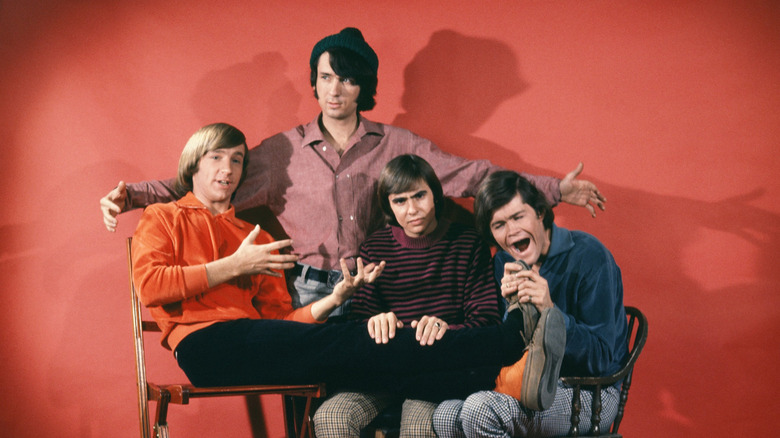
There are ongoing debates about whether the Monkees should be considered bubblegum pop, but in our opinion, they are an early example of the genre, especially their first self-titled album from 1966. Like many other bubblegum pop bands, the Monkees were a manufactured band that was created for a television show. Band members Micky Dolenz, Davy Jones, Michael Nesmith, and Peter Tork were hired for the show that aired on NBC in 1966. Don Kirshner, who later created the Archies, was tapped to handle the music and relied heavily on songwriters Bobby Hart and Tommy Boyce and others of the Brill Building — a New York City music business hive that churned out tunes — for many of the songs that would make the Monkees famous. Kirshner and many Brill Building songwriters were vital to the creation of the bubblegum genre.
On the self-titled Monkees album, the band didn't play their own instruments, although they did sing. Kirshner used the famed Wrecking Crew, a group of LA session players. The album features their first No. 1 hit, "Last Train to Clarksville," which has some bubblegum elements (upbeat tempo, driving beat, shimmering harmonies) but has more lyrical depth than most other tunes that fall into the category. Other songs, including "(Theme From) The Monkees," "Let's Dance On," and especially "Gonna Buy Me a Dog," with its silly lyrics and goofy sound, are representative of bubblegum.
The Cowsills — Captain Sad and His Ship of Fools
The Cowsills were a family group (and the inspiration for the Partridge Family) from Rhode Island, made up of five brothers of various ages (Bob, Bill, Barry, Paul, John), a sister, Susan, and their mother, Barbara. While the Cowsills don't neatly fit into the business side of bubblegum — there was no Svengali-like producer pulling the strings — their record company packaged them as one.
Musically, the band had undeniable connections to the genre, although they also crafted some beautiful sunshine pop. "Captain Sad and His Ship of Fools" came out in 1968 and included such bubblegum classics as "Indian Lake" and "The Path of Love." Both of these songs were written by Tony Romeo, who also wrote the Partridge Family hit "I Think I Love You. "Indian Lake," with its imagery of idyllic summer days, uptempo beat, and bright harmonies, became a Top 10 hit for the band and remains an oft-cited example of the genre. "The Path of Love," with simplistic lyrics and a hook-laden structure, is also a bubblegum classic. Other songs on the album that dig into psychedelia, folk rock, and sunshine pop still retain a bubblegum sensibility that makes it, and the other albums on the list, define bubblegum pop in its various incarnations.