

Not Led Zeppelin, Not Deep Purple: The British Rock Band That Time Forgot Pioneered Heavy Metal
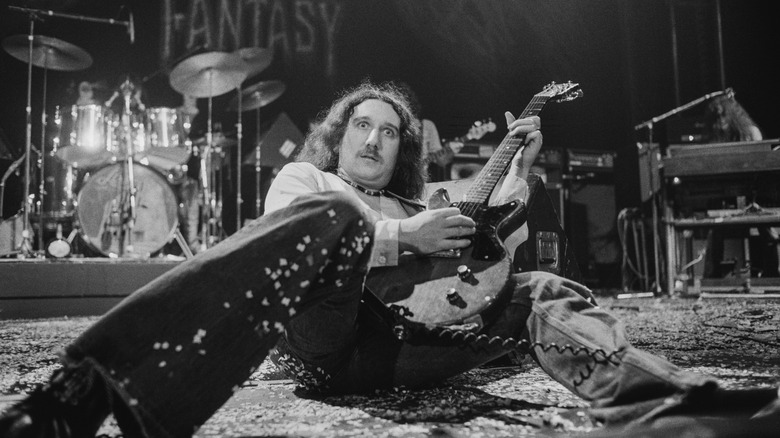
In the annals of rock 'n' roll, there are bands like Led Zeppelin, Deep Purple, and Black Sabbath that tend to be the most cited progenitors of what would become heavy metal. But there's a fourth pivotal band that time forgot that should be mentioned in the same breath with these others: Uriah Heep. When we say "time forgot," we're obviously overstating things a smidge. The band is still around today and maintains a small but avid fanbase, and they were huge internationally, especially in the '70s. What we're getting at is that compared to the three other key foundational proto-metal bands, Uriah Heep has gotten short shrift for their contributions. The band hasn't even been inducted into the Rock & Roll Hall of Fame as of this writing.
Formed in London in 1969, Uriah Heep, named for a character in Charles Dickens' "David Copperfield," helped bridge psychedelic rock with heavy metal and prog metal, beginning with 1970's "...Very 'Eavy...Very 'Umble," which starts with one of the band's all-time greatest songs, "Gypsy." With its heavy Hammond organ intro, operatic vocals, and aggressive guitar, it was the opening salvo for the band. The American version of the album, released in the summer of 1970, also included "Bird of Prey," which music critic Martin Popoff in Goldmine called "the heaviest metal song as of that date ever" since it came out earlier than Black Sabbath's "Paranoid." And Uriah Heep just got heavier from there.
A trilogy of heaviness
The classic lineup of Uriah Heep included singer David Byron and guitarist Mick Box, and over the decades its had a pretty big rotating cast of band members. Today, only Box has been in the group throughout its existence. The band's thick musical stew that combined elements of psychedelia, boogie, and blues, produced a unique sound that included some key elements that define heavy metal. They used tritones, drop-D guitar tuning, close soaring vocal harmonies, and searing guitar work. A trilogy of the band's albums from 1971 and 1972 ("Look At Yourself," "Demons and Wizards," and "The Magician's Birthday") showcases the elements. As early as 1972, critics were describing the band as heavy metal.
Uriah Heep also forged the way for progressive metal on songs like "The Wizard," the album opener for "Demons and Wizards," and "The Magician's Birthday" from the album of the same name. Both have the earmarks of the genre, with their mystical themes and complex song structures. Like their fellow heavy metal founding fathers, such as Black Sabbath, who were dismissed by critics, Uriah Heep was ravaged in reviews, including by Rolling Stone, in which the writer threatened to end her own life if the band succeeded. Still, more than 50 years on, the band is still around. According to Metal Music Archives, the band has sold more than 40 million albums worldwide and laid the groundwork for heavy metal acts like Iron Maiden, Accept, Dream Theater, and Metallica, who owe a lot to Uriah Heep's sound, as do bands like Queen. Uriah Heep deserves more credit for their musical impact.