

4 Underrated Artists Every Motown Diehard Should Already Know
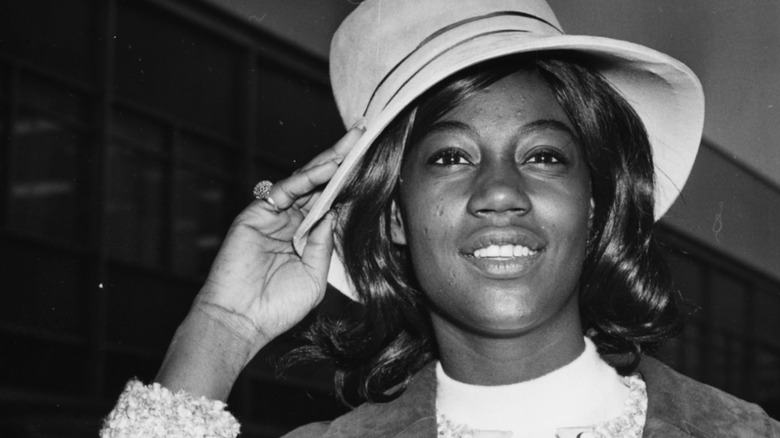
Motown Records, record tycoon Berry Gordy Jr.'s Detroit-based label, is a towering edifice of modern musical history. Since its founding in 1959, Motown has been responsible for the careers of everyone from the Jackson 5 to Lionel Richie and become a pioneering force in the world of soul music. But while many casual music listeners could tell you how Smokey Robinson got his name or recount the tragic real-life stories of Motown stars, there's a wellspring of minor hitmakers with fascinating stories to tell.
Today, we're digging into the lesser-known players in the Motown game. Whether it's Marvin Gaye's criminally underappreciated duet partner delivering a powerhouse civil rights anthem or one of the label's rare white artists scoring a moment of notoriety, there's plenty here for the hardcore fans to dig into. They may not have topped the charts time and again like their more well-known counterparts, but we're going to make sure they get their due, and maybe even surprise a few listeners who thought they were already in the know along the way.
Kim Weston
Kim Weston's name may not resonate in the popular consciousness like some of Motown's more established artists, but she has a definitive place in the label's history. "It Takes Two," her duet with Marvin Gaye, came in at No. 14 on the Billboard Hot 100, while another duet from the pair, "What Good Am I Without You," reached No. 61 on the same chart.
Weston's solo work for the label failed to garner as much attention. She and Gaye released an LP of duets in 1966, but Weston left the label along with her husband, producer William "Mickey" Stevenson, shortly thereafter. She remained active in the industry but never enjoyed the enduring legacy of her iconic duet partner. "It Takes Two" would go on to find a second wind in 1990 when it was rerecorded by Rod Stewart and Tina Turner for a Pepsi ad campaign. The new incarnation became a hit throughout Europe.
But while Weston's solo output has been largely forgotten, there remains one deep-cut artifact that belongs in the archives of every soul music aficionado. Her 1968 LP "This Is America," recorded for MGM after Weston's Motown tenure ended, features an impassioned rendition of "Lift Every Voice and Sing," the official song of the NAACP and commonly referred to as the "Black National Anthem." Arriving at the height of the Civil Rights Movement, Weston's rendition comes with an impassioned delivery that drives home the pain, hope, and endurance of the Black community during a crucial point in American history.
G.C. Cameron
It's a shame that G.C. Cameron is better known as the lead singer of the Spinners than for his dynamite solo output. He stepped away from the band in 1972, just before their heyday was in full swing, for the allure of a solo career. The result was a series of albums that failed to make much of a splash, all while his former bandmates were riding high on a series of Billboard Hot 100 Top 10 hits.
As his 1974 LP "Love Songs & Other Tragedies" makes clear, he's a chameleonic vocal presence who's equally at home in the sweat and grit of funk as he is the silky alcoves of vintage R&B balladry. "Act Like a Shotgun" finds him kicking out the Isaac Hayes funk with heavy overtones of James Brown. It's a nasty, sneering banger that calls to mind the precisely sculpted afros and aviator sunglasses of vintage Blaxploitation cinema. Such hard-edged grooves sit side by side with ballad cuts like "All in Love Is Fair," where he embraces the crystal-clear high end of Stevie Wonder. There's hints of Curtis Mayfield and Marvin Gaye throughout the album, and a whole host of other influences as well.
The stylistic diversity might account for his lack of concrete success. Cameron feels like a doctor languishing in general practice while his colleagues are raking in the dough as specialists. He might have been an easier sell if he could have picked one lane and stayed in it. As it stands, his diverse solo career is an unexplored treasure trove for Motown devotees.
R. Dean Taylor
A native of Toronto, Canada, R. Dean Taylor pitched himself to Motown in 1963 at the encouragement of a Detroit-based friend who had heard about the then-fledgling label. Signed as an artist and songwriter, he initially helped pen hits for the likes of the Supremes ("Love Child," "I'm Livin' in Shame") and the Temptations ("All I Need").
Those hits all fit squarely in the Motown sound aesthetic, but Taylor's own output feels wholly removed from the label's common genre associations. His most successful single, 1970's "Indiana Wants Me," went to No. 5 on the Billboard Hot 100 and feels more at home as a forerunner of the blues rock stylings of Lynyrd Skynyrd and Little Feat than among Motown labelmates like Marvin Gaye or Diana Ross. Subsequent singles "Ain't It a Sad Thing," "Gotta See Jane," and "Taos New Mexico" all maintain that electric folk style, and all peaked well outside the Top 40.
Taylor may not have had a solo career of Motown hits that still get boomers in their dancing shoes, but his success — essentially that of a one-hit-wonder — is a deep-cut curiosity for the deeply devoted. On its own, "Indiana Wants Me" is not much of a song and falls in line with a lot of the other, comparable fare of the day. But that's not the point; it's a rare and enduring outside-the-box oddity from a label whose roster is eternally linked to soul music.
Hattie Littles
Hattie Littles' powerful voice is so instantly arresting that it's perplexing she didn't make more of an impact. Her one release for Motown — 1962's "Your Love Is Wonderful," which came paired with the B-side "Here You Come" — was released on Gordy, the label's R&B-soul subsidiary. It's a stirring performance of mid-century R&B from a voice with so much vibrato it sounds like she could strip rust off of steel.
What little information there is on the singer indicates that much of her failure to launch was down to bureaucratic bungling on the label's part rather than her own shortcomings. Whatever the case, Littles was notably dissatisfied with the recording and preferred sticking to more traditional blues and jazz. She performed the single only once, at Lee's Sensation Lounge where she'd initially been discovered by Motown producer Clarence Paul.
At the end of the day, Hattie Littles is a reminder that sometimes even the mightiest of talent on the top label in her field can't quite make it happen. The unfairly forgotten single is a bittersweet hint of what might have been.