

Quote Of The Day By Bruce Springsteen: 'He Was Tough On Me When I Was Young, But Fundamentally, Underneath, He Was...'

Bruce Springsteen is one of rock's biggest commercial forces and critically acclaimed artists. Born in Long Branch, New Jersey — a state with which he has become indelibly identified — on September 23, 1949, Springsteen built his reputation in the 1970s as a songwriter with the unique ability to put the lives of everyday people into emotionally charged rock tracks, while with his E Street Band he became acclaimed as one of rock's most energetic and generous performers.
Of course, Springsteen poured much of his own life into his artistry, with his comparatively humble background shaping his work and his view of the world. His early life was spent in Freehold, where his father, Douglas, was a laborer who took on a variety of jobs (including prison guard and cab driver), and his mother, Adele, was a secretary. However, work was never guaranteed, and amid spells of unemployment, money was often tight for the Springsteens. Indeed, the songwriter's relationship with his father has been a subject he has returned to time and again — and which is central to our Quote of the Day.
Quote of the Day by Bruce Springsteen
"He was tough on me when I was young, but fundamentally, underneath, he was a vulnerable, fragile, sweet-hearted, and soulful man."
Bruce Springsteen's Quote of the Day dates from 2025 in an interview he gave to Time magazine anticipating the release of "Springsteen: Deliver Me From Nowhere," a biopic of his early career starring Jeremy Allen White as the "Born in the U.S.A." songwriter. As well as documenting Springsteen finding his voice as a songwriter, the film delves into his relationship with his father, who Springsteen has described as being an emotionally-distant figure, with whom he struggled to connect for a large part of his early life.
In "Deliver Me From Nowhere," Douglas Springsteen is portrayed by Stephen Graham, and in the interview, Bruce discusses how a reconciliation with his father, who admitted his shortcomings, is reflected in his compassionate treatment in the film.
Deeper Meaning of Bruce Springsteen's Quote – Learning to Understand our Parents
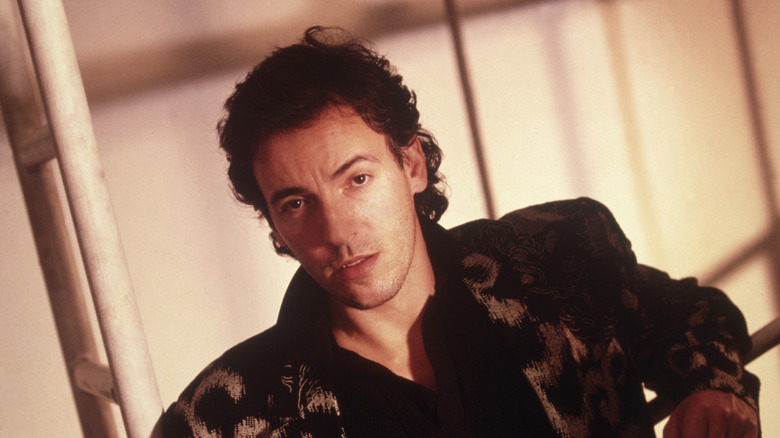
While Bruce Springsteen is famous for tracks exploring the emotional turmoil of break-ups, chronicling the American dream, and working life, many of his best songs are autobiographical. The image of Douglas Springsteen emerges in many of them, through characters who struggle to find work and provide for their families — and also in ghostly father figures who are absent or uncontactable, either physically and emotionally. For those familiar with the Boss' discography, it is clear that Bruce's relationship with Douglas preoccupied him in his early years, as is the case with many who are dealing with a rocky parental relationship.
However, relationships rarely remain static through life, and as Springsteen has described in the Time interview, things eventually thawed between his father and him on the occasion of the birth of Springsteen's first child. "You've been very good to us, and I wasn't very good to you," Douglas told him.
It was a moment of insight for Springsteen that helped him see his father in a new light. "He had the fortitude and the wherewithal and the deep understanding that I was about to become a father, and he didn't want me to make the same mistakes," he said. This moment appears to have given Springsteen a deeper insight into his father's inner emotional life. The moment crystalizes the fact that parenthood does indeed represent a series of decisions that one makes either consciously or emotionally that come to govern your relationship with your children. Forgiving one's parents ultimately requires coming to understand them, and as the Springsteens' reconciliation shows, that may require moments of radical honesty.
More Quotes from Bruce Springsteen

- "Two of the best days of my life were the day I picked up the guitar and the day that I learned to put it down."
- "The first thing that really reaches the public is the thing they tend to hold on to and want you to hold on to. What the writer has to do is you write yourself into a box, and then you're Houdini. You continue your work until you feel yourself locked in that bigger box, then you're supposed to escape into a bigger box."
- "I have spent my life judging the distance between American reality and the American dream – how far is that at any given moment? If you go back to the work that I did beginning in the late '70s, I'm always measuring that distance: how close are we, how far are we, how close are we?"
- "I don't set aside any time in the day. I write when the fire gets lit, and then I do it in spare time. I work at home, so there's always something going on — somebody needs to be picked up from school, somebody needs to be dropped off at school. But it doesn't take me long, like it used to."
- "The inspiration thing, if that's what you'd call it, it's like a visitation. Something happens where suddenly it's like the planets aligning. The times, what's in the air, what's inside of you, there's your craft, your skills... and suddenly they go 'click!' and 'zoom!' and then 'bang!'"
- "All we know about manhood is what we have learned from our fathers. And my father was my hero, and my greatest foe."