

Born 86 Years Ago Today In England, This Art Student Turned A School Band Into A Global Sensation
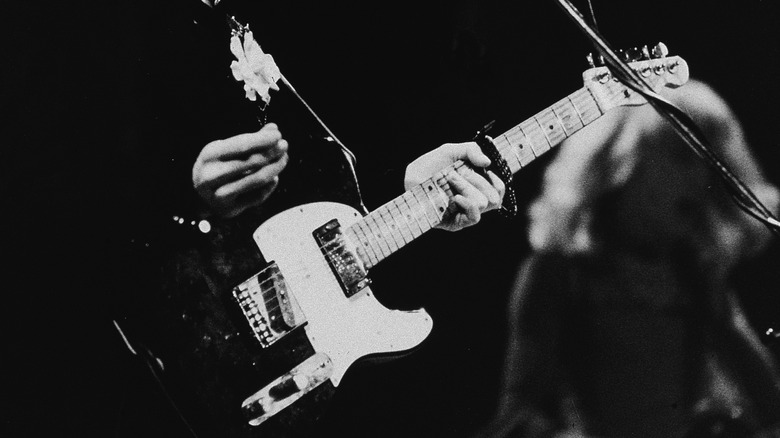
On October 9th, 1940, in Liverpool, England, music lover Julia Lennon gave birth to her son, John, instilling in him her love of music and playfulness that would make him world-famous just over two decades later. Unfortunately, she would not live long enough to see him become a pop culture icon as the founder of what many consider to be the greatest rock band of all time.
Julia's death in a road traffic accident occurred when John Lennon was 17 years old, and was one of the defining moments of his early life, fueling a sense of anger and alienation that would become evident in much of his later creative output. By then, he was already performing music with school friends, playing at local events and building a small following with his first band, the Quarrymen. Founded when Lennon was just 15 years old, it was named after Quarry Bank High School, which Lennon and his bandmates attended.
The experience would become an important stepping stone for Lennon, who, while still in his teens, would form the Beatles, eventually evolving into favorites on the live circuit before becoming hitmakers who dominated the charts in the 1960s. Throughout, his music would undergo several revolutions, with his subject matter and approach also influenced by visual art, which he studied at the Liverpool College of Art. As well as formalizing his creative thinking, the institution would help the budding artist make connections that would ultimately drive him to rock 'n' roll stardom.
John Lennon's early skiffle days
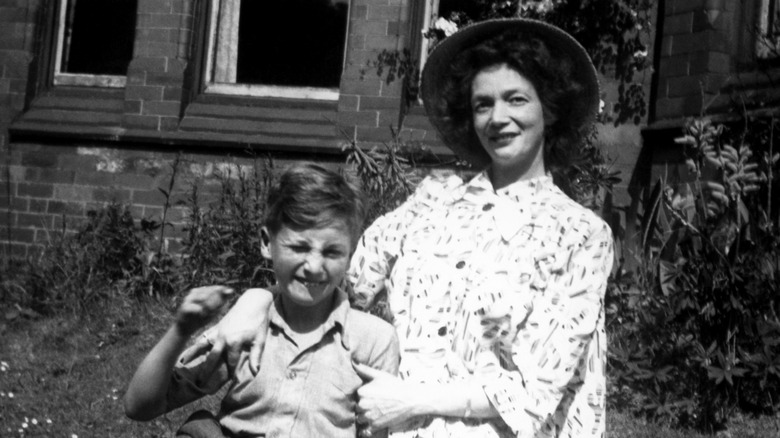
Julia Lennon had been a huge source of inspiration in John Lennon's early life, buying him his first instruments and infecting him with her enthusiasm for song, dance, and performing. She also taught him banjo and ukulele, which set him in good stead for a life in music. Like other young men of his generation — including his future songwriting partner, Paul McCartney — Lennon was transfixed by the figure of Elvis Presley, who had become a rock king thanks to the release of hits like "Heartbreak Hotel," while the teenagers of the U.K. had also become obsessed by skiffle, an upbeat pre-rock 'n' roll genre blending American folk, country, and jazz, and popularized by charismatic practitioners such as Lonnie Donegan.
The Quarrymen's live setlists mainly consisted of skiffle and doo wop songs, with Lennon as the band's banjo-twanging frontman. It was while performing with the Quarrymen that Lennon was first introduced to McCartney, who impressed the band leader backstage with his ability to perform songs by the rocker Eddie Cochran. It was the start of a special relationship between the two youngsters that would soon see them eclipse the local music scene as the first step of their journey to becoming rock royalty.
Becoming the Beatles
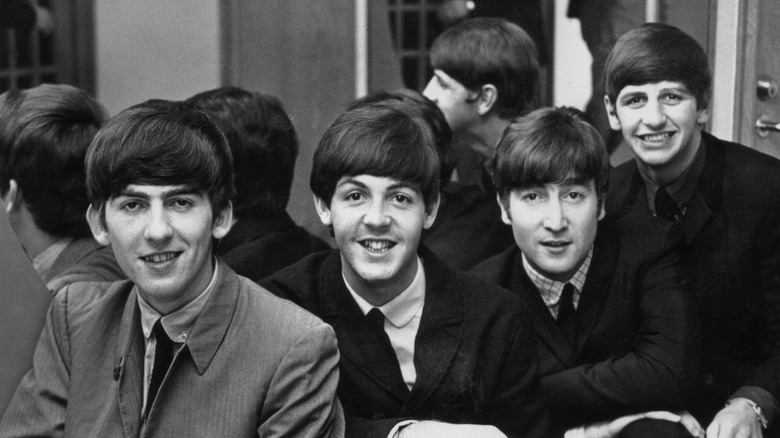
By the late 1950s, it was obvious that rock 'n' roll was the sound that most captivated the youths of the era, and before long skiffle musicians such the Quarrymen were increasingly turning toward the budding genre. Paul McCartney had joined the group in 1957, with guitarist George Harrison joining in 1958. Around the same time, Lennon and McCartney began their songwriting partnership, though early recordings would remain dominated by cover versions of R&B, doo wop, and rock 'n' roll songs written by other artists.
By 1959, several early members of the Quarrymen quit, leaving the three future Beatles to continue together. Lennon was by this time struggling with the death of his mother, and he briefly left the group, but they reformed and continued playing live shows later in the year. The band was briefly renamed Johnny and the Moondogs, before Lennon invited his art school friend Stuart Sutcliffe to join, renaming the band the Beatles.
The band would continue to be a revolving door of members until they settled on the drummer Pete Best before the loss of Sutcliffe. Best was eventually replaced by Ringo Starr, forming the classic Fab Four line-up. Though the direction of the Beatles would in their later years be guided to a greater degree by Paul McCartney, throughout their rise, Lennon was typically considered the leader of the group, which had blossomed from the earlier incarnation he had founded. Eighty-six years after his birth, he remains a music icon.