

Quote Of The Day By Gordon Lightfoot: 'I Made Sacrifices. The Isolation Of It All Managed To...'
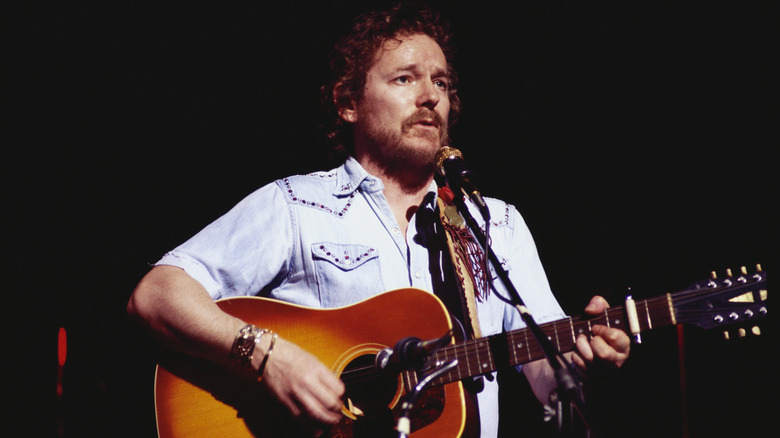
Gordon Lightfoot is basically the patron saint of Canadian folk music. Coming of musical age with his solo 1966 debut, "Lightfoot!," during the mid-60's folk boom, Lightfoot gained his greatest notoriety in the mid-70s with songs like the semi-historically accurate, "The Wreck Of The Edmund Fitzgerald." But his entire legacy of 21 studio/live albums, roughly 500 songs, an induction into the Canadian Music Hall of Fame, and more, didn't come without its costs.
Born on November 17, 1938, in Orillia, Ontario, Lightfoot showed musical talent from a young age — much like other prolific and/or successful musicians. And like those musicians, he had encouragement from a supportive parent. Under his mother's guidance, he sang in the church choir at age 5, competed in a talent competition at 10, and started formally studying music at 12. Excelling at every turn, Lightfoot fully committed to his musical path, but it took a turn after he encountered Bob Dylan's music. This was the inspiration that set Lightfoot on the folk journey that defined his life and career from then on out.
After he picked up commercial steam in the '70s, he swapped from United Artists to Warner/Reprise, and he felt compelled to produce, produce, produce for the latter. He did, and his career thrived, but it cost him two marriages, as he told Vanity Fair in 2016. Lightfoot was honest about this, and took responsibility for his self-imposed sacrifice, right until his death in 2023. That's why he gets our quote of the day.
Quote of the Day by Gordon Lightfot
"I made sacrifices. The isolation of it all managed to destroy a couple of my [marriages]."
Lightfoot said this towards the end of his life in 2016 in an interview with Vanity Fair. He was talking about the aforementioned mid-70s height of his career when he managed to top the Billboard Hot 100 with "Sundown" in 1974. This came four years after he'd landed a No. 5 song with "If You Could Read My Mind" in 1970, which took sad inspiration from his failing marriage to Brita Ingegerd Olaisson. The latter song was released three years before Lightfoot and Olaisson divorced in 1973; their young daughter even inadvertently contributed to the song's lyrics.
This is the context for Lightfoot's quote, particularly his discussion of how he wrote his biggest hit, "Sundown." He was very much in a musically inspired place at the time, he said in the interview, fueled by a combination of solitude (his future ex was out with her friends) and alcohol. Lightfoot also described his alcohol addiction at the time, which led to amphetamine use to stay alert and productive. In turn, this amplified his obsession with productivity and further separated him from his family. All of this led to two failed marriages.
Nowhere in the interview, however, does Lightfoot bemoan his choices or try to escape from responsibility. He just states things factually — the good taken with the bad — and owns up to his choices and impulses.
Deeper Meaning of Lightfoot's Quote — Accountability
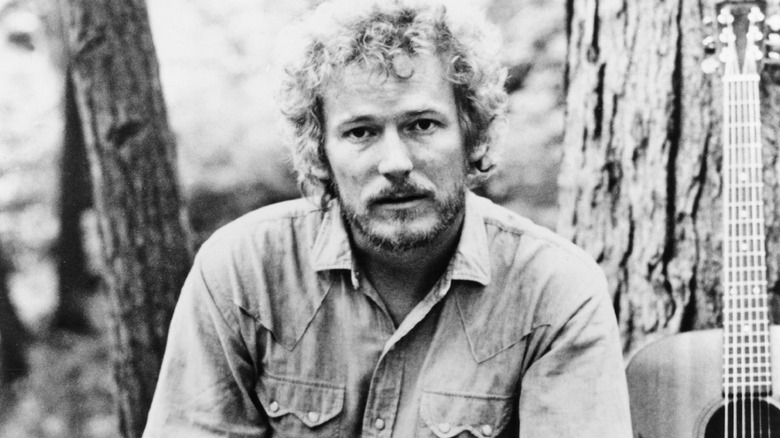
We can't say exactly what Lightfoot was thinking when he wrote hits like "Sundown," though the song's lyrics say a lot: "Sometimes I think it's a shame / When I get feelin' better when I'm feelin' no pain." Judging by his 2016 interview with Vanity Fair, it's least clear that his personal life was an absolute wreck during those days, balanced out by heightened career-related success. But it's also not clear that Lightfoot was driven by the desire for such success, rather than fear of failure under a new record label. Or, he might have been simply driven to write music, as that'd been his one path since childhood.
Regardless, Lightfoot in his late life didn't make excuses for himself or the pain he caused himself or others. His responses in the Vanity Fair interview are cut-and-dry, clear-minded, and directly spoken. It doesn't seem like he's masking his feelings, either, but rather that he's come to terms with them.
This is the best possible outcome for anyone who's made a mistake and realized it, no matter any indirect positives wrought by such a decision. That's what a "sacrifice" is, as Lightfoot put it to Vanity Fair — it's one thing traded for another, producing both benefits and detriments. So it's not that we applaud Lightfoot's neglect of his marriage, but rather we applaud his sense of accountability to himself over time. This requires a type of courage and self-awareness that pretty much everybody would benefit from adopting.
More Quotes From Gordon Lightfoot
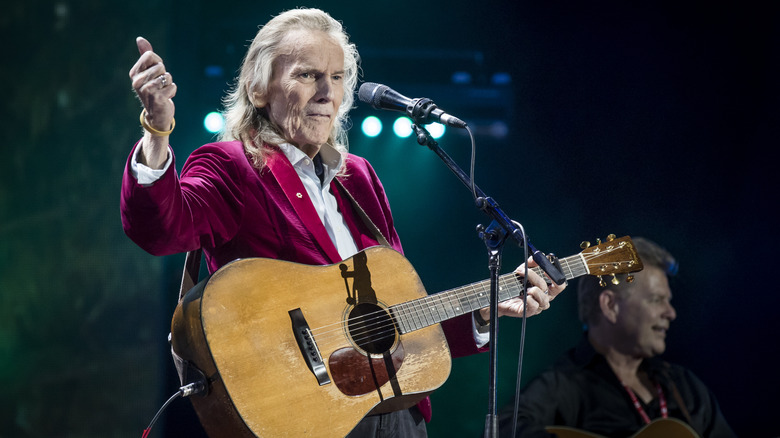
- "I don't like to have to remind myself of everything I hate about myself. It's highly unnecessary. I'm reformed. I'm doing my best, I'm trying hard, I don't want to hurt a soul."
- "There is always something wrong with a song, you can't be perfect."
- Even long after I was divorced and separated and she'd gone her way and I'd gone mine, I would sing this song and think, 'Geez. How did she ever put up with this?!' I stopped singing it.
- My playing is fine right now, and I still practice, but at that time it had that drive and attack that you have when you're still only 60 years old.
- "I'm a little nuts. I'm a lot nuts. All I know is that in the midst of the madness of this world it's [music's] my therapy."
- "I'm going to leave a clean campsite when I get out of here."