

1972 No. 1, Later Covered For A John Candy Hit Comedy, Went To The Top 54 Years Ago Today
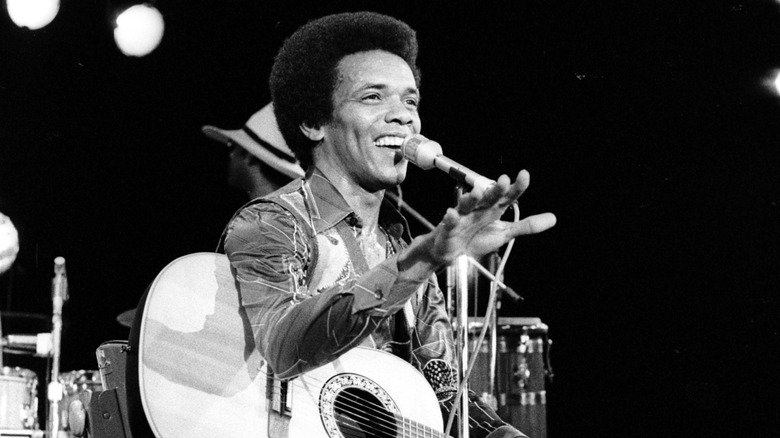
Some tunes wrap you in their embrace and lift you up. Johnny Nash's "I Can See Clearly Now," which reached No. 1 on the Billboard Hot 100 the week of November 4, 1972, ranks among them. Like Bobby McFerrin's "Don't Worry, Be Happy" or "O-o-h Child" by the Five Stairsteps, it reminds you that everything is going to be all right. Decades later, those positive vibes shimmered again on reggae artist Jimmy Cliff's version of the song, recorded for the 1993 hit comedy "Cool Runnings," starring John Candy. Each singer imbued it with his own flair and warmth, and both the original and the cover are enduring classics: perfect songs for vacation playlists and uplifting movies alike.
Much of the sunshine comes from Nash's lyrics, which capture the feeling of hope returning and troubles fading away. "I think I can make it now the pain is gone / All of the bad feelings have disappeared," the second verse begins, before exploding into color with "Here is that rainbow I've been praying for." That imagery is universal, which no doubt adds to the appeal of both versions.
When "I Can See Clearly Now" hit its heights in 1972, it brought Jamaican grooves to the top of the charts, showcasing Johnny Nash's evolution from R&B and soul to reggae. And in covering it for "Cool Runnings," reggae legend Jimmy Cliff found a new generation of fans.
Johnny Nash helped bring reggae to American audiences
Johnny Nash was still living with his parents in Houston, Texas, and attending high school when he released his first single, "A Teenager Sings the Blues," in 1956. By 1958, thanks to frequent TV appearances and a Top 40 single, "The Teen Commandments" (recorded with Paul Anka and George Hamilton IV), he emerged as a '50s pop star, joining the ranks of Bobby Darin, Frankie Avalon, and other teen idols.
But what makes Nash so fascinating is his trajectory from R&B and pop to reggae. In the mid-'60s, he set up JAD Records with the idea of fusing U.S. pop sensibilities with Jamaican sounds. In addition to recording the U.S.'s first reggae hit — "Hold Me Tight," which reached No. 5 on the Billboard Hot 100 in 1968 — Nash hired Bob Marley and the Wailers as songwriters. Earnings from Nash's version of Marley's "Stir It Up," which reached No. 12 on the charts, helped Marley start his own label, Tuff Gong.
"I Can See Clearly Now" — the title track of Nash's 1972 album — perfectly fuses R&B songcraft with reggae flavor. Though the genre would gain purchase in the U.S. in the '70s and '80s, there wouldn't be another reggae chart topper until 1988, with UB40's cover of "Red Red Wine."
Cool Runnings and Jimmy Cliff's return to the charts
In part, Jimmy Cliff became an ambassador and leading light of reggae music thanks to his film work. After finding early success in Jamaica producing and singing on ska singles, he moved to London and put out his first international release, 1967's "Hard Road to Travel" — an album that, like Johnny Nash's "I Can See Clearly Now," blended homegrown sounds with American R&B. But it wasn't until he returned to Jamaica in 1969 and starred in and contributed to the soundtrack of the 1972 underground film "The Harder They Come" that his sound broke through in the U.S. and U.K. Songs like the title track and the soulful "Many Rivers to Cross" established Cliff as a legendary musician and outspoken political advocate.
And while he never stopped producing, writing, recording, and performing through the '70s and '80s, it took the popularity of "Cool Runnings" to bring the reggae icon his greatest chart success. His update of "I Can See Clearly Now" — which sets the song's gorgeous vocal textures against a contemporary, early-'90s hip-hop beat — immediately resonated with wide audiences. In January 1994, more than 21 years after Johnny Nash's original topped the Billboard Hot 100, Cliff's cover of "I Can See Clearly Now" climbed into the Top 20, peaking at No. 18. It was his highest-charting pop single, eclipsing his dreamy 1969 song "Wonderful World, Beautiful People," which reached No. 25.
No doubt, "Cool Runnings" — like the plucky 1988 Olympic bobsled team it's (somewhat loosely) based on — helped popularize Jamaica on the global stage. Like an Olympian, Cliff showcased the vitality of his nation's culture through his work, clearing away the clouds and letting the sun shine.