

Why Are Vinyl Records So Expensive?

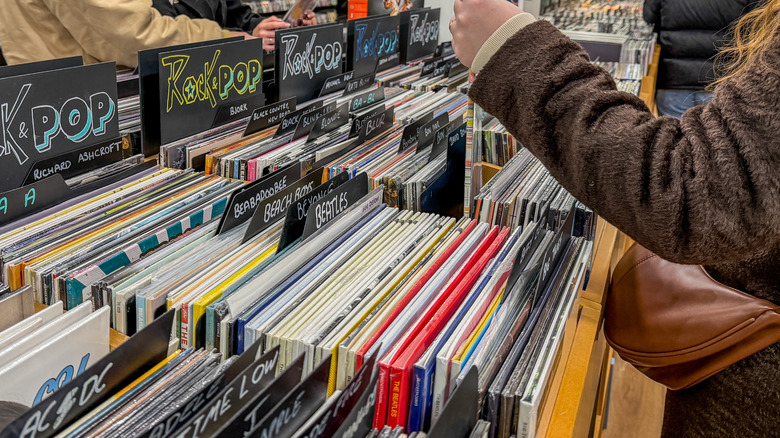
Vinyl records were so cheap — what happened? If you're a kid of the 90s, you probably had all those high school hits that every '90s teen knows by heart on CD, not an LP. Vinyl wasn't cool 30 years ago. It was so uncool, you could get two for the price of a single CD. But you can't say that anymore. When you buy an album on vinyl, you're paying anywhere from $25 to $40 for a mint condition copy (with the average price at $37.22 in 2025).
So why did things change? Well, first off, vinyl wasn't always cheap. Any Boomer who spent hours gazing into the artwork of their favorite classic rock LPs can tell you that. The average retail price for a vinyl EP/LP in 1978 was $7.32, equal to $30.18 back in 2022 when Billboard ran the numbers. This was when vinyl was in high demand, and supply was low, with the 1970s oil crisis driving up the cost.
Emerging technologies shifted customer trends and brought down the price. People started buying cassettes, and then CDs. Vinyl suffered, with the lowest price (adjusted for inflation) for an EP/LP being $11.35 in 1992. The recent vinyl resurgence has brought the format back in favor, but it comes with a cost: there are fewer vinyl pressing plants, meaning a tight supply of records. So, labels could easily raise wholesale prices, putting a squeeze on a fan's wallet. But there's more to it.
Vinyl records are expensive because they are expensive to make
According to Burlington Record Pressing, which has put out albums by rock bands like Bad Brains, Saves The Day, and The Darts, it takes roughly $1941 USD to press 300 records to standard black vinyl (that is without shipping costs; plus, prices go up if you do fancy things like color, splatter, or starburst vinyl). This estimate covers the cost of the vinyl, test pressings, master lacquer, and plating — all the processes needed to make a vinyl record.
This comes out to $6.47 per record. So, if a band sold an LP with 100% profit ($6.47), a single LP would cost around $12.94. That's rather cheap, right? However, consider that if there are four people in a band, each person makes just $1.62 per album sold, with the non-guaranteed chance to make $487.50 net profit (per person) for that batch of 300 black records. That's not a lot. Independent bands need to charge a lot per LP to pay their bills — but not too much, or they end up with a box of unsold records.
Then there's the cost of making the music (studio time, producer fee, etc.), promotion (advertising, publicists), touring (food, gas, lodging), and that profit goes way, way down. Add on top of that, music venues sometimes take 10% to 40% of merch sales — it's clear why a band will charge up to $40-50 bucks for an LP.
Gas Prices and Shifting Trends
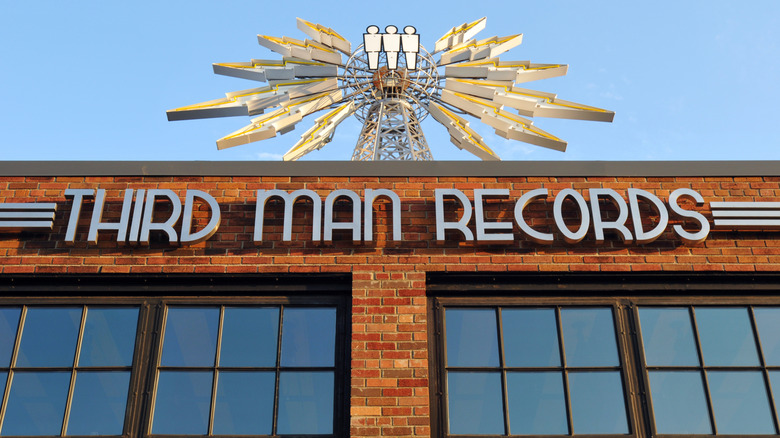
A vinyl resurgence kicked off in the late 2000s. Jack White is credited with being one of the high-profile vinyl evangelists, promoting acts with his Third Man Records label (which he focused on after the White Stripes stopped touring in 2008). But while Third Man appealed to the punks, hipsters, and rockers, Taylor Swift elevated vinyl's place in the mainstream world. Her 2025 album, "The Life of a Showgirl," sold 1.6 million copies, extending her streak of having the top-selling vinyl album in the U.S. to four years running. Vinyl sales hit $1 billion in U.S. revenue, selling nearly 47 million copies. So, when demand goes up, prices usually follow.
Vinyl is also not immune to real-world politics. Vinyl records are made of made of polyvinyl chloride, a synthetic polymer made from fossil fuels and chlorine. Yes, your vinyl record is a product of crude oil, and if the price of oil goes up, so does the price of your LP. However, there is hope: the younger generation is getting into CDs. Luminate released a 2026 Midyear Report that said CD sales' 16.3% growth dwarfed vinyl's 2.4%. So, like a CD and LP, it all might come full circle, and you can soon afford to buy records again.