

Not Just Led Zeppelin: 5 British Rock Bands That Took '70s America By Storm
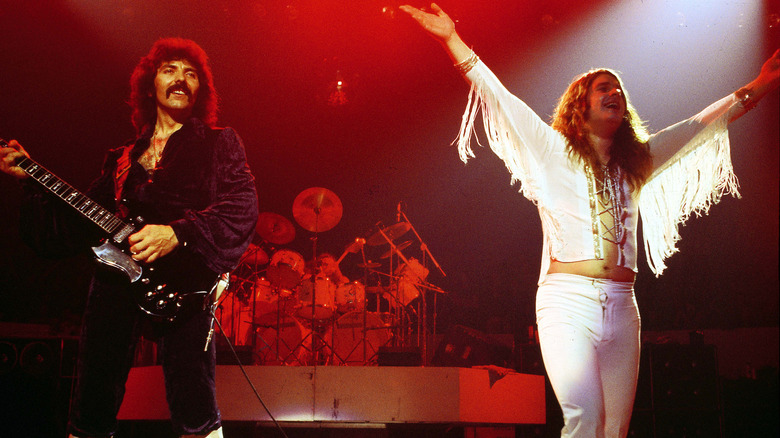
American rock 'n' roll music from the 1970s produced some of the most iconic hits and bands to ever hail from the genre, but a number of international groups had their own say in the history of rock in the U.S., taking the country and its listeners by storm throughout the decade. These acts, specifically from the U.K., featured a number of sounds that especially connected with American audiences, from hard and glam rock to softer more folky tunes. Among the most successful and iconic to bridge this gap was the legendary band Led Zeppelin, whose music helped define this era of classic rock, but in this list we'll feature five other bands from Great Britain that dominated.
These artists took over the States in unique ways, some turning fresh sounds into cult fanbases and some filling up stadiums with several of the most popular rock songs of all time. A few bands, like Queen, took their success far beyond the '70s into the decades to follow, but found their core U.S. audience and released their most known tunes in that era. Not every band can have the universal success of Led Zeppelin, but these five are surefire contenders for the most successful British bands in the United States, and they absolutely took America by storm during the 1970s.
Queen
The dominance of this band is something that just about every classic rock fan is familiar with, anchored by one unmissable and totally unique hit — that itself took years to make — amidst an excellent overall discography. Queen began their trajectory (in their most known form) in the early '70s with a lineup of singer Freddie Mercury, guitarist Brian May, drummer Roger Taylor, and bassist John Deacon. They began as stylistically fluid, blending metal and glam rock with the transcendent vocals of Mercury in a unique and distinctively '70s fusion.
In the States, Queen's commercial success began with "Killer Queen" in 1975, a Top 15 hit, and led into an impressive run in the late '70s and early '80s. The majority of Queen's most iconic tracks were released in this stretch, and some of these songs are among the most played classics ever. "Bohemian Rhapsody" was never No. 1, peaking at the second spot nearly 20 years after its 1976 debut, but "Crazy Little Thing Called Love" came out during the last weeks of the '70s and cracked the No. 1 spot not long after. "We Are The Champions" in '76 and "Another One Bites The Dust" in '80 are other essentials from the band's winning streak, where Queen was as relevant as any rock band in the United States.
Pink Floyd
Though quite stylistically different from their British glam rock peers, this band dominated the '70s in their home country and in the U.S. with their mesmerizing progressive rock sound. Pink Floyd began in the mid 1960s and evolved into a truly dynamic band with conceptual and unconventional ideas. Its prime lineup consisted of bassist and vocalist Roger Waters, lead guitarist David Gilmour, keyboardist Richard Wright, and drummer Nick Mason. Pink Floyd's sound is psychedelic and often ambient, built on complex and gorgeous guitars that create completely unique textures. With time since their 1965 founding to develop, their '70s music primed them for an impressive takeover of the United States.
On the '70s U.S. singles chart, Pink Floyd only had one major hit, which was "Money" in 1973 — peaking at No. 13 in late July during a 15 week stint. Instead, the band's success was predicated on albums, which better captured the overall appeal of their music. Released in 1973, "Dark Side Of The Moon" catapulted the band into stardom, spending one week at No. 1 on the Billboard 200 and spending an unbelievable 996 weeks on the chart in total. "The Wall" and "Wish You Were Here" achieved similar levels of stardom in the '70s, and they scored their only No. 1 hit just outside of the decade with "Another Brick In the Wall (Part II)" in March of 1980.
The Who
Though their career began in the '60s as a major success in the United Kingdom, and much less so in the United States, this staple British rock 'n' roll band achieved a lot in the 1970s and helped take over the decade's popular music. The Who, after forming in 1963, kept their standout original lineup through the 1970s: lead singer Roger Daltrey, guitarist Peter Townshend, bassist John Entwhistle, and drummer Keith Moon. Often behind loud, large energy, the Who brought American listeners an extended taste of what stateside bands already provided them, though with a unique London flair.
The band's biggest ever U.S. chart hit, "I Can See For Miles," peaked in 1967, but most of their other successes were a product of the 1970s, with the five Top 20 hits "See Me, Feel Me," "Who Are You," "Won't Get Fooled Again," "Squeeze Box," and "Join Together" peaking in '70, '78, '71, '76, and '72 respectively. This diversity of years showcases the decade-long staying power of the band, who never hit the supreme heights of some of the era's other acts, instead maintaining an incredible consistency that carried over to their albums as well: in total, six separate albums peaked in the Top 10 of the Billboard 200 during the '70s, including "Quadrophenia" and "Who Are You" reaching No. 2. You simply can't write '70s classic rock without the Who.
T. Rex
Originally formed under the full name of its prehistoric inspiration, this versatile duo took on a variety of sounds over its decade of existence and in turn produced some of the era's most replayable tunes. T. Rex, founded in 1967 as a more folky and psychedelic project, evolved into an anthemic glam rock sound at the turn of the decade behind the talents of vocalist and songwriter Marc Bolan and a rotating lineup of other members, notably bassist Steve Currie, percussionist Mickey Finn, and drummer Bill Fifield during the band's early '70s peak.
Their chart success was not as extensive as some of the other acts on this list, but T. Rex still made their mark in the U.S. singles Top 10 with their standout hit "Bang A Gong (Get It On)," which found the 10th spot during a 15-week chart run in the spring of 1972. Five of their '70s records also cracked the Billboard 200 albums chart during the '70s, headlined by "The Slider" in 1972, which reached No. 17. The band's sound remained compelling as their releases continued, becoming a cult favorite group for their American audience. Though their success went on throughout the '70s, T. Rex disbanded after Bolan died in 1977.
Black Sabbath
Known all across the world for their iconic name and role in developing a burgeoning sound soon called heavy metal, this British band found an esteem in America that was rivaled by few others. Black Sabbath debuted in 1970 after some late '60s experimenting, settling in a standout lineup of vocalist Ozzy Osbourne, guitarist Tony Iommi, bassist Geezer Butler, and drummer Bill Ward for their '70s music. The Birmingham rockers were incredibly influential in the sounds they combined, from gritty and energized songs like "War Pigs" to the serene and emotional ballad "Changes."
They only had two major U.S. singles successes, with the now classic songs "Iron Man" and "Paranoid" each flirting with the Top 50 during 1970 and 1972 respectively. As for album success, Black Sabbath fared much better in the U.S., with committed fans bringing nine '70s albums into the Billboard 200, four of which reached the top 13. Their success continued on throughout the '80s, '90s, and beyond, with the 1970s paving the way for the genre they'd influence throughout their career. Black Sabbath was as ingrained into American rock culture as any international band could be, and stands among the best acts to ever find major success in America.