

Born 79 Years Ago Today In England, He Helped Found Two Of Progressive Rock's Biggest Bands
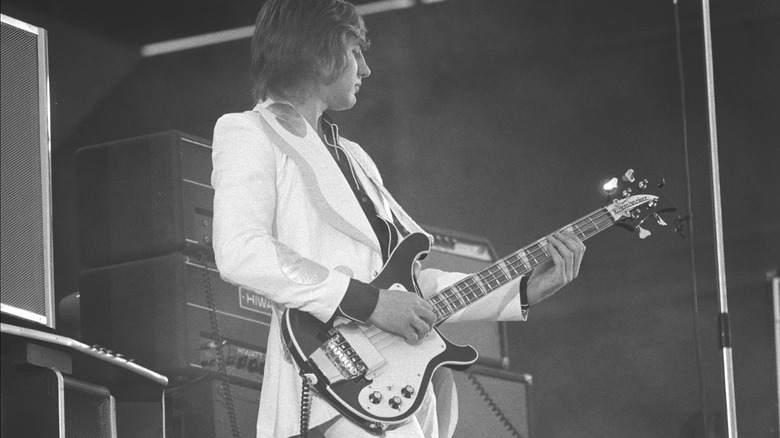
You can't talk about the history of progressive rock without mentioning bassist, singer, composer, and multi-instrumentalist Greg Lake. His ability to incorporate jazz and classical musical influences into his playing and writing were vital both in this sub-genre's genesis and spread. With a powerful baritone coloring often inward-facing and fantastical lyrics, he was the musical movement's poet and vessel. In helping to form two of prog rock's most important bands, Lake is behind some of the most groundbreaking sounds to emerge in the '60s and explode in the '70s.
Born November 10, 1947, in Bournemouth, a small town on the south coast of England, Lake started playing guitar when he was 12, taking an interest both rock 'n' roll and classical music. After playing and singing in a succession of bands in the late '60s, Lake picked up bass and lead vocal duties in a quintet led by his childhood friend, the guitarist Robert Fripp. That would become King Crimson, who in 1969 put out "In the Court of the Crimson King," a classic album that defines prog rock.
However, Lake — and much of the band's original line-up — didn't last long. By 1970, he'd team up with keyboardist Keith Emerson and drummer Carl Palmer to form Emerson, Lake, and Palmer: prog's first supergroup and a '70s rock commercial behemoth, with arena tours and gold albums. Guiding it all was Lake's keen ear, musicianship, and peerless voice. And let's not forget; he's undoubtedly one of the greatest bassists of all time.
Lake and King Crimson charted the course for progressive rock
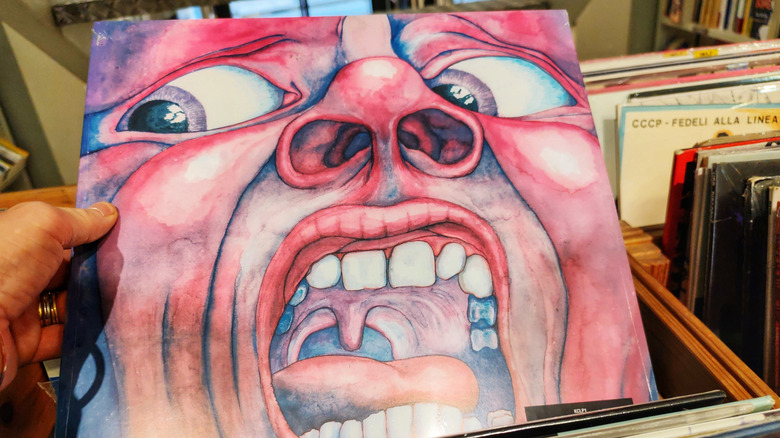
Progressive rock is a descendant of psychedelic rock: its origins can be heard on the extended jams of the Grateful Dead or Jefferson Airplane and the experimental techniques of the Beatles' "Sgt. Pepper's Lonely Hearts Club Band." With "In the Court of the Crimson King," King Crimson put these pieces together, freely pulling in influences from jazz and classical music. In so doing, they created a manifesto for the sub-genre.
Like most prog rock records, "In the Court of the Crimson King" is best experienced from start to finish. "It wasn't the three-minute single. It wasn't basic blues-riff music," Lake told Rolling Stone in 2013. "... It was intense. Things like '21st Century Schizoid Man' would literally scare people." Indeed, the album's opening track is haunting, ambitious, and forward thinking. In its over seven-minute runtime, it cycles between heavy jamming, jazzy break downs, and experimental flourishes. Written by band lyricist Peter Sinfield, lines like "Death seed, blind man's greed / Poets' starving children bleed / Nothing he's got he really needs" are devastating as issued by Lake's piercing yet melancholy voice. What a way to capture alienation.
Having put out one of rock's most influential debut albums, King Crimson toured the U.S. and the U.K. However, drummer Mike Giles and saxophonist, Mellotron player, and flautist Ian MacDonald quit afterward. Lake recorded for King Crimson's second album "In the Wake of Poseidon," then left in 1969 to link up with the Nice keyboard player, Keith Emerson, who was seeking to form a new band. In the new decade and thanks to this new partnership, prog rock took over.
Emerson, Lake, and Palmer become a supergroup and take the throne
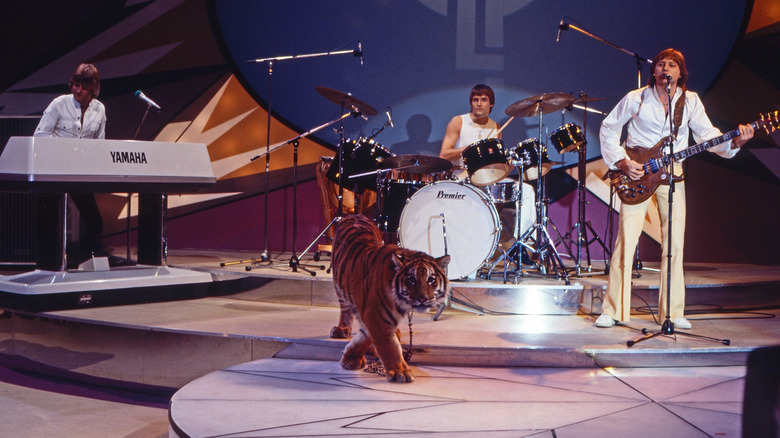
If King Crimson drafted the blueprint for progressive rock, Emerson, Lake, and Palmer built the castle. Hitting the ground running, they debuted as a live band, then played at the Isle of Wight Festival, and also put out their self-titled first album, all in 1970. Including one of their only charting singles "Lucky Man," ELP's debut reached No. 18 on the Billboard 200 album charts and hit the Top 5 in the U.K. "It was sort of one of those overnight star things," Lake recalled to Classic Bands. "The problem is, we got tagged with this supergroup label."
That put pressure on Lake and ELP, but they clearly responded well. Through the late '70s, the band were an absolute juggernaut: big concepts, bigger arena audiences, and massive album sales. The title track of their second album "Tarkus" — which climbed to No. 9 on the Billboard Hot 200 and No. 1 on the U.K. album charts — has seven parts and runs over 20 minutes. Lake's virtuosic bass drives along this symphony, with his moody vocals telling a tale of a mystical society collapsing into war. It's rock opera: high concept, a little nerdy, and dazzlingly symphonic. While such touches are why some call this music pretentious, you can't deny they make for an unforgettable ride.
Internal tensions eventually unwound ELP, and as tastes in music shifted in the late '70s, sales plummeted. In 1979, the band called it quits (though they'd reunite for a time in the '90s), but not before laying the groundwork for contemporaries like Genesis, Yes, and generations of bands that followed. When Lake passed away in 2016, we lost one of our great innovators and visionaries.