

Female Motown Artists You've Heard But Might Not Know By Name
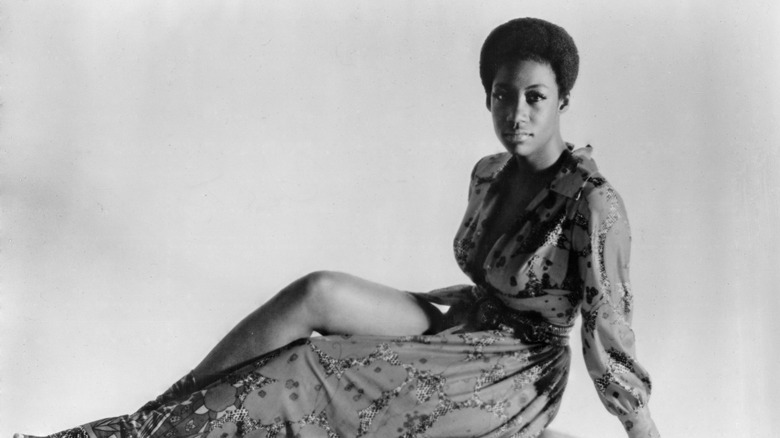
Few record labels in the history of popular music are so utterly defined by their signature sound as Motown Records. Having formed in Detroit, Michigan, in 1959, the label's roster of musicians and producers pioneered an energetic, infectious blend of R&B, jazz, gospel, and soul, which became hugely successful, dominating the charts for much of the 1960s and 1970s. Among the acts were a large number of female-fronted groups and solo artists, far more so than in other popular genres of the era, such as rock. With that in mind, here are five female Motown artists you've likely heard, but might not know by name.
Even if you're not a dedicated Motown fan, you can likely name some of the women who made the label such a force in the world of music. But for every Diana Ross and the Supremes or Gladys Knight and the Pips, there were a huge number of performers with exquisite vocals who were important to the Motown label without becoming household names. These five acts each contributed to the Motown legend, either as hitmakers in their own right or as session musicians for other artists on the label, and the music they made back then still has plenty to offer for modern listeners.
Brenda Holloway
Los Angeles-born singer Brenda Holloway was one of Motown's biggest icons in the mid-1960s. She was still a teenager when she was signed by Motown boss Berry Gordy, and made an instant splash when her debut single with the label, "Every Little Bit Hurts," peaked at No. 13 on the Billboard Hot 100 and announced her as a major new star.
By the following year, she was supporting the Beatles, who had newly arrived in the U.S. on a wave of Beatlemania, as the opening act for many of their American shows, charming audiences with her charisma and impeccably powerful vocals. The singles kept coming, although Holloway reportedly grew frustrated by the lack of commercial backing she received from Motown.
Holloway co-wrote "You've Made Me So Very Happy," which proved to be her final Top 40 hit, peaking at No. 39, a beautiful track that became a smash for the rock group Blood, Sweat, and Tears, peaking at No. 2. Eventually Holloway left the label, and though she stayed in the music industry, she failed to replicate the success of other ex-Motown stars. She instead moved more frequently into a backing singer role, working with big names such as Barry White, Cliff Richard, and Joe Cocker. Several compilations of her work have been released in recent decades.
Kim Weston
Music fans have been blessed with many soul legends, such as Aretha Franklin and Gladys Knight, who continued to entertain audiences well into old age, enjoying their status as bona fide legends. But others decided to leave the music industry even as they retained the respect of other musicians and the ongoing love of her listeners. Kim Weston, for example, left and pursued an acting career in the early 1970s and went on to become a singing teacher.
Having honed her musical abilities as a church singer from the age of 3, Weston signed to Motown Records in 1961 and enjoyed some chart success, but it was only in 1965 that she enjoyed a true smash hit in the form of the timeless "Take Me in Your Arms (And Rock Me a Little While)," which arguably rivals anything the label released during its 1960s heyday. Featuring Motown's typically lively percussion, pristine backing vocals, and a rousing arrangement that allows Weston to build and build her expansive vocals through the verses, the track quickly built a following, peaking at No. 4 on the R&B chart and No. 50 on the Billboard Hot 100. It remains a widely-played Motown classic even if Weston's profile has been dimmed by her decades away from the limelight.
Weston enjoyed her highest chart performance in 1967, in a famous duet with Marvin Gaye, "It Takes Two," which again was a No. 4 R&B hit, but which performed better on the Hot 100, rising to No. 14. Of course, Gaye's megastar status has meant that he has typically received top billing for the song, but one listen is enough to remind you of Weston's incredible vocal talent.
The Velvelettes
The Velvelettes were initially one of the most successful female vocal groups of Motown Records' early roster, touring widely with other rising stars such as the Supremes. The group's roots are found at Western Michigan University, where founder members Bertha Barbee-McNeal and Mildred Gill, having performed at campus parties, recruited Gill's sister Cal, Cal's friend Betty Kelly, and Bertha's cousin Norma Barbee to form a group to perform at a fraternity talent show. From there, it was just a few short steps to stardom, with the Velvelettes signing to Motown the following year in 1962. The group was so young that they had to split their time between recording at the Motown studios in Detroit and returning to college to ensure they could graduate.
The Velvelettes released several charting singles, the biggest and most enduring of which was 1964's "Needle in a Haystack," which peaked at No. 45 on the Billboard Hot 100. Their follow-up single, "He Was Really Saying Something," was also a chart success.
However, the group never even released a studio album during their time at the label. The Velvelettes split in 1969, by which time they were already a revolving line-up. Though they never received the acclaim they deserved, their music continues to embody the spirit of Motown.
Barbara Randolph
Barbara Randolph seemed almost destined to become a Motown star. Not only was she born in Detroit, Michigan, where the label had its headquarters, she was also from an entertainment family. Her adoptive mother was the actress Lillian Randolph, who had parts in movies including "It's a Wonderful Life," and the future soul vocalist came to the stage early as a child actor in the 1950s.
Randolph then performed with her mother in a group called the Red Caps, and forged a solo career before joining the soul group the Platters in 1964. By 1967, she had moved from RCA to Motown as a solo artist. Though they struggled to find success on the charts, the single "I Got a Feeling" is now considered a Motown classic. Resplendent with tasteful brass instrumentation and an expressive, longing vocal from Randolph, the single failed to land on the Billboard Hot 100, but has had a long afterlife, especially in the U.K., where it has long been a dancefloor-filler on the Northern Soul scene.
The Andantes
Backing vocalists tend not to get the same level of respect as their lead counterparts, but as any fan of the label knows, backing vocals were essential to the classic Motown sound. And when it comes to sheer productivity, no backing group contributed more to the legendary label than the Andantes.
The group, which for most of its existence was made up of first alto Jackie Hicks, second alto Marlene Barrow, and soprano Louvain Demps, was formed in 1959 and became the go-to session vocal group at Motown's studios. Though they were barely known to the public in their own right — they released just one single under their stage name and rarely performed live — it is a guaranteed certainty that if you have even skimmed the top of the Motown discography, you have heard their voices.
"Love Child" by Diana Ross and the Supremes, "My Girl" by the Temptations, and Marvin Gaye's classic "Heard it Through the Grapevine" each featured contributions from the Andantes. The long-serving trio was with Motown from 1961 until 1972, during which time they were estimated to have appeared on an incredible 20,000 recordings for the label.