

Flop Songs From Motown We Can't Help But Love
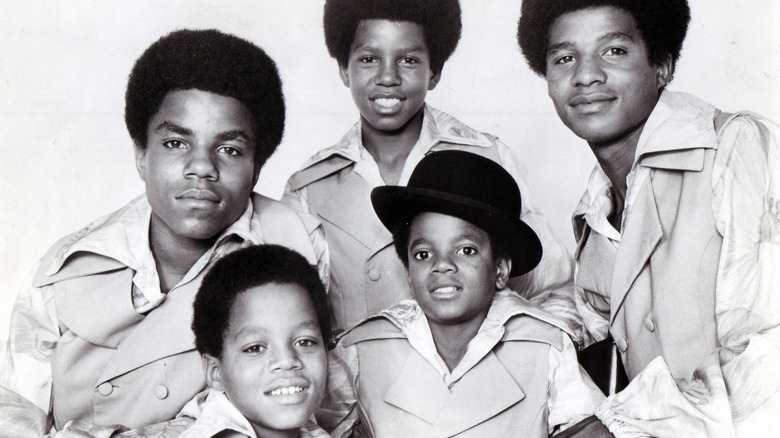
Motown has produced a mind-boggling string of successful songs. A lot of people probably associate the label with their 1960s heyday, but some top of its top hits came in the '80s, '90s, and even the 2000s. Still, a good number of Motown songs never charted and didn't do much commercially, and those songs deserve another chance. That's why we're taking a look at some that we truly adore even though they're considered flops by music industry standards.
We selected these songs because they're completely solid from top to bottom, and they could've easily been Top 10 hits if the only thing considered was how well they were put together. It isn't often discussed by fans and music pundits, but chart placement isn't a good enough metric to use on its own to determine the quality of a song, and often a high chart position has more to do with the label's marketing efforts and other strategic moves being made. That's why it seems like those who are really passionate about music are more interested in how a song makes them feel, not how successful it became. Some of the most popular songs aren't considered very good by many, while some that didn't chart are deeply cherished.
All I Do — Stevie Wonder
With 10 No. 1 singles and 28 Top 10 hits, it can often seem like Stevie Wonder songs are guaranteed to land on the charts, but of course, that isn't the case. He has a long list of songs that never charted at all. That certainly doesn't mean those songs aren't expertly produced, well-written, or catchy. Take his cut "All I Do," off his 1980 "Hotter Than July" album; it's far from a hit, despite having everything that we love about our favorite Wonder songs: A foot-tapping melody that will live in your head for hours, lyrics that express both vulnerability and confidence, and Wonder's soulful vocals. After all, he has one of the most beautiful voices in Motown's history.
The song never charted because Motown never released it as a "Hotter Than July" single, instead going with "Master Blaster (Jammin')," "I Ain't Gonna Stand For It," and "Lately" from that album. "All I Do" was later released as a B-side to "That Girl" in 1981, and that single climbed to No. 4 on the charts, outshining "All I Do" completely. But the song still remains in the hearts of many Motown fans and music lovers, which is easy to tell based on the crowd's reaction whenever Wonder plays it live. If anything, "All I Do" highlights Wonder's knack for making accessible, easy-to-digest songs that show a high level of artistry.
He Was Really Sayin' Somethin' — The Velvelettes
Motown's monumental success had a lot to do with releasing singles that have the perfect balance of R&B, soul, and pop, put together in a way that satisfies different musical palettes at once. The Velvelettes' 1964 single "He Was Really Sayin' Somethin'" is a prime example, and some may find it shocking that it only peaked at No. 64 on Billboard's Hot 100 since it's so well-crafted. From the opening piano lick to the handclaps that serve as a snare drum to the impressive sax solo around the song's midway point, "He Was Really Sayin' Somethin'" is easy to love, and it stands right alongside the label's chart-toppers as far as quality and execution.
Produced by legendary Motown hitmaker Norman Whitfield, the song tells the story of a woman being charmed by a guy who flirts with her as she walks down the street, and the woman explains why she gave him the time of day. "My heart started thumpin', blood pressure jumpin' / Girls, he was really sayin' somethin,'" the group sings in the chorus.
The pure danceability of the song is just one of the reasons why it's so memorable. It has plenty of feel-good energy as well, and after just a play or two, one is left with a joyful feeling that may last all day. The song did find success outside of the U.S. when it was recorded by British pop group Bananarama, but the fact that The Velvelettes' version didn't hit will forever be a head-scratcher.
Darling Dear — The Jackson 5
There are plenty of '70s B-side songs that outdo the lead single, maybe not on the charts, but in catchiness and as being complete ear candy, like the Jackson 5's "Darling Dear," a 1971 release that was on the flip side of the single "Mama's Pearl," which went No. 2 on Billboard's Hot 100 and took away some attention from the B-side.
"Darling Dear" — initially recorded by the Miracles — was first included on the Jackson 5's LP, "Third Album," but it was never released as a single and didn't land on the charts. But between the soft electric guitar, the lush strings that float in like a gentle mist, and the sing-along la-la-las, the mid-tempo tune is both relaxing and lively at the same time, allowing one to either use it for decompression or to dance.
The vocal performance from a young Michael Jackson also makes the song phenomenal, as he delivers the lyrics about how to find love in a convincing way, like a person 20 years his senior. "Darling Dear" could be called one of the group's best deep cuts, along with songs like "La La (Means I Love You)," "It's Great to Be Here," and "I'm So Happy."
Love's Gone Bad — Chris Clark
From the masterminds of the production team Holland & Dozier came 1966's "Love Gone Bad," sung by Chris Clark, an intense, powerful, and energetic tune where Clark wails about her guy suddenly vanishing, and how her days have darkened as a result. For a song with such sad subject matter, Clark makes it sound triumphant, like a woman coming to grips with her feelings, then venting so she can move on, which is partially why it works so well. The song is also ideal to play during a breakup, because instead of bringing the listener down, its high-energy feel could help to lift spirits.
The Motown release only hit the No. 41 spot on Billboard's Hot 100, but despite its lack of commercial success, the true achievement lies in what was accomplished in the studio between Clark and the producers, since they created something that's timeless, incredibly hard-hitting, and relatable. That's because the subject of heartbreak never goes out of style, especially when it's layered over big, swagger-filled production.