

5 Soft Rock Singers Whose Voices Were More Famous Than Their Names
So many singers in the soft rock world were recognized more for their voices than for their names, a phenomenon that may have put a kink in many burgeoning musical careers. It's one thing if your voice can open doors and help you establish a brand; it's something entirely different if the name that goes with it gets skipped over in favor of the better-known singers in the industry. Naturally, some of the forgettable names were soft rock one-hit wonders; that sort of phenomenon is bound to happen when your skyrocket fizzles once single number two is released. But others were staples on the circuit who gained a following without the name recognition other soft rockers achieved.
You've likely sung along with some of these soft rock stalwarts without knowing exactly who you were singing along with. The blue-eyed soul of Bobby Caldwell crooning "What You Won't Do For Love" and the near-New Age smoothness of Eric Woolfson from the Alan Parsons Project adding his pipes to "Eye in the Sky" are magical vocal performances you can easily recognize when you hear them, even if you've never put names to the voices. Sometimes soft rock is so soft it forgets to make its name unequivocally known. It's time to connect the dots for five of the greatest examples of voice-to-name disconnect and give credit where it's due.
Paul Carrack
His voice has adorned some of the best-loved songs in soft rock and pop for decades, as a band singer as well as a solo artist. But Paul Carrack has achieved more audio recognition than name recognition in his five decades as a singer for hire. Do you bop along to "How Long?" by '70s pop group Ace or weep when you hear "The Living Years" by '80s supergroup Mike + the Mechanics? That's because Carrack's voice is calling the shots. His earthy, lived-in tones have made songs like "Tempted" by British favorites Squeeze and his own hit "Don't Shed a Tear" feel like masterpieces. Carrack is a barometer against which other blue-eyed soul singers are measured.
His name is certainly known in industry circles. He jumped into the role of keyboardist for art rockers Roxy Music in the early '80s and helped Roger Waters recreate Pink Floyd's timeless epic "The Wall" in 1990. He co-wrote "Love Will Keep Us Alive," the Eagles' comeback single from 1994, as well as his first Mike + the Mechanics co-writing contribution, 1995's "Over My Shoulder." Guest appearances as a keyboardist or vocalist with Elton John, B.B. King, Simply Red, and Ringo Starr show Carrack to be a humble jack-of-all-trades and a world-class singer and musician. So what if his name doesn't always come to mind when his songs play? His treasured voice is calling card enough.
Bobby Caldwell
"What You Won't Do for Love" was one of the smoothest soft rock hits of the '70s, a mix of jazzy R&B arrangements delivered by the soulful voice of Bobby Caldwell. You'll be forgiven for not recognizing his name; Caldwell's dulcet tones became better known than his name, thanks to his one-hit-wonder status. But the unmistakable vocal skill Caldwell contributed to the soft rock atmosphere made an indelible impression on fans of similar artists like Boz Scaggs, Al Jarreau, and Bill Withers — more familiar, longer-lasting names that often precede voice recognition.
Caldwell's deft, soulful way with a melody has often been confused with other singers, and his mastery of the blue-eyed soul category meant he was sometimes mistaken for a Black artist. He w as even presented in silhouette on his debut album cover and promo materials to encourage this misconception. That purposeful ambiguity was used to usher "What You Won't Do for Love" onto R&B radio stations that Caldwell's record label feared might have been less receptive to a white artist. It was a slick, sneaky trick that led many listeners to assume Caldwell was Black until his death in 2023, when his photo appeared with the announcement.
Alicia Bridges
The gentle disco anthem "I Love the Night Life (Disco Round)" is a Grammy-nominated treasure and a No. 5 hit from 1978 that proved soft rock and disco could merge into a single song that fit perfectly in both categories. The name of the innovative artist who sang the song, Alicia Bridges, isn't likely to ring any bells right away, however. Bridges was well ahead of her time, merging Memphis blues arrangements (that bluesy organ! Those funky guitar licks!) with lyrics that cast off her cheating lover as she made her way to the dance floor. It was female empowerment in the vein of "I Will Survive," but with a smoother delivery and a one-of-a-kind voice that fit the situation perfectly.
Even Bridges' image was from the future; she did close-cropped blond hair before Pink claimed the style and unapologetically glam couture when it was still considered gaudy. But the bold North Carolinian didn't stop singing after her brief stardom simmered down into relative anonymity. The singer-songwriter reverted to her R&B roots for albums in the late '70s and even released a collection in 2008, featuring a fresh remix of "I Love the Nightlife." If you knew her voice before but not her name, now you can say you know both.
Eric Woolfson
As a member of soft art rock unit the Alan Parsons Project, Eric Woolfson became the best-known voice of the collective; he also co-wrote and sang lead on some of the band's best-loved soft rock compositions. Woolfson added a smooth, soothing layer that felt otherworldly at times and thoroughly grounded at others. His flexibility made his voice feel like an instrument, as integral to the arrangements as the synths and strings. But you'd only know his name if you were a big-enough Alan Parsons fan to dig into the liner notes to discover that Parsons himself wasn't doing the singing.
Not sure which of your Alan Parsons favorites might feature Woolfson's elegant vocals? That's Woolfson singing you into a trance on the classic "Time," inspiring you to dance in your chair in the peppy "Don't Answer Me," and warning you of his all-seeing cosmic surveillance on "Eye in the Sky" — the band's No. 3 hit and highest-charting single. The instrumental that leads into that soft-rocking classic, "Sirius," was also co-composed by Woolfson and became synonymous with professional sporting events by world-class teams like the Chicago Bulls and the Arizona Cardinals. Now when any of these supreme soft rock creations show up on your Spotify or Pandora playlists, you'll know exactly who you're dealing with, by name as well as by voice.
Benjamin Orr
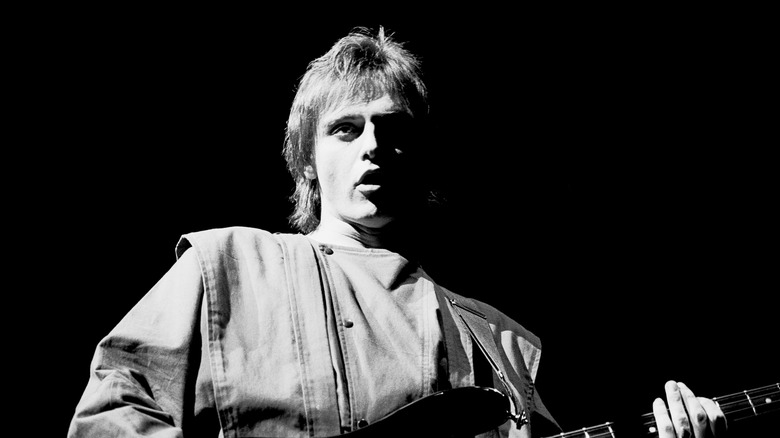
As a member of new wave hitmakers the Cars, Benjamin Orr mostly handled bass-playing and backing vocal responsibilities. But every so often, he'd take the mic and turn his husky, hushed voice into soft rock gold, even if his name got lost in the mix. It happened early on with the gentler songs in the Cars' catalog, tunes like "Let's Go" and "It's All I Can Do." Orr emulated lead vocalist Ric Ocasek so well in the earlier days, it was hard to tell who was singing.
The distinction became much clearer in 1984, when Orr tackled the vocals on what became the band's best-known tune, a soft rock crossover sensation called "Drive." The hushed, synth-driven ballad was stunningly mature and a refreshing departure from the band's usual upbeat party music. Orr's restraint and measured delivery as he sings "You can't go on thinking nothing's wrong / But now / Who's gonna drive you home tonight?" was a plaintive, desperate soft rock plea for the ages. It may not have been the happiest soft rock song ever, but it was one of the most affecting.
"Drive" became a No. 3 hit and took the Cars as high as they would go on the Billboard Hot 100. Thanks to Orr's emotive delivery and haunting tone, you know his voice through and through and have for decades, even if this is the first time you've seen his name.