

Life During WWII Germany's Final Days Was Truly Horrific
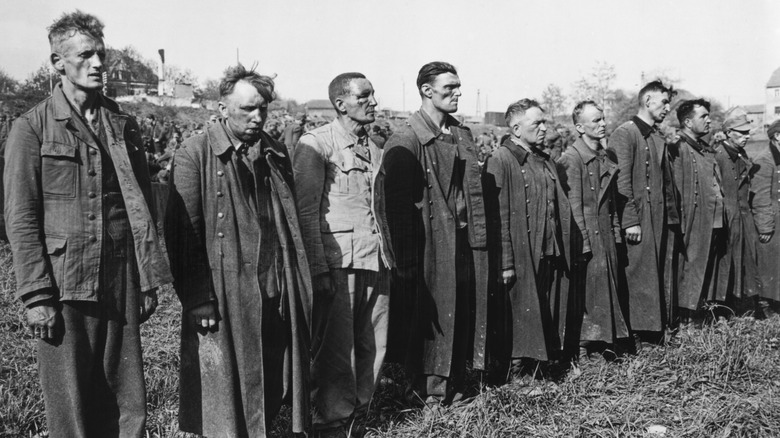
By the beginning of 1945, Nazi Germany was in its death throes. The Soviets were grinding through central Europe toward Berlin, the Western Allies had successfully invaded Normandy and were pressing in on those fronts, and neither Italy nor Japan nor any of the smaller Axis powers was in any position to help Germany out of its doom spiral.
Germany was suffering nearly everything it had previously imposed on its neighbors: invasion, slaughter, aerial bombardment, starvation, and crimes against civilians. Anyone familiar with the long catalog of Nazi atrocities may struggle to fully sympathize with the Germans in their desperate hour, but civilians and non-combatants are entitled to a degree of protection, even when they've supported a state that has not extended that right to others. However, those rights were inconsistently upheld by the victorious Allies, who — above nearly every other concern — prioritized the obliteration of the expansionist Nazi state's warmaking powers. At enormous human cost to all parties, they succeeded.
Skies were full of Allied bombs
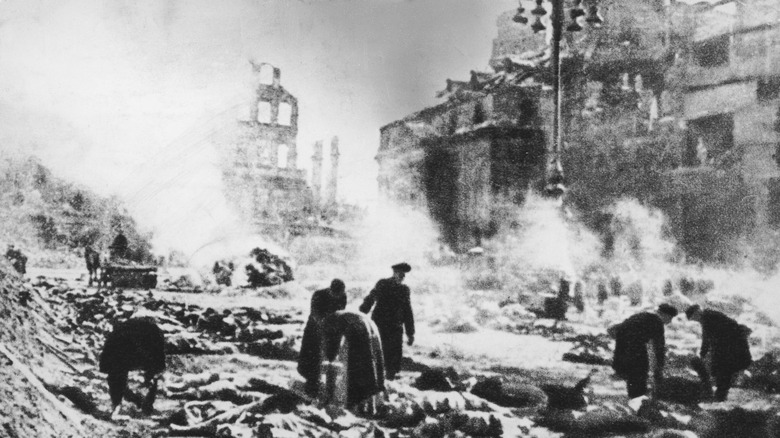
In 1940, German forces bombed England's Coventry for 11 hours, destroying so much of the beautiful old city that "Koventrieren" became a slang term for "to destroy as badly as Coventry." By the end of the war, though, it would be German cities that were remembered as the casualties of destruction from the air.
As early as 1940, industrial cities in the Rhine and Ruhr river valleys took the first blows from the Royal Air Force. As the capacity of German defenses was degraded, Allied bombers were able to get more ambitious with their strikes. In 1943, Hamburg was targeted for its shipyards, and a multi-day joint USAF and RAF bombing campaign called "Operation Gomorrah" (think smiting the wicked from the air) reduced much of the city to ash.
In February 1945, it was Dresden's turn. The lovely old capital of Saxony had been nearly untouched during the war until three nights of incendiary bombing sent the Baroque jewelbox up in smoke, along with as many as 250,000 people. Dresden had been chosen because the previously unharmed city's destruction would be that much more shocking, but if it was one of the worst losses, it was far from unique. By the end of the war, most German cities of any significance had been struck, including Cologne, Bremen, Düsseldorf, and Berlin, with up to a million civilians killed.
The Russians rampaged through formerly Nazi-occupied territory
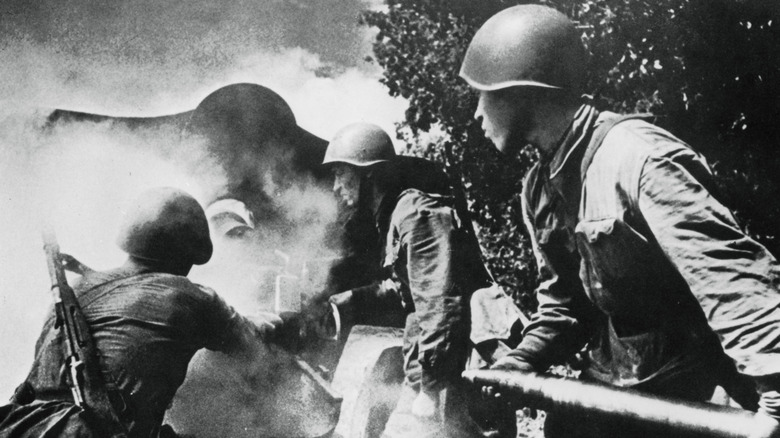
Though Soviet forces were initially on the back foot confronting Hitler's audacious three-pronged invasion, they were able to resist, recover, and bring the war back to Germany. Furious at the sneak attack and the colossal scale of the war crimes that Germany had committed against Soviet civilians and POWs alive, the Soviet invasion force was ready to make Germany bleed.
In 1943, Germany made its last attempt at an offensive on the Eastern Front; the Soviets won the critical Battle of Kursk and kept the initiative for the remainder of the war. As the Soviets liberated Nazi-occupied territory, the extent of the horrors the Nazis had inflicted became evident, and the Red Army took on a savage momentum as the capitals of Eastern and Central Europe fell before it. By the end of 1944, they were besieging Budapest. In May 1945, they would be in Berlin.
The Germans rightly feared the Red Army because of its deserved reputation for cruelty. The Soviets wanted revenge for the countless murders and rapes the German forces had committed on their charge across the western Soviet Union, and with the German war effort collapsing, there was no one to stop them. While a desire for revenge might be understood if not condoned, note that it was not only Germans on whom the Red Army's wrath fell. Looting, extrajudicial killings, and sexual violence occurred across the areas the Soviets "liberated."
Food shortages
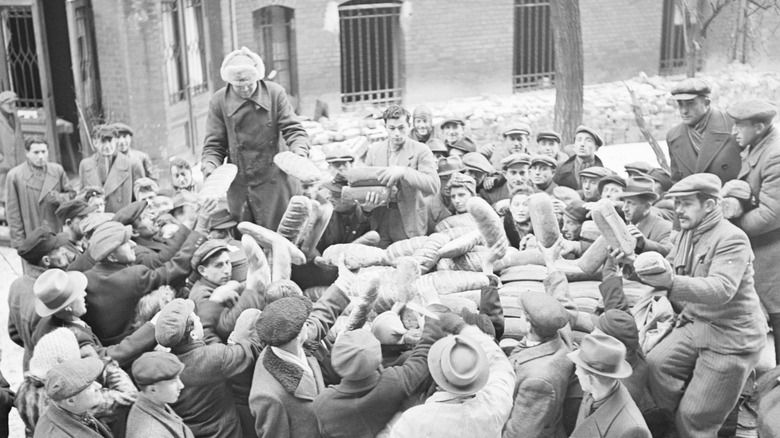
German society had been traumatized by food shortages after World War I, and the Nazi state had capitalized on this by making promises of food security part of its message, even as intermittent shortages continued. Before World War II began in earnest, the diversion of so much of the country's economy to preparations for the coming war meant that some shelves were bare across Germany in the late 1930s. Propaganda encouraged budget- and supply-stretching dishes like whole-grain bread and one-pot stews.
By 1941, some German homemakers had the unenviable task of increasingly relying on vegetables like cauliflower, and poor Germans had begun gathering wild food; access to rich Eastern European farms and their products was one reason for the invasion of the Soviet Union that year. Ration amounts tumbled as the war continued, and meat was scarce in cities from the winter of 1943-44. Rural people suffered less (and later) than urban Germans, with Berliners turning to beet leaves, nettles, and crafting "meatless meatballs" as supplies failed. Inflation made shortages even worse, with prices high even when products were available. By 1945, Germany was siphoning a significant portion of its calories from places like occupied Denmark, which had fallen early in the war and had not suffered the disruptions of invasion.
Those the German authorities considered lesser fared even worse. Rations for Jews had been set lower than those for Germans at the beginning of the war, and prisoners in concentration camps lived on pitiful starvation rations, excepting only those whose labor was important to the regime.
Nazi crimes were revealed
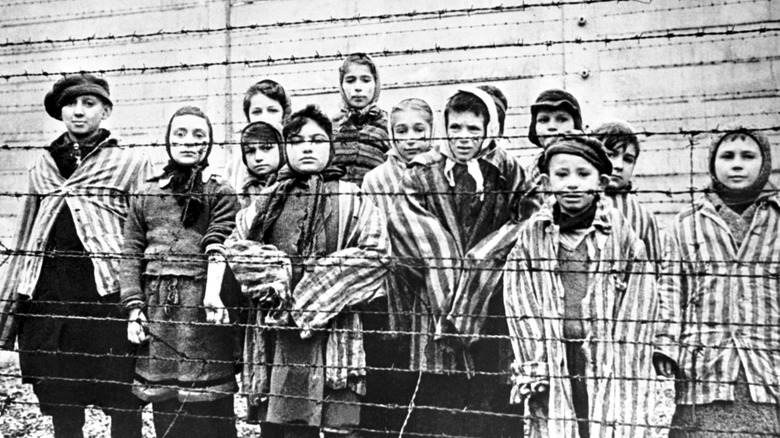
When Nazi Germany began to retreat, it was left with a serious problem: The advancing armies would find out what it had been doing. The ruined towns, the terrorized civilians, and, above all, the extermination camps would be discovered, and Germany's many, many crimes would be laid bare before a furious and horrified world public.
The retreating Germans tried to conceal the evidence of the camps, evacuating them in advance of the arrival of hostile forces, killing witnesses, and even disinterring mass graves to destroy the bones in an attempt to conceal the magnitude of the slaughter. The Holocaust was not wholly secret beforehand, of course, especially among governments of the Allied powers, but the Nazis had confused the story by referencing anti-German propaganda from WWI that had proven to be false, as well as staging a happy facade at the Theresienstadt camp for Red Cross visitors in 1944.
In January 1945, Soviet forces advancing across Poland captured the area around a town called Oświęcim. They found the ruins of Auschwitz: Retreating German forces had forced most of the prisoners on death marches away from the front and blown up part of the facility, but the 8,000 survivors and remaining structures were witnesses enough to what had occurred. The Soviet authorities began their formal investigation of what had occurred at Auschwitz the following day.
The Holocaust lasted until the very end of the war
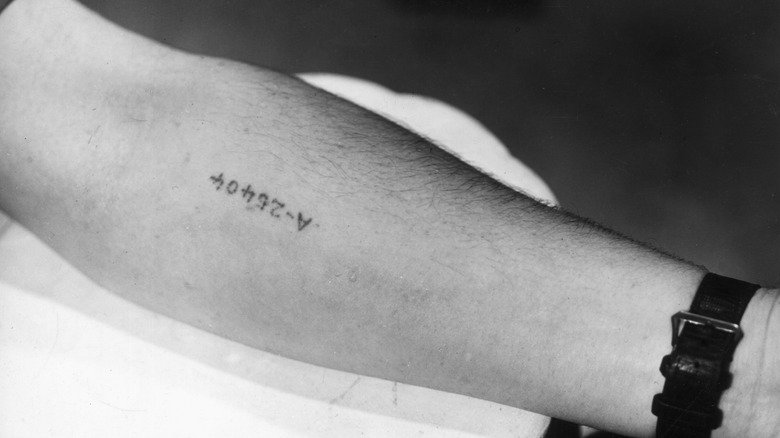
Germany had built much of its state and occupation apparatus around the liquidation of Jewish populations in Europe, along with other minorities like Roma, queer people, and the disabled, and this murder machine didn't stop until it was forced to. Even as Allied armies closed in, camp authorities and German troops continued killing people as long as they had time and power to do so.
In 1944, Nazi Germany occupied its ally Hungary in order to prevent the Hungarian government from striking a deal with the advancing Red Army. Despite the enormous peril Hungary, and behind it Germany, faced from the coming Soviet onslaught, the German occupiers still found time (and men) to bring the hammer down on the Hungarian Jews, whom their government had partly shielded. Over 400,000 Hungarian Jews were abducted to labor or extermination camps over a few weeks that spring.
Likewise, concentration camps remained active even as the fronts collapsed and German forces tried to cover their crimes before retreating. Inmates were sent out of Auschwitz on forced marches, where they were shot if they lagged behind or simply froze in the Polish winter. Others were left to starve and brave the elements in open railroad cars. Allied troops in the west found 28 railroad cars full of corpses at the Dachau camp site. The enormity of the slaughter led to the coining of the term "genocide," and its definition was ratified by the UN in 1948.
Germany threw children and older men into the fight
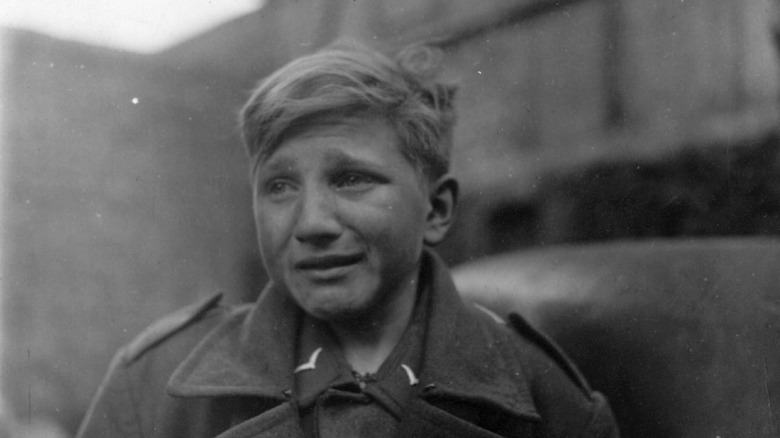
The militarization of German civilian life and the armylike structure of the Hitler Youth meant that when manpower began to dwindle in 1943, Germany had a supply of child soldiers to turn to in order to bolster its faltering forces. Hitler Youth members, who would have been under 18, were formed into units that fought against the Soviets on the Eastern Front and against the Normandy invasion in northern France.
In October 1944, the Volkssturm ("People's Storm") was created, a militia incorporating all males from 16 to 60 who were not otherwise fighting — this included men injured earlier in the war and sent home. These militias were to serve to defend their own areas from invasion, but a lack of training and weapons meant that casualties and desertion were astronomical.
Finally, as Berlin itself watched the Red Army draw near, children of both sexes were pulled out of school, armed with whatever was available, and pointed at the advancing Soviets. Shortly before his final retreat into his bunker, Hitler watched a parade of several pre-teen or early teenage boys, all set to defend the Fatherland with their young lives. These children received little training from the German forces and little mercy from the Soviets, with their deaths only serving as a final indictment of the perversity of the Nazi state: it would sacrifice Germany's entire future for a few more days in power.
The elite weren't immune
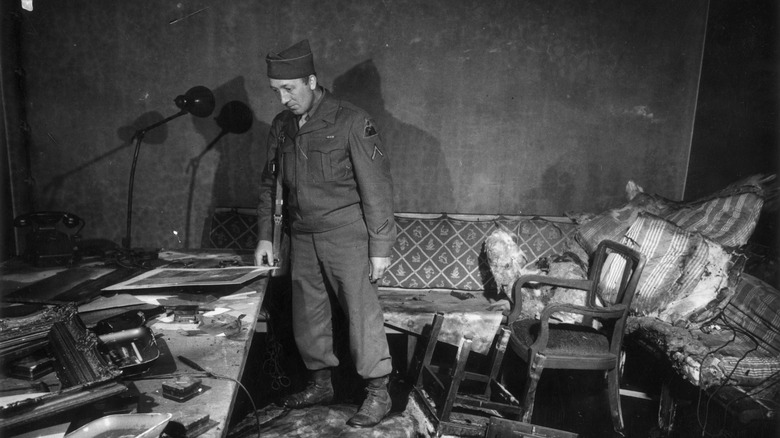
The very elite of Nazi society don't deserve any pity, but it's notable that even Hitler and his innermost cronies were unable to insulate themselves from the war in the final weeks. Hitler and crew moved to the infamous bunker in Berlin in January 1945, hiding from Allied bombing raids on the capital and the relentless Soviet advance. There they cowered for a few weeks as the hopeless war ground on and Allied armies tore through a near-prostrate Germany.
By late April, Soviet troops were in Berlin itself, fighting to take the Nazi capital. Hitler wrote out his will before marrying longtime mistress Eva Braun; the couple shared a wedding breakfast with some of their fellows in the bunker. Hitler's own secretary left the meal early, as the vibe was apparently grim. Later that morning, news reached the bunker that Mussolini, his mistress, and some of their hangers-on had been lynched in northern Italy, which apparently spurred people into action. Hitler had his dogs poisoned, giving a spare capsule to the secretary. (Braun gave her a fur coat, which she may have liked better.)
Hitler and Braun then died by suicide, and the remaining occupants of the bunker either followed suit or slipped out to take their chances with the Soviets. Magda Goebbels, wife of Hitler's chief propagandist, committed a final atrocity on her way out: she poisoned six of her seven children, at least one by force, before taking her own life.
POWs were sent on forced marches
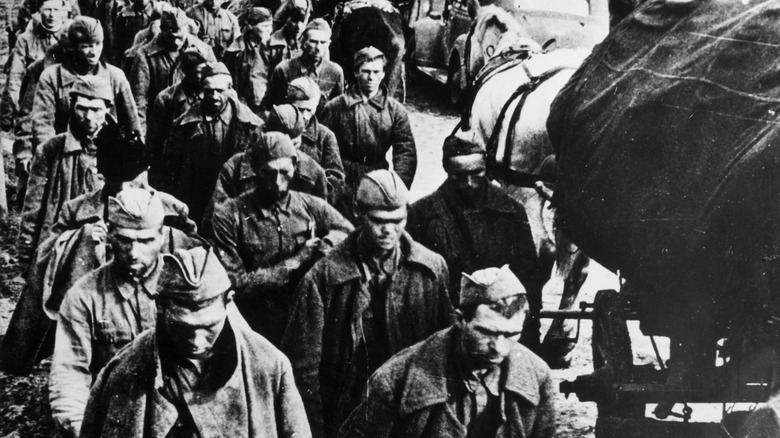
As the Soviets dismantled the Nazi infrastructure in the east, German forces were faced with the problem of the POWs held in camps along the Red Army's (enormous) path of advance. If liberated, these POWs could be repatriated and put back into the war effort as soon as they recovered from their captivity, and with Germany already buckling under a manpower shortage, the last thing it wanted was to let the Allies help themselves to reinforcements. To that end, they forced the prisoners to march west across Central Europe in the winter and spring of 1945.
The winter of 1944-1945 was very cold and unusually snowy, and the men forced on these marches were already weakened from their captivity: POW camps were distinct from labor or extermination camps, but conditions were by no means good. Diarrhea from contaminated water further weakened the men, medical care was scarce at best, and some columns of marching men were mistaken for German troops and attacked by Allied planes. The German captors, unsurprisingly, mistreated their charges, even shooting some of them for lagging behind. In all, some 80,000 of the quarter million men held in German POW camps were forced to march west in these conditions, with death tolls difficult to calculate given the circumstances.
Ethnic cleansing in Soviet-occupied territories begins
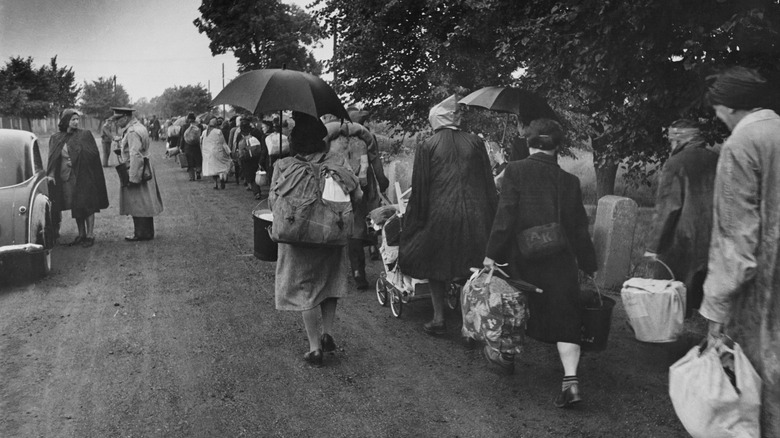
During the final stages of World War II, some of the newly liberated nations began expelling their ethnically German residents. This was most common in the east, with German communities cleared out of Czechoslovakia, Hungary, Poland, Yugoslavia, the Soviet Union (including its conquests in the Baltic States), and those parts of eastern Germany that were to be resettled and reassigned to Poland. Nonetheless, even the Netherlands got in on the act, purging 3600 Germans in "Operation Black Tulip."
This ethnic cleansing continued after the war until 1950, at least for most victims, but 2 million ethnic Germans were deported to work in the Soviet Union for uncertain terms as a form of national reparations. An estimated 2 million of the 12 to 14 million Germans expelled died, either directly from violence or from complications like hunger or illness; victims also confronted rape, looting, and denial of basic services. The expulsion of the Germans would be the largest act of ethnic violence in Europe between the Holocaust and the atrocities that occurred during the breakup of Yugoslavia.
Masses of Germans died by suicide
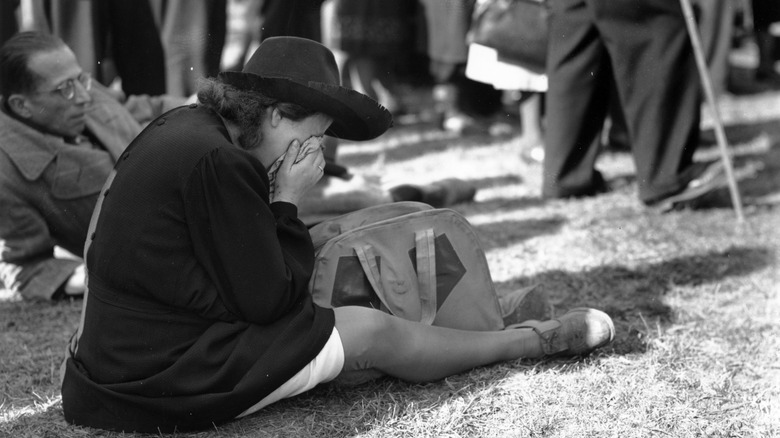
As the Nazi project collapsed around them, many Germans escaped the horrors of invasion and occupation by dying by suicide, some murdering those closest to them in a final act of intended mercy. Civilian deaths by suicide numerically outstripped those of government and military officials, with everyday people, under enormous duress from the strain of the long and harrowing war, ending their struggles rather than face the hardships they expected, particularly the abuses they feared at the hands of the marauding Soviet army. These deaths took place across gender, class, age, and seemingly all other societal lines: The victims shared only their despair.
A specific driver of these casualties in the final months and immediate aftermath of the war was sexual violence perpetrated by advancing troops. The Soviet Army was particularly notorious for this crime against civilians, but U.S. and French forces (particularly colonial units from Morocco) were also guilty of rapes of German civilian women, many of whom were assaulted more than once.
If you or someone you know is struggling or in crisis, help is available. Call or text 988 or chat 988lifeline.org
The Allies planned to subject Germany to a hard peace
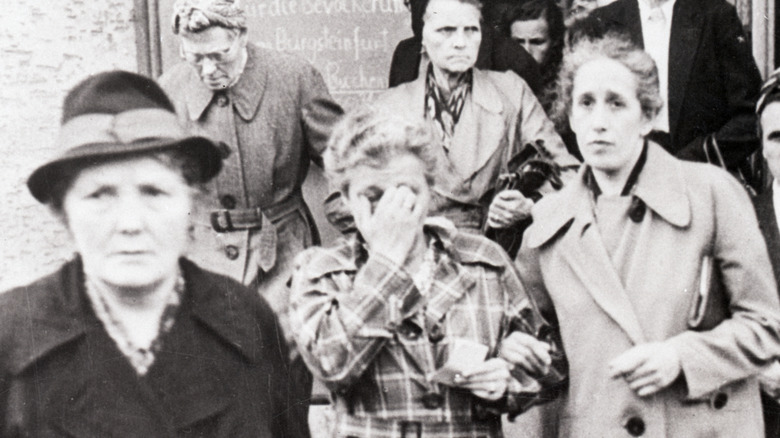
In spring 1943, the Allies had determined that the Axis powers would be forced into unconditional surrender, giving the victorious Allies the freedom of action to do whatever they liked with their prostrate enemies. The original plan was for Germany to have its industrial base stripped, troublemaking Prussia split up, various pieces of territory detached and given to its neighbors, and possibly even be partitioned — these last three all happened, of course, but mostly due to squabbles between the Western Allies and the Soviets.
But the Germans lucked out. Former president Herbert Hoover visited Germany in 1947 and, seeing the widespread hardship there, convinced the U.S. government to rebuild a stronger Germany capable of feeding its own. This plan corresponded with the realization that an industrialized Germany could better serve Europe-wide manufacturing needs and, if needed, resist Soviet encroachment into Western Europe.
The Germans were forced to take one particularly bitter pill: denazification. High-ranking Nazis were expelled from public office, with the highest subject to trial and, in some cases, execution. Details of the trials were widely publicized to expose the depths of Nazi depravity to the world and discredit the ideology. Everyday people were forced to confront the reality of Nazi crimes and the Holocaust through "psychological denazification." Germans were forced to view images and footage of the Holocaust, to visit mass graves, to bury victims, and to accept that the horrors had been committed with at least their tacit approval.