

Why We'll Never Get Over The Loss Of Nirvana
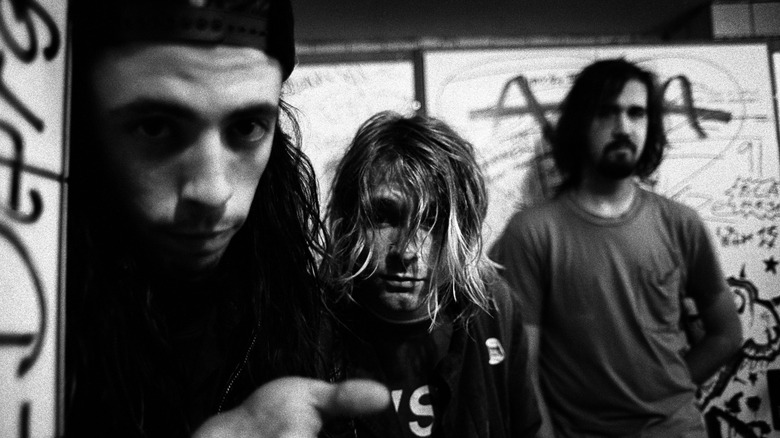
Can someone please explain why bickering drama consumes so many bands and groups? Is it punishing tour schedules combined with the pressures to succeed and squeeze musical verve out of emotional cavities that have long run dry? Is it pure egotism and how it connects to those driven toward the performing arts? Is it differing visions for the future interwoven with the inherent difficulties of managing a multi-person creative project? "Yes" to all of the above. Sometimes it seems inevitable when a band breaks up, sometimes it's eye-rolling, sometimes it's exasperating, and sometimes it's actually quite sad. And sometimes, it's nothing anyone in the band ever wanted.
Take the most famous breakup of all, the Beatles. They split up in 1970, a mere seven years after their first album, 1963's "Please Please Me," due to a whole host of interlocking personal and professional factors, of which Yoko Ono and drugs were only a couple. Brothers Liam and Noel Gallagher of Oasis carried all of their family baggage into their careers and royally obliterated their band after a violent confrontation in 2009. The White Stripes and divorced couple Jack and Meg White broke up in 2011 to "preserve what is beautiful and special about the band," The Guardian quotes. These examples constitute the barest sliver of what's underpinned band breakups across the decades.
But none of those examples are really "sad," no matter how unfortunate. To tackle something truly penetrative, we've got to revisit the well-tread topic of Nirvana's dissolution following Kurt Cobain's death by suicide in April 1994.
The immensity of Nirvana's impact
It's practically impossible to explain to a 20-something Nirvana t-shirt wearer — you know, the shirt with the smiley face and X eyes — precisely how generation-defining and all-pervasive Nirvana's music was, as well as the '90s Seattle scene, aka grunge. It wasn't loved by 100% of all humans, but even those who had no interest in grunge's coarse authenticity couldn't avoid its music, its fashion, its ethos, nor even its music videos.
When "Smells Like Teen Spirit" erupted out of absolutely nowhere on September 10, 1991, a new wave of popular rock consumed the U.S. and the world. The song reached No. 6 on the Billboard Hot 100, paved the way for fellow Seattle bands like Pearl Jam, Alice in Chains, Soundgarden, and all their successors, permanently changed the trajectory of music, and did so in a year when musicians like Whitney Houston, Mariah Carey, Celine Dion, and Bryan Adams dominated the airwaves.
When all was said and done, grunge lasted maybe three to four years, tops (1991 to the mid-'90s), much like disco at the end of the '70s. And yet, grunge's historical hiccup reverberates all the way to the present, when Nirvana and their tiny discography of three core albums, "Bleach" (1989), "Nevermind" (1991), and "In Utero" (1993), plus their unparalleled "MTV Unplugged" album (1994), has garnered over 36 million monthly listeners on Spotify. "Smells Like Teen Spirit" itself has over 2.6 billion listens at the time of writing and its music video over 2 billion views.
So how did adoring young people and fans feel when a band at the absolute height of its popularity, and arguably just the beginning of its career, was gone in a snap?
The fallout following Kurt Cobain's death
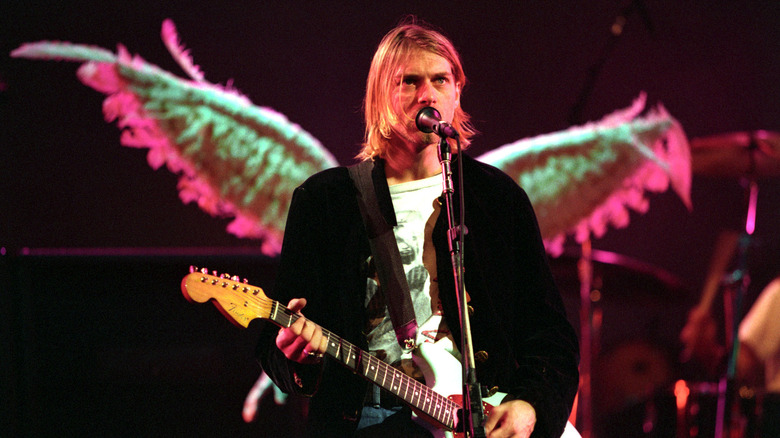
By now, we've got articles containing minute-by-minute breakdowns of the entire sequence of events leading up to Kurt Cobain's death, endless analyses of the final days of his life, and much, much more. Folks all but canonized Cobain during his life and elevated him to godhood upon death. Such was Nirvana's impact and the permanent impression that Cobain left behind over a few meager years of fame. It really is hard to convey precisely how shocking the news of his death was when it happened, same as other sudden deaths of prominent figures whom people believed would be around for years to come.
Nirvana disbanded immediately following Cobain's death, no questions asked. Drummer Dave Grohl went on to form Foo Fighters, which we all know has become an immensely successful rock mainstay, and bassist Krist Novoselic joined a whole host of smaller musical outfits. To this day, Grohl doesn't want to hear Nirvana's music because it's too sad, especially "You Know You're Right," the last song they recorded.
This is how we lost not only Cobain, but everything that he and Nirvana could have done. Sure, the band might have broken up years later, amicably or otherwise. Or, Cobain might have gotten clean and lived a healthy life as the band made music befitting their personal and creative growth. We'll never know. It's this lack of knowing, plus the loss of what might have been, on top of Cobain's death right at the band's peak of fame and impact, that makes Nirvana's involuntary breakup so, so tragic and wasteful.
If you or someone you know is struggling or in crisis, help is available. Call or text 988 or chat 988lifeline.org