

This Classic Love Song Held The No. 1 Spot The Longest In 1970
Plenty of songs top the charts and then vanish seemingly without a trace. Sometimes, though, a song becomes both an instant hit and a classic that continues to resonate decades after its release. In January 1970, the folk rock duo Simon and Garfunkel released the song "Bridge Over Troubled Water" that raced up Billboard's Hot 100 list and stayed, and stayed, and stayed. It held the top spot for six weeks and remained on the chart for 14. And this was just the beginning of its immense success.
Paul Simon wrote the song, and Art Garfunkel — at Simon's insistence — sang lead on this secular gospel tune about offering comfort to someone in a time of need, a bridge over troubled water. It won several Grammy Awards, including song of the year, and was quickly covered by numerous artists from Aretha Franklin to Elvis Presley, who sang it at his final concert before his death. And it would have been a very different song if not for Garfunkel pushing his musical partner to expand it. But, regrettably, the studio album that included the seminal song would be the duo's last together.
Art Garfunkel pushed Paul Simon to write a third verse
In early 1969, Paul Simon sat in his Manhattan apartment working on a new song. He had the beginnings of the music, but only a few lyrics. He'd added a part based on a Bach chorale before becoming stuck. Simon had been incessantly listening to a gospel group called the Swan Silvertones and realized he could add some gospel flourishes to his new tune. He also got the song's main lyric and title from the group's rendition of the 19th century song "Oh Mary Don't You Weep," in which the singer Rev. Claude Jeter shouts, "I'll be a bridge over deep water if you trust in my name." The line resonated with the singer-songwriter. "Well, I guess I stole it, actually," Simon admitted on an episode of "The Dick Cavett Show." Simon immediately knocked out the first two verses, an easier experience than he typically had writing songs.
The song may have ended up very differently if not for Garfunkel, who pushed his musical partner to write a third verse. Simon, thinking about how his then-wife Peggy Harper had been complaining about finding gray hairs, came up with the third verse there and then. The verse that started, "Sail on silver girl/Sail on by/Your time has come to shine," added drama both musically and lyrically into the song, giving it a more complex feel.
A hit song that was something of a swan song
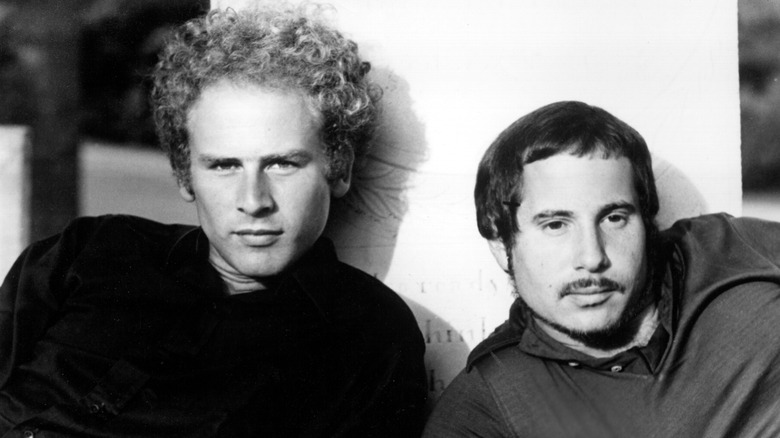
Paul Simon wanted Art Garfunkel to sing lead on "Bridge Over Troubled Water." Garfunkel pushed back, not all that keen on the tune, believing it was good but not Simon's best work. In the end, Garfunkel agreed. Simon would later regret his decision, especially after it became a massive hit, since Garfunkel was getting the lion's share of the glory for a song that Simon wrote. This was just one symptom of the acrimony growing between Simon and Garfunkel that would eventually turn into a nasty feud. Problems surfaced even before "Bridge Over Troubled Water," when Garfunkel starred in the film "Catch-22" and was gone for months shooting the movie, while Simon wrote the entirety of the album. Simon decided he didn't need Garfunkel since it was his music.
As the song climbed the charts, the relationship between the musical partners further eroded, just part of the tragic story of the duo. Besides becoming the longest-running No. 1 hit of 1970 and a multiple Grammy winner, its success helped push the album to the top. It was No. 1 in 10 countries, Grammy album of the year, sold more than 25 million copies worldwide, and helped earn Simon a total of seven Grammys. But it was the last studio album Simon and Garfunkel made together. Still, they've reunited over the years to perform, with "Bridge Over Troubled Water" remaining the duo's signature song and a continued crowd pleaser.