

All In The Family Theme Song, Those Were The Days, Was One Of 1972's Top Hits
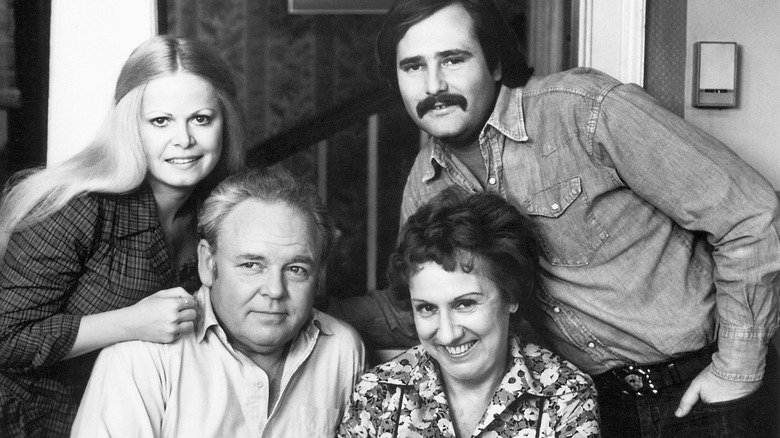
By early 1971, the Generation Gap had taken hold in the U.S., referring to the chasm between older, more conservative Americans who supported President Richard Nixon and the Vietnam War, and the younger, rising Baby Boomer generation with a more progressive attitude and its protest culture. CBS found a way to turn that ongoing political debate into a sitcom. "All in the Family" debuted in 1971 and was about as big a hit as TV would ever see. One of the most popular shows in America 50 years ago, it routinely topped the annual ratings and won Emmys for its entire cast. Carroll O'Connor dominated as the disillusioned and unabashedly bigoted Archie Bunker, who softens over time thanks to his kind, trouble-avoidant, and brunt-bearing wife Edith (Jean Stapleton), their adult daughter Gloria (Sally Struthers), and her husband, Mike. Rob Reiner portrayed Mike as the very encapsulation of the countercultural generation; Archie nicknamed him "Meathead."
Responsible for highly controversial TV moments, "All in the Family" was such a phenomenon that it impacted more than TV. For example: An anatomically accurate doll of "Archie Bunker's Grandson" was a brief toy craze, while the decidedly old-fashioned theme song from the sitcom also made its way pretty far up a couple of Billboard charts.
A nostalgic song about the good old days sold a lot of copies in 1972
Lee Adams and Charles Strouse, musical theater composers who'd previously written the Broadway shows "Applause" and "Bye Bye Birdie," collaborated on "Those Were the Days," the theme song for "All in the Family." It looked back wistfully on the early 20th century while also sounding like a song that would've been popular in the early 20th century. As heard on TV every week, it was performed by "All in the Family" stars Carroll O'Conner and Jean Stapleton in character as Archie and Edith Bunker, sitting at their home piano and warbling (and occasionally comedically screeching) lyrics about the old Brooklyn Dodgers, President Herbert Hoover, how things used to cost less, and how women used to wear their skirts long and their hair short. The final couplet, "I don't know just what went wrong / those were the days," explained the motivation behind the Archie Bunker character succinctly.
While the version used on television was under a minute long, an extended, two-and-a-half-minute take was recorded by O'Connor and Stapleton. Credited to "The Bunkers," and juiced with a nostalgic, Dixieland jazz-style arrangement, "Those Were the Days" was released as a single in late 1971. Early the next year, the record climbed the charts, and it just barely missed the Top 40, peaking at No. 43 on the Billboard Hot 100. On the older-adult-oriented Easy Listening chart, "Those Were the Days" did even better, reaching No. 30.