

These 5 Timeless '80s Songs Are Even Better A Cappella
In the 1980s, music strapped on a pair of leg warmers and sprinted toward the future with synthesizers blaring. The decade saw digital synths take over analog, the first fully electronic drum kit, the launch of MTV, and cassette tapes outselling vinyl. The decade embraced technology with a simple motto — if it's shiny or new, turn it up.
The innovation and creativity created countless classic hits we still love today. But sometimes, all those shiny new objects hid strong melodies, thoughtful lyrics, and remarkable voices. That's not to say we don't love drum machines, keyboards, and gated reverb. But we're curious about what might have been buried under those tools.
So, we're dusting off our shoulder pads and unplugging the synth to explore five '80s songs that sound even better a cappella. From the King of Pop to the woman simply known as "The Voice" to a song synonymous with one of the most well-known Brat Pack movies, these versions might just knock the mousse out of your hair. Because it turns out that the '80s weren't just about what you could plug in — they were about what you could belt out.
Simple Minds — Don't You (Forget About Me)
Simple Minds almost didn't make "Don't You (Forget About Me)." When asked to record it for "The Breakfast Club," the group thought the song sounded a little meh. But the band eventually gave it a go, punching up the intro with towering chords that guitarist Charlie Burchill later described to The Guardian as "almost a caricature." Lead singer Jim Kerr inserted "la la la la" as a placeholder, planning to swap in real lyrics the next day. They opted to stick with "la la la la." Kerr wasn't convinced it would work, but somehow, those nonsense syllables became one of pop's most memorable outros.
But let's be honest: Our love for this song is tied up in that freeze-frame of Judd Nelson's fist in the air. It's not just a song — it's "The Breakfast Club." Even the band knows it, and its members are grateful for what the song did for their careers, though Kerr admits it's not his favorite Simple Minds track. Musically, it's fine. The background easily fades, but you remember the chorus. And that's exactly why the song shines a cappella, from the Bellas performing it in "Pitch Perfect" to the real-life VoicePlay belting it out on NBC's "The Sing-Off."
With a cappella, leaning into the "la la la la" absolutely fits the song. And when you remove the functional-bordering-on-tedious background, the heart of the song stands out. What once felt like a definitive statement — don't you dare forget about me! — now feels like the real fear of being forgotten.
Whitney Houston — I Wanna Dance With Somebody (Who Loves Me)
Whitney Houston's team was deliberate with "I Wanna Dance with Somebody (Who Loves Me)." They weren't just trying to create a hit song — they also wanted to prove that Houston could dominate uptempo pop. Her debut album had relied heavily on ballads, but now it was time to dance. The producers came at "I Wanna Dance with Somebody" with new drum machines, innovative synths, and every shiny trick the '80s had. It worked. The song was busy, bright, and a Billboard sensation.
But take away the synths and pulsing beats, and you find something far more vulnerable. Suddenly, it's not a party invitation — it's a confession. Now imagine if one of the greatest voices ever belted out that confession. Thankfully, we don't have to imagine it: Houston herself created a raw and beautiful a cappella version. With only her voice, the lyrics hit much differently: "And when the night falls, loneliness calls" ... followed by silence. No distracting beats or bright production to rescue the mood. Just loneliness echoing in silence.
And then that voice returns. Without the musical momentum pushing things along, lines about wanting "to feel the heat with somebody" stop sounding like dance-floor flirtations. Instead, they sound like a person reaching out, hoping someone will reach back. It's not about dancing anymore — it's about a universal human need for connection. And when it's coming from a voice like Houston's? With no LinnDrum machine or optimistic sax interruptions? All you can do is listen.
Michael Jackson — Thriller
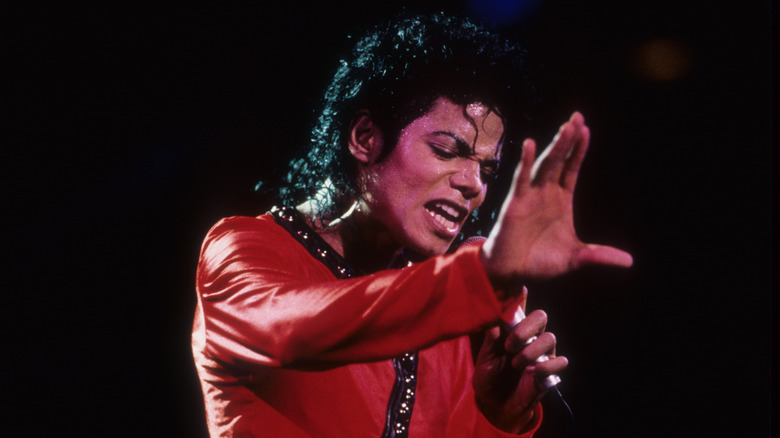
"Thriller" was many things at once: A blockbuster album, a chart-topping song, and one of the most influential music videos ever unleashed onto television screens. That video turned "Thriller" into a full-on spectacle, something to watch as much as listen to. With the cinematic storyline, the iconic red jacket, the zombie choreography, and enough makeup to haunt a generation, the music itself can almost fade into the background.
All that's not meant as a knock on the video. It's just an acknowledgment of how powerful the video was. But one of the many interesting stories behind Michael Jackson's "Thriller" video is that it was actually somewhat of an afterthought: The video only came together after album sales began to cool. Before the zombies rose, "Thriller" was simply a song. And a very good one, at that.
Of course, once you've seen the video, it's hard to unsee it. And even without the visuals, you're still hearing creepy footsteps, slamming doors, and the howling of werewolf-like creatures. But when you hear "Thriller" without all those sound effects, the result is a masterclass in vocal performance with Jackson's epic range and signature vibrato. All those spine-tingling effects in the original? Fun, sure. But Jackson's voice? That's where the real chills come from.
Phil Collins — Against All Odds
Phil Collins and drums have a lifelong bond. He started with a toy drum kit at age 5 and later answered a newspaper ad from a little band called Genesis that needed a drummer. So it makes sense that the breakout hit from his first solo album would become percussion folklore. "In the Air Tonight" didn't just have a drum fill — it had the fill of the '80s. A cappella versions are interesting, but without that explosive "ba-DUM, ba-DUM, ba-DUM, DUM-DUM," something feels off. Body percussion just doesn't cut it. It's not even safe to try.
"Against All Odds (Take a Look at Me Now)" is built differently. Still Collins. Still amazing. But this time, the drums are supportive rather than structural. The tension and payoff live in the melody and lyrics, making it primed for a cappella magic. You get to hear that when Phil Collins sings with the a cappella group Straight No Chaser. It makes you wonder how Collins was ever reluctant about singing lead. His voice is a perfect centerpiece, bending rhythm with his phrasing and dynamics.
The a cappella version works so well, it almost sabotages the original. Return to the studio track, and the processed piano isn't just distracting — it's annoying. It pierces like a migraine in musical form. But the a cappella arrangement is like stepping out of a migraine and into one of those dreamy pain relief commercials, floating through a field of daisies with the world in perfect harmony.
Leonard Cohen — Hallelujah
When Leonard Cohen released "Hallelujah" in the 1980s, it didn't exactly set the charts on fire. In fact, it barely flickered. But like all things truly timeless, it got better with age. The song picked up some steam when Bob Dylan added it to his live sets in the late '80s. Then came John Cale's cover in the early '90s, which inspired Jeff Buckley to record a version so emotionally charged, it probably made angels cry.
And then, "Shrek" happened. In 2001, "Hallelujah" landed on the movie's soundtrack, and suddenly, an emotionally wrecked ogre walking through a moonlit swamp had the entire world quietly sobbing into their popcorn. The song finally got the mass attention it deserved, thanks to a big green guy with layers. Now, imagine that scene done a cappella. That single tear on Shrek's cheek would've become a full-on ugly cry.
What makes "Hallelujah" so ripe for a cappella is its simplicity. The melody is open and spacious, and the lyrics even invite musical self-awareness with their reference to chords and structure. A cappella versions strip the song down to its emotional bones. Harmony and silence take over, making you feel the song as much as you hear it. If you need proof, the Grammy Award-winning a cappella group Pentatonix performs one of the best covers of Cohen's "Hallelujah" — even each member's breath is haunting when they sing it. Religious or not, the a cappella version of "Hallelujah" will have you believing in the higher power of music.