

5 Songs From 1980 That Define Rock History
In rock history, 1980 was a dynamic year as established artists cemented their legacies and new sounds emerged. On the heels of the punk and new wave explosion, a second generation of U.S. and U.K.-based metal, the rise and fall of disco, and the arena tours of the late '70s, rock music was in flux. In the last year before MTV went on air, AC/DC's "Back In Black" was the top-selling rock album, and artists ranging from Ozzy Osbourne to Neil Diamond and Pat Benatar had massive hits. However, as great as they remain, these releases don't truly define rock history.
In 1980, rock fans witnessed a creative explosion. Joy Division released "Love Will Tear Us Apart," marking new sonic territory for punk music. With "Ace of Spades," Motörhead set the blueprint for thrash metal bands that would dominate the latter parts of the '80s like Metallica. Meanwhile, Kate Bush's art pop exploded into the mainstream with "Babooshka," carving out a space for artistically uncompromising female voices in music. And with "The River," Bruce Springsteen hit new pop heights doing what he did so well: telling heartfelt stories of everyday people. In different ways, each song defined the coming decade and rock history in general.
We had to leave a great deal of excellent choices off this list. Mainly, we focused on songs that have a clear influence on the music that followed, laying the groundwork for the sounds we hear today. These are also songs that have staying power. Including a range of musical styles, these releases have come to shape rock history.
Once In a Lifetime — Talking Heads
By 1980, Talking Heads had already broken out of New York's CBGB's scene. Equal parts artistic and funky, the quartet started the '80s by recording their next album, "Remain In Light," and looking to mix things up. They decided to work in the Bahamas and changed their creative process. Rather than coming in with complete songs, band members created individual parts that were assembled in the studio. Lead singer and frontman David Byrne also developed a deep love for afrobeat artists like Fela Kuti, making the album groundbreaking for rock music.
With its off-kilter groove and preacher-like delivery, "Once In a Lifetime" ditches traditional song structure and is a highlight on one of Talking Heads' best records. Expressing alienation from a "beautiful house" and a "beautiful wife," the lyrics seem to recoil against the excesses of '80s living. However, as Byrne told NPR, it's more about how "We're largely unconscious ... we operate half-awake or on autopilot." The single — on the "Remain In Light" album but released individually in January of '81 — also came with a music video. Cementing their status in the new decade, Talking Heads were one of the first bands featured on MTV, which hit the airwaves on August 1, 1981.
Talking Heads' unique fusion of arty lyrics, funk, afro-beat, international music, sampling, and avant-garde techniques set the template for countless bands. Few bands are as influential. You can see their imprint in countless acts, including B-52s, R.E.M., Arcade Fire, LCD Soundsystem, and the Strokes.
Ace of Spades — Motörhead
On the heels of Black Sabbath and Led Zeppelin, a second generation (sometimes called "the New Wave of Heavy Metal") emerged in the mid to late '70s: we're talking about bands like Judas Priest, Iron Maiden, and Thin Lizzy. Formed in 1975, Motörhead's driving, aggressive, and distorted sound didn't just fit in; it pushed the sound forward. Shedding excesses like long, indulgent guitar solos — while cranking the volume — the trio led by bassist and lead singer Lemmy Kilminster was a band loved by metal and punk fans alike. And with the October 1980 release of "Ace of Spades," the lead single of their album of the same name, rock became even thrashier and grittier.
Spinning a tale about a gambler, the song hits you over the head right from the start. It's packed with punk energy and rock swagger with its propulsive beat, driving and distorted bass, flashy but gritty guitars, and Lemmy's gravely vocals. "Ace of Spades" became Motörhead's best-performing single, peaking at No. 15 in the U.K., and the band became a household name. They broke new ground for metal, inspiring everyone from '80s thrash metal icons Metallica and Slayer to more contemporary acts like Slipknot and High On Fire. All bands that like it loud and fast — from hard rockers Guns N' Roses to punk band Napalm Death — owe something to Motörhead and "Ace of Spades."
Babooshka — Kate Bush
Listening to Kate Bush's "Babooshka," it's hard to believe it came out in 1980. Telling the tale of a wife testing her husband's loyalty by pretending to be someone else, it has a unique but compelling Eastern European flair. Featuring artistic flourishes like samples of breaking glass (taken using a Fairlight sampler), it took pop rock music into a stranger, imaginative direction without sacrificing wide appeal. No doubt, Bush showed artists, especially female artists, that rock can be weird, uncompromising, and experimental.
Though the "Babooshka" single didn't top the U.K. charts like 1978 debut, "Wuthering Heights," it spent four weeks in the top 10, peaking at No. 5. This helped the album it appeared on, "Never Forever," enter the U.K. album charts at No. 1, a first not just for Bush but any solo female artist. That's especially impressive considering this was also the first time that Bush, then only 21 years old, took creative reins and acted as co-producer with Richard James Burgess. "She was clearly the boss in the studio," Burgess told Prog (via Loudersound), "not in an aggressive way, she's just a natural born leader."
With "Babooshka," Kate Bush blazed a trail for uncompromising female artists in the music industry, from Annie Lennox and Tori Amos to St. Vincent. And thanks to the use of her 1985 hit, "Running Up That Hill," in the fourth season of "Stranger Things," she's gained new generations of fans. Asked about her influences in 2020, pop superstar Chappell Roan mentioned Kate Bush first in a list that included Lady Gaga, Cyndi Lauper, and Queen (per I Dream of Vinyl).
Love Will Tear Us Apart
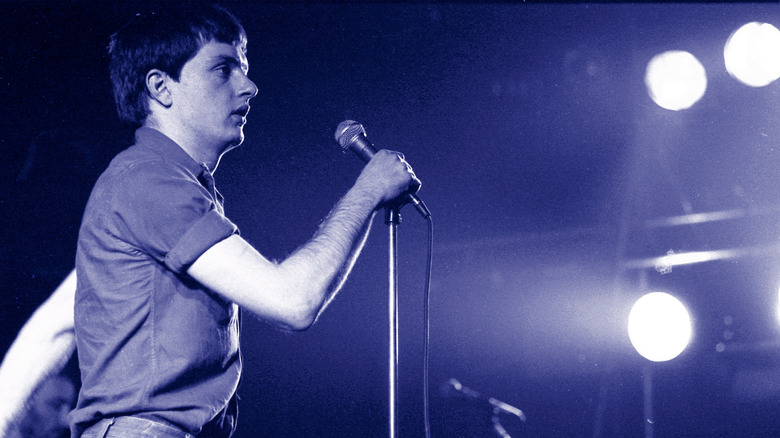
With its hooky arrangements, driving and mechanical beat, and devastating vocals, "Love Will Tear Us Apart" sounds like nothing else released in 1980. Inspired to form as a band at a legendary Sex Pistols show in Manchester, U.K. in 1976, Joy Division made punk music groovier, more atmospheric, and moodier. Capturing this post-punk sound, their songs — and "Love Will Tear Us Apart" in particular — continue to fill dance floors at indie and gothic rock nights to this day. Their influence spreads across genres and decades, inspiring artists as diverse as The Cure, Smashing Pumpkins, Nine Inch Nails, and Moby. Musicians playing industrial, gothic music, indie rock, and electronic music all take cues from Joy Division.
But what adds to the enduring power of "Love Will Tear Us Apart" is that it's forever associated with rock 'n' roll tragedy. One month before it was released, on May 18, 1980, Ian Curtis — the band's singer and lyricist — died by suicide two days before what would have been Joy Division's first American tour. Buoyed by a surge in interest following his death, the single charted in the U.K., reaching No. 13. Curtis's lyrics, like "There's a taste in my mouth / as desperation takes hold / Just that something so good / just can't function no more," seem to depict his own hopelessness and depression. Who knows what could have happened had he gotten help? However, the remaining members of Joy Division continued on to form the massively influential (and commercially successful) synth pop and new wave band, New Order.
If you or someone you know is struggling or in crisis, help is available. Call or text 988 or chat 988lifeline.org
The River
With his rootsy, classic rock 'n' roll sound and blue-jeans-and-T-shirt style, Bruce Springsteen didn't fit in with his new wave and punk peers in the '80s. On the heels of the success of 1978's "Darkness on the Edge of Town" album, he entered the new decade ready to take over. Even as the music industry became invested in new technologies and genres, Bruce and his E Street Band dug in and did what they best: tell heartfelt stories of everyday people while playing their hearts out. Ironically, that's what makes "The River," from his 1980 double-album of the same name, a game-changer.
On a bed of mournful harmonica and acoustic guitar, "The River" sets a stage. Based on conversations with his sister and her husband, it gives voice to the hopelessness and struggles of a young, blue-collar couple in a small, industrial town. In the liner notes of his "Greatest Hits" album, Springsteen noted it was "a breakthrough song for me ... one of the first of my story songs that eventually led to [1982 album] 'Nebraska'" (per Springsteen Lyrics). While "The River" was never released as a single in the U.S., the album became Springsteen's first to reach No. 1 in the U.S. Billboard charts, per Ultimate Classic Rock.
With songs like "The River," Springsteen carved out a space for heartland rock, while influencing other genres. Fellow New Jersey rocker Jon Bon Jovi, Melissa Etheridge, Eddie Vedder of Pearl Jam, and The National all consider him an influence. No doubt, he continues to cast a shadow over anyone with a guitar and a story to tell.