

5 Songs From 1970 That Define Rock History
After the peace, love, and green daze of the Swinging Sixties, the world changed in the next decade — for better or worse. Even though some of the biggest rock 'n' roll tragedies happened in the 1970s, the music continued to play, evolving and breathing new life into what rock would mean and become for the generations to come. And it all started in the year 1970 itself.
Those 12 months proved to be an important time for the genre, as several songs were born to become classics and set the bar for the decades to come. There are numerous tracks from the year that could be disputed as history makers; however, there are five big ones that come to mind as being particularly impactful in the long run. Their influence continues to run through the veins of rock to this day, while they still find regular rotation for specific reasons.
So, carry those vinyl records to the table and let's prepare for endless debate, because it's time to check out the songs from 1970 that define rock history. Keep in mind, though, that these tracks may have dropped on an album first before being released as official singles thereafter, or vice versa — just as long as the songs were available at some point in the year.
Black Sabbath - Paranoid
As the title single off the eponymous 1970 album, Black Sabbath's "Paranoid" doesn't stick to basic musical convention. The song has no chorus, hardly any structure to speak of, and remains chaotic from a lyrical standpoint. It's also exactly what Black Sabbath stood for, demonstrating how rules are meant to be broken when it comes to creating history. Even the Rock and Roll Hall of Fame agreed, naming it one of the 500 songs that shaped rock.
Here's the funny thing about the electric mind-bending powerhouse known as "Paranoid": it was an absolute afterthought. "We were short on material, and Tony [Iommi] just kind of came up with the riff on the spot," bassist Geezer Butler told Classic Rock. "But Ozzy and I thought it was too close to 'Communication Breakdown' by Led Zeppelin." The skeptical members relented in the end and boom: Rock history was made, even if it has a Black Sabbath guitar solo that Tony Iommi hated.
That's the magic of "Paranoid," really. It's a reminder that the unexpected and unrestrained ideas in an impromptu jam session have the potential to unlock something bigger than anyone could ever imagine in the moment. It's almost like a stream of consciousness takes place, tapping into the unfiltered part of the soul where creativity lies in wait. Black Sabbath embraced this element, and the reward was one of the most headbangable and definitive tracks in rock history.
Led Zeppelin - Immigrant Song
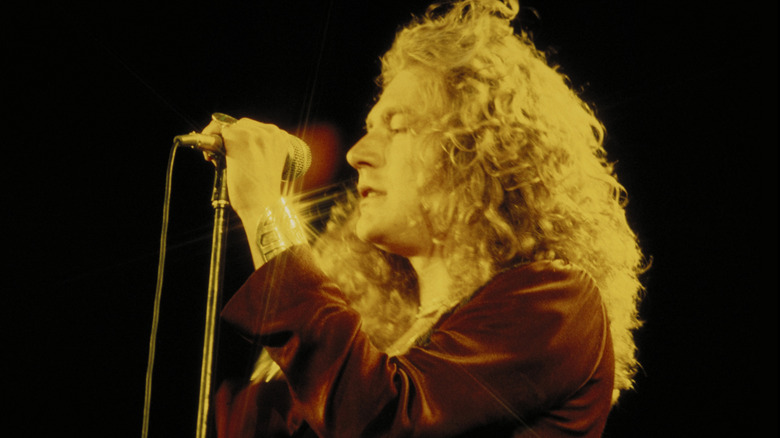
It's apt that Led Zeppelin's "Immigrant Song" eventually featured in a movie about a Nordic god in 2017's "Thor: Ragnarok," since the track is a tribute to Norse mythology. Even if you had no clue what the song is about, it's easily one of the most identifiable tracks in rock history because of its unmistakable intro. The galloping riff leads straight into vocalist Robert Plant's piercing wails, which hold as much weight and raw power as "the hammer of the gods," to quote the lyrics.
When the track — off 1970's "Led Zeppelin III" — debuted, no one could have anticipated the influence "Immigrant Song" would have had. It shaped an entire subgenre of music, inspiring a litany of rock and metal bands that became obsessed with including Norse mythology in their music. Look at Manowar as a classic example — not only does the band sing about gods of war and fighting the world, but the members have also greased and muscled themselves up to look like actual warriors while doing so. Gotta love the commitment here!
"Immigrant Song" stands the test of time. It's the type of song that not everyone might know the lyrics to, but it's guaranteed they'll know how to imitate Plant's unforgettable high-pitched shrieks. Along with "Whole Lotta Love" and "Stairway to Heaven," it remains a hallmark of Led Zeppelin's legacy, as well as the genre of rock as a whole.
Mungo Jerry - In the Summertime
The name Mungo Jerry might not carry as much recognition as some of the other artists mentioned here, but make no mistake about it, the British rock band delivered an all-time great track in 1970. The song in question is "In the Summertime," which was off the album "Electronically Tested" that arrived a year later.
There's a playful simplicity and casual shuffle to "In the Summertime," as it establishes itself as the ultimate summer anthem. One cannot help but envision blue skies, packed beaches, the smell of sunscreen, and the happiness around you, as the song conveys what it's like to experience the promise and freedom of a summer of no responsibilities or worries. "In the Summertime" puts a feel-good nature at the heart of it all, which is unsurprising when you learn that Mungo Jerry's Ray Dorset wrote it in just 10 minutes at a time when he "was writing songs for fun," as he told Express.
The track received a famous cover from Shaggy, who put his own reggae spin on it. However, most people still prefer Mungo Jerry's original banjo-fueled version that acts much like the first ray of warm sunshine on the face, announcing that summer has arrived and the good vibes are here to stay.
The Beatles - Let It Be
There's something melancholic about listening to the Beatles' "Let It Be," the title track of the 1970 album of the same name that went on to No. 1 on the Billboard Hot 100. It might not have the infectious groove of "Love Me Do" or "Yellow Submarine," but there's a poignant quality of finality and closure to it. Of course, as everyone knows, the Beatles called it quits in 1970, so this felt like the perfect goodbye from the iconic rock band to its fans; a way to say, "So long, and thanks for all the fish," to quote the title of Douglas Adams' book.
Yet, there's actually a tragic inspiration behind the Beatles' "Let It Be." Paul McCartney sensed the turmoil in the band and was worried about what was to come, then he had a dream in which his late mother, Mary, came to him and told him to "let it be." He heeded the message and accepted what was to come: a new chapter for him and his bandmates on their own paths as musicians.
Musically, "Let It Be" doesn't follow a complicated formula. It's mostly built around McCartney's singing and the piano keys, with the other instruments coming in throughout the song. However, it's the soul-touching lyrics and authenticity that carry the song, encouraging everyone to accept that what's meant to be is meant to be. Hakuna matata and all that.
Creedence Clearwater Revival - Have You Ever Seen the Rain
Few songs embody the phrase "nothing lasts forever" more than Creedence Clearwater Revival's "Have You Ever Seen the Rain," which is off the 1970 album "Pendulum." John Fogerty's voice provides the listener with a reality check, warning about the impending "calm before the storm" and the downpour "comin' down on a sunny day."
While the track sounds ominous and depressing, it's not. Instead, "Have You Ever Seen the Rain" acts as a reminder to take in every moment of sunshine, because it can all go away in an instant. It's about appreciating what you have and not taking it for granted, since life has a sneaky way of pulling the rug out from under you when everything is going right.
That's exactly what was on Fogerty's mind as he wrote the song. Using the metaphor of rain on a sunny day, he expressed how, despite CCR's success, the members weren't getting along and enjoying the ride. Ultimately, he predicted the end was on the horizon for them. Fogerty wasn't wrong, as CCR broke up in 1972. Regardless, "Have You Ever Seen the Rain" remains one of the band's most recognizable tracks and a beloved sing-along song among rockers of all ages.