

'60s Rock Songs That Should've Never Won Grammys
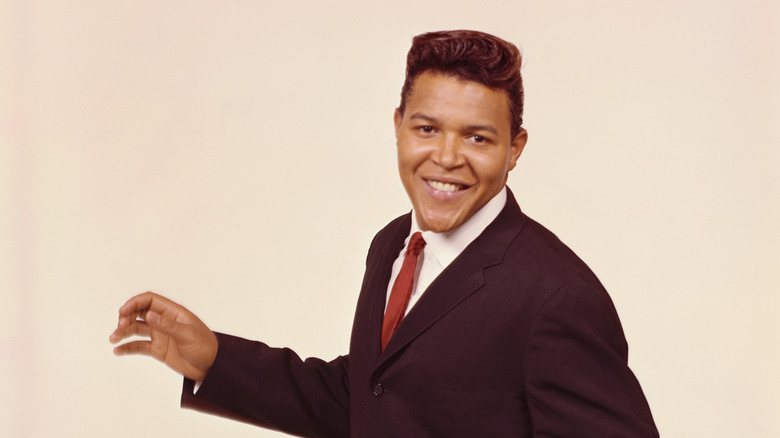
While rock n' roll was massive in the 1960s, it's a wonder that any examples of the genre were Grammy honored at all that decade. The Grammy (short for "gramophone," an ancient and obsolete record player) was built out of the Hollywood Walk of Fame, a way for music industry bigwigs to honor its performers and songwriters that played ball and generated a lot of money. In its first few years, voters for the award show noticeably excluded rock 'n' roll — early Grammy winners included people like TV composer Henry Mancini and Frank Sinatra.
The category of best rock & roll recording debuted at the 4th Grammy Awards in 1962, and its name changed over the years to cater to contemporary, youth-oriented songs — some of them rock, some of them not. By the end of the 1960s, only a scant few songs that could be considered rock 'n' roll or rock 'n' roll adjacent managed to snag a prize from stingy, stodgy Grammy voters. In fact, several of these prize winners from the era shouldn't have even received so much recognition: They didn't rock very hard, came across as goofy, or could be categorized as easy listening. The trend was indicative of Grammy voters meeting the rock contingent halfway in a lackluster compromise, and it meant more impactful and popular nominees in the same categories lost out. With that said, here are a few '60s rock songs that shouldn't be Grammy winners.
The New Vaudeville Band — Winchester Cathedral
There's a decent guitar hook and drumbeat in 1966's "Winchester Cathedral" — it's just buried under a bunch of ridiculous nonsense. The only hit from the sprawling U.K. collective The New Vaudeville Band was nominated for record of the year at the 9th Grammy Awards, and it won the accolade for best contemporary rock 'n' roll recording. It's not the best of anything, however, short of a Grammy category for "Best Song That Sounds Like It Was Created for 'The Benny Hill Show.'"
To start, The New Vaudeville Band's members dressed like they were going to a '90s theme party. They further embrace nuggets of pop cultural past by whimsically and annoyingly whistling through "Winchester Cathedral" before its lead singer stops making his trumpet bray in order to pick up a megaphone and offer up an impression of actual vaudeville star Al Jolson. It's not funny — it's cynical, and it's totally disposable. And yet at the Grammys, "Winchester Cathedral" won out over some of the greatest rock songs ever recorded. Among them: "Monday, Monday" by the Mamas and the Papas, "Eleanor Rigby" by the Beatles, "Last Train to Clarksville" by The Monkees, and "Good Vibrations" by The Beach Boys.
Joe South — Games People Play
A lot of landmark rock music was released in 1969, the year recognized at the 12th Grammy Awards — The Beatles' "Abbey Road," Led Zeppelin's first two albums, and The Who's "Tommy," for example. And yet the single-most honored rock composition of the ceremony was Joe South's "Games People Play," a sitar-powered and country-laced maudlin ballad that's almost overpowered by a very un-rocking and very old-fashioned string section. It seems that the Grammys were willing to embrace a piece of rock music that had appeal to older voters because it was so soft, inoffensive, and restrained, like something a '50s crooner like Jack Jones might perform. In fact, the ceremony opened with Jones singing "Games People Play," just before it went on to win best contemporary song and song of the year for South, who wrote and recorded the definitive version of the track. Saxophonist King Curtis' version also won the Grammy for best R&B instrumental performance.
"Games People Play" is a forgettable song that barely qualifies as rock, and it's been mostly forgotten in the five decades-plus since its epic Grammy triumph. A more fondly remembered and popular rock song of 1969 that also utilized inventive instrumentation: "Spinning Wheel," a searing jazz-rock blast made famous by Blood, Sweat & Tears. Yet South and "Games People Play" beat that tune for both of its Grammy wins.
Petula Clark — Downtown
Rock music was never the same after 1964. That's the year that the British Invasion truly took hold in the U.S. — when U.K. bands that wrote their own rave-ups stormed the charts. Acts like The Beatles and The Rolling Stones became some of the most influential and best-selling musicians ever, while other performers benefited from the trend simply because they were from the same place as those bands. Take Petula Clark, for example: A singer of pleasant but unexceptional pop suitable for everyone from 8 to 80. Clark reached American airwaves for the first time in 1964 with "Downtown," a wide-eyed and innocently naive song that romanticized a sojourn into the exciting, glitzy, glamorous "big city."
It's corny, it's hokey, and at the 7th Grammy Awards in early 1965, it took home the prize for best rock & roll recording. The problem? "Downtown" is the least rocking of all the nominated songs in its category. Not only did it defeat The Beatles' hysteria-causing "A Hard Day's Night," but it also stole the Grammy away from other certifiable rock classics like Roy Orbison's "Oh, Pretty Woman" and The Righteous Brothers' "You've Lost That Lovin' Feeling."
Chubby Checker — Let's Twist Again
By awarding Chubby Checker the Grammy Award for best rock & roll recording at the 4th Grammys in 1962, voters signed off on the performer's absolute desperation and near self-plagiarism. In the '60s, Checker had been at the center of a national phenomenon thanks to his song "The Twist," which, like so many others of the era, encouraged and vaguely instructed listeners on how to do a simple fad dance of the same name. That movement became so popular that people wanted to ban the twist, and Checker's song went to No. 1 two different times — once in late 1960 and again in early 1962.
After the first run, Checker, probably sensing that he was a one-trick pony whose time in the spotlight may quickly end, released "Let's Twist Again." The song that asks its audience to look back with nostalgia on the events of a few months earlier and, of course, do that dance again (you know, the one that put money in his bank account). To remind them further, Checker starts off "Let's Twist Again" with almost the same intro — drumbeat and lyrics ("come on everybody!") — as "The Twist." It's just sad, really. It's also sad that this cynical, cringe-worthy rehash and unofficial ripoff of another song won one of the earliest Grammy Awards for best rock & roll recording. That same year, it trumped more deserving candidates, like the still-popular "The Lion Sleeps Tonight" by The Tokens and the cool and exhilarating "It's Gonna Work Out Fine," with lead vocals by Tina Turner.