

The 5 Biggest Grammys Snubs Of The '80s
In the 1980s, the Grammy Awards were often terribly predictable but not without reason. For example, we certainly think that Michael Jackson deserved the eight Grammys he won in 1984 in the wake of "Thriller" dominating pop culture and record stores. But just as often, the Grammys would confuse us with its choices, like how ultra-light rocker Christopher Cross won all four major Grammy Awards in 1981 and then subsequently vanished from relevance after we all lost interest. Yet the worst upsets were when authentic, artistically viable nominees were overlooked in order to play favorites, thereby snubbing the nominees who deserved to win
We looked at the major categories and the top prizes for genres that were big in the '80s — hip-hop, mainstream rock, Top 40 pop, and heavy metal — to see where the Grammys erred. Our choices reflect the most egregious examples of when voters wrongly awarded the prestigious prize to better-known, better-selling, or more senior acts, and even those that didn't even belong in the category. We're also sticking to snubs that were shared by public opinion at the time of those awards ceremonies, as well as now. With all that said, we think the following are the most indefensible Grammy misfires of the 1980s.
Tracy Chapman's Fast Car had a slow night at the Grammys
When casting their ballots for the 31st Grammy Awards, covering the music of 1988, voters at least named Tracy Chapman its Best New Artist. She was a critical darling who made pop hits out of deeply emotional work, particularly the beautiful and heartbreaking "Fast Car." However, despite also being well-deserving of its nods for Record of the Year (conferred to performers) and Song of the Year (given to songwriters), "Fast Car" lost in both categories. The winner of both Grammys was the far less moving and not at all challenging "Don't Worry, Be Happy" by Bobby McFerrin.
McFerrin had a gimmick that dazzled Grammy voters and distracted them from Chapman's songwriting and incredible voice: He provided all of the sounds on "Don't Worry, Be Happy" with his mouth, including all vocal tracks and imitations of musical instruments. While "Don't Worry, Be Happy" was a passing novelty that briefly topped the Hot 100, he never made that chart again.
Chapman had lasting appeal, however, and so did "Fast Car." It's since been covered by artists as disparate as Black Pumas and Justin Bieber, and country artist Luke Combs' faithful version hit No. 2 on the pop chart in 2023. As if to make up for its egregious '80s snub, the Grammys brought on Combs, with surprise guest Tracy Chapman, to perform "Fast Car" at the 2024 awards ceremony. Few in the 2020s are paying much tribute to McFerrin.
The Grammys said no-no to the Go-Go's
The Go-Go's were among the most groundbreaking and historically impactful bands of the 1980s. Initially a punk band in the freewheeling Los Angeles scene of the late '70s, the Go-Go's — led by future pop star Belinda Carlisle — tweaked its sound ever so slightly, adopting a radio-friendly, straightforward rock n' roll sound to enhance its appeal. It worked, as the band would churn out some of the era's best and best-known rock hit singles, including "We Got the Beat" and "Our Lips are Sealed." The Go-Gos spent six weeks at No. 1 on the album chart with "Beauty and the Beat," the first time an LP consisting entirely of songs written by women and played by an all-female rock band would log such a milestone.
Many of those achievements happened around the time that ballots went out for the 24th Grammy Awards, which recognized the music of 1981. Throughout the 1980s, Grammy voters leaned toward the softer, safer, less important acts nominated for Best New Artist, and 1981's winner was Sheena Easton, leaving the Go-Go's in the small pool of runner-ups. While Easton wasn't a flash in the pan — she landed 14 Top 40 hits between 1981 and 1991 — she was a disappointing choice, given that the Go-Go's were also up for Best New Artist. In 2021, the band was inducted into the Rock and Roll Hall of Fame.
Somebody should've slowed down Lionel Richie
Lionel Richie is just okay. He's got a pleasant enough voice, and he co-wrote "We Are the World." As a solo artist, he's boring and unremarkable, and nowhere is that more evident than on his second album, "Can't Slow Down." Richie's history as a well-liked music industry veteran who collaborated across genres is probably what secured the LP's victory in the Album of the Year category at the 27th Grammy Awards, a tribute to the biggest music of 1984. The album itself is exceedingly dull and sleepy, made up of the stuff heard in countless waiting rooms and as customer service hold music, with songs like "Stuck on You" and "All Night Long (All Night)."
It's maddening and baffling that "Can't Slow Down" is forever the Grammys' chosen representative of 1984, one of the greatest years ever for mainstream music. Other Album of the Year nominees would've been more correct from a historical perspective, such as Bruce Springsteen's heartfelt stadium-rock blockbuster "Born in the USA," which generated an astounding seven Top 10 hits and secured the singer-songwriter's legacy as one of the all-time giants of American music. Even more inexplicably, also vying for and more deserving of Album of the Year was "Purple Rain," the soundtrack album to Prince's film of the same name, which showed the universally heralded and multi-talented genius at his creative peak with the epic title track, "Let's Go Crazy," and "When Doves Cry."
The Grammys didn't understand rap at first
A decade after the Sugarhill Gang brought hip-hop from the New York underground and into the mainstream, the Grammy Awards first gave out a prize for Best Rap Performance in 1989. And then, the National Academy of Recording Arts and Sciences managed to snub everyone it nominated. Perceived as a lack of respect or failure to embrace the art form, the Grammys handed out the award before and apart from the televised ceremony. When they got word of that plan, nominated (and ultimately winning) duo DJ Jazzy Jeff & The Fresh Prince boycotted the event, as did other recognized acts LL Cool J and Salt-N-Pepa.
At the following year's Grammy Awards, which honored the music of 1989, the presentation of Best Rap Performance made it onto the broadcast. But once again, voters ignored real artistry, albeit in a different way. "Bust a Move," a pop radio-ready rap song about dancing at weddings and flirting with girls by Young MC, won the Grammy. Two landmark recordings representing two exciting and influential emerging rap sub-genres thus had to lose it. Those songs were progressive hip-hop collective De La Soul's "Me Myself and I" and the politically motivated rap group Public Enemy's acerbic call to arms, "Fight the Power."
Metallica lost the first metal Grammy to a non-metal band
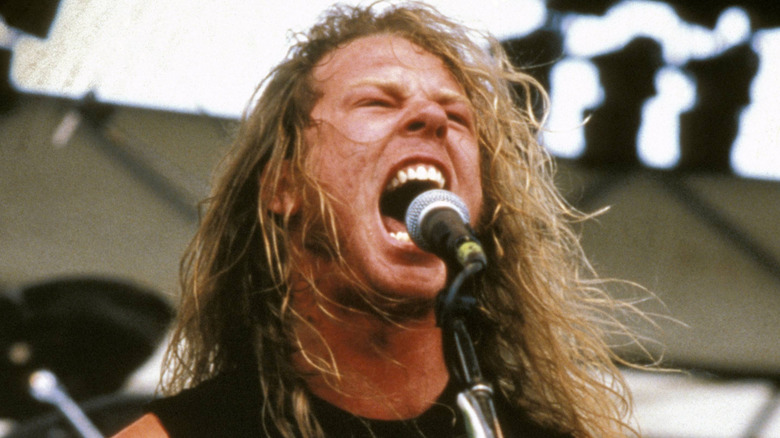
Heavy metal was massive in the 1980s, and by the decade's end, the Grammys could no longer ignore the loudest, most emotional, and abrasive kind of rock. The 1989 ceremony included a new category, Best Hard Rock/Metal Performance Vocal or Instrumental. The nominated acts were a solid but varied bunch that showed how varied hard rock and heavy metal had become, including Metallica, perhaps the hardest and definitely the best-selling metal act ever, and which seemed like a lock to win the inaugural prize for a genre it named itself after.
Metallica even performed at the event, ripping through "One" (from its nominated LP, "...And Justice for All") and then waiting just offstage to head back out when it was announced as a Grammy winner. But when presenters Alice Cooper and Lita Ford opened the envelope, the name inside didn't read Metallica, but rather Jethro Tull for its album "Crest of a Knave," more of a progressive rock work by an irrelevant early '70s relic than a vital heavy metal record. It was such a laughable surprise that Cooper and Ford actually laughed, while scattered boos rose up from the audience.
The Grammys went into damage control to save face, and at the very next ceremony, it split the tainted prize into Best Hard Rock Performance and Best Metal Performance. Metallica rightfully won the latter that year and the following two years, with a total of seven wins in that category so far.