

These Are The Biggest Scandals To Ever Hit The Olympics
A big part of why so many millions of people all over the world look forward to the Olympics are the athlete narratives. The stories of how those mostly previously unheralded sports figures made their way to the biggest global stage to test their talents are fascinating, inspiring, and sometimes, highly controversial. Every two years or so, if both the Summer Olympics and Winter Olympics are included, the greatest individual and team athletes represent their countries and try to win a medal and set some world records. Obviously imbued with tremendous drive and will, those athletes sometimes respond poorly to the incredible stress and very high stakes. They crack under the pressure, or they may connive to get an edge and wind up doing something against Olympic rules or even the law. In short, it's hard to be an Olympian.
It seems like the sporting world can't get through an Olympic Games without some kind of eyebrow-raising or shocking thing happening. Among the most memorable moments from Olympic history come the most notorious: Here are 12 of the most scandalous things to ever go down in relation to the Summer and Winter Olympics.
Ben Johnson runs back his achievements
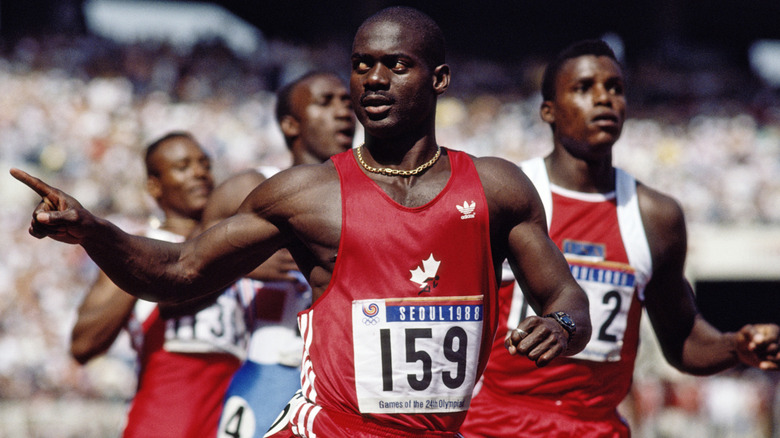
Heading into the 1988 Summer Olympics in Seoul, one of the most anticipated match-ups was between American sprinter Carl Lewis, looking to add to the four medals he won in 1984, and Canada's Ben Johnson, who had set a new 100-meter record at the 1987 World Championships with 9.83 seconds. Fans got their wish, as both runners wound up in the medal-awarding final. Less than 10 seconds later, it was all over — Johnson dominated and finished with a time of 9.79 seconds, another new record that landed him a gold medal.
Just after the race, Johnson submitted to an International Olympics Committee drug test to ensure that the victory and blistering time were legitimate. The results came in about three days later: His urine bore evidence that he'd consumed a banned anabolic steroid, Stanozol. The IOC rejected Johnson's explanation — that the herb supplement beverage he'd had just before running had been laced with steroids without his knowledge — and ordered him to return home to Canada and give up his gold medal. Johnson was banned from competing in track and field events for two years, and his Olympics and World Championship times were both struck from the official tallies. Previously second-place finisher Carl Lewis, on his way to becoming an Olympic athlete with the most gold medals ever, was declared the first-place finisher, and his time of 9.92 seconds was recognized as the new world record.
Nancy Kerrigan vs. Tonya Harding
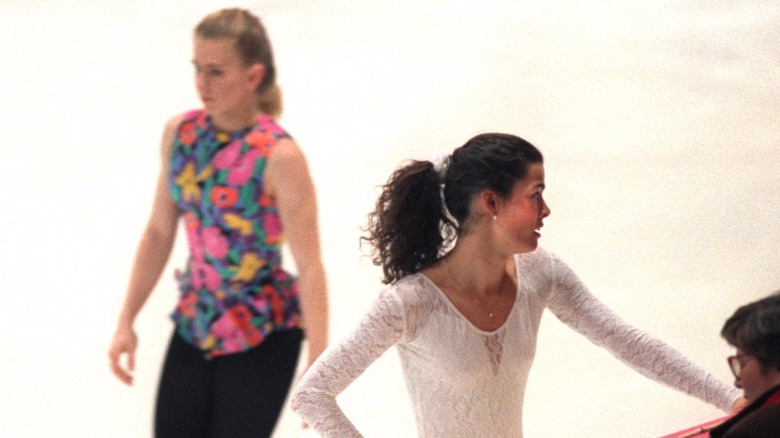
It was widely speculated that U.S. figure skater and 1992 bronze medalist Nancy Kerrigan would fare well at the 1994 Winter Olympics, as would 1991 U.S. national champion Tonya Harding. The media encouraged a rivalry between the two very different skaters — Kerrigan was a traditional, conservative skater, while the brash Harding told reporters at the January 1994 national championship that she was about to "kick some butt," per Oregon Live.
Two days after Harding's words, an assailant whacked Kerrigan in the knee with a baton at a practice facility in Detroit. She was so badly hurt she couldn't participate in the championships, which Harding won. That set up a showdown between the two skaters at the Olympics in February. Meanwhile, an FBI investigation into the assault broke wide open after a tip came in from a minister in Harding's hometown — he'd heard Harding's publicly recognized bodyguard Shawn Eckardt, her former husband Jeff Gillooly, and friend Shane Stant discussing how they'd club Kerrigan.
Eckardt confessed, and Stant and Gillooly gave themselves up to authorities. After weeks of denying involvement, Harding apologized at a press conference for knowing of the attack but failing to prevent it. While her cohort faced charges, Harding was allowed to skate in the Olympics, where she finished eighth to Kerrigan's silver medal. When courts got involved, Harding entered a guilty plea to a charge of conspiracy to hinder prosecutors and had to pay $160,000 in fines and serve three years of probation.
Jim Thorpe gets stripped of his medals
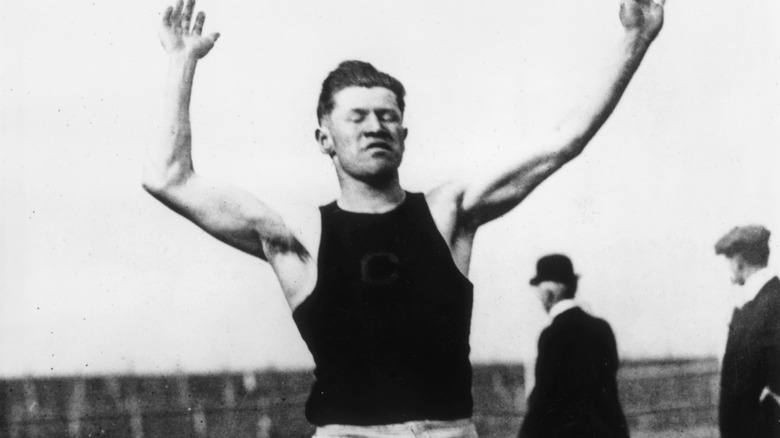
Whoever wins the Olympic decathlon also receives the unofficial but widely repeated title of "The World's Greatest Athlete." The decathlon consists of 10 various and challenging track and field events that prove a competitor's versatile athletic dominance. In 1912, American athlete Jim Thorpe won both the decathlon and the five-event pentathlon, which involves swimming, fencing, horse jumping, running, and shooting. He more than earned the "World's Greatest Athlete" designation when King Gustaf V, monarch of 1912 Olympics host country Sweden, declared it as he gave Thorpe his two gold medals.
After the Olympics, the wildly famous Thorpe, a member of the Sac and Fox indigenous nation, returned to school and put up some of the best running back stats of all time for the Carlisle Indian Industrial School's football team, which posted a 12-1-1 record. At that point, reporter Roy Johnson dug up some dirt on Thorpe and discovered that he'd played baseball in the summers of 1909 and 1910 in the semiprofessional Eastern Carolina Association. He was paid $5 a game, which would negate his amateur athlete status, a strict rule for Olympians at the time. The New England Association of the Amateur Athletic Union filed a grievance against Thorpe in January 1913, and Thorpe released a signed confession — co-written for him by his football coach — and a plea for mercy. The International Olympic Committee decided to take back his gold medals and vacate his victories.
Tommie Smith and John Carlos staged a political protest
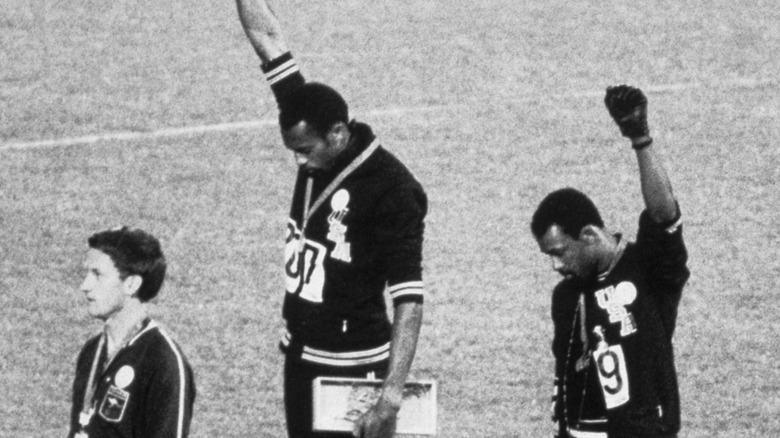
At the 1968 Summer Olympics in Mexico City, American runner Tommie Smith won the gold medal in the 200-meter race final with a world-record-setting time of 19.83 seconds. He received his award as he stood on the three-tiered podium, alongside bronze recipient and fellow American John Carlos. As the country's national anthem played, a quiet, powerful, and coordinated protest began. Smith wore a black scarf, a symbol of Black pride, and he raised his closed right fist, clad in a black glove — the Black Power salute. Carlos wore a necklace of beads, a nod to lynchings of Black people in the U.S., and also held his gloved fist upward, but his left one, which proclaimed unity among the American Black community. Both men wore black socks and no shoes, an allusion to the historical and systemic subjugation and poverty faced by Black Americans.
The International Olympic Committee was livid that two Black men, in the middle of the Civil Rights Movement, would make such overtures and gestures. "The untypical exhibitionism of these athletes violates the basic standards of good manners and sportsmanship, which are so highly valued in the United States," the IOC said in a statement (via the New York Times). Then it issued suspensions of both athletes and stripped them of their Olympic credentials, meaning they had to return to the U.S. within two days' time.
The electrified sword in a 1976 fencing event
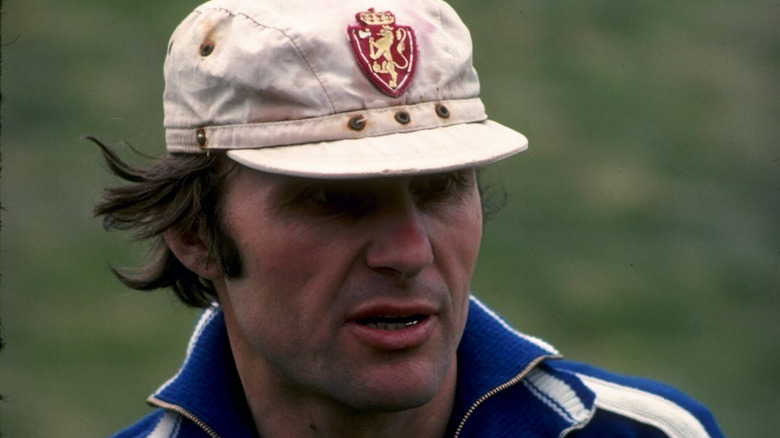
At the 1968 and 1972 Summer Olympics, Boris Onishchenko of the Soviet Union performed admirably in the modern pentathlon, a collection of five athletic events. Onishchenko had won two silver medals and one gold across two Olympic Games and different pentathlon permutations, and he was expected to do just as well or even better at the 1976 Summer Olympics in Montreal. His specialty? Fencing, and before his match with the U.K.'s Jeremy Fox, Onishchenko led the field in that event.
During the épée bout, Onishchenko jerked forward with his extended weapon and registered a hit on his opponent. In high-level competition, such touches are registered with electronics, with Olympians wearing special gear that responds when wired swords make contact. Onishchenko's touch triggered lights and a buzzer to mark the point and signal the fencers to reset. Fox, however, attested to the judges that he hadn't been touched at all.
The panel began an immediate jury of appeal and, after a conference and short investigation, found that the Soviet fencer's sword had been altered. Put another way, he'd cheated. "The weapon definitely had been tampered with," head disciplinary judge Carl Schwende told The New York Times. "Someone had wired it in such a way that it would score a winning hit even without making contact." Onishchenko was immediately kicked out of the pentathlon and the Olympics, despite his claims of having not messed with the sword himself.
The non-attack on the U.S. men's swim team
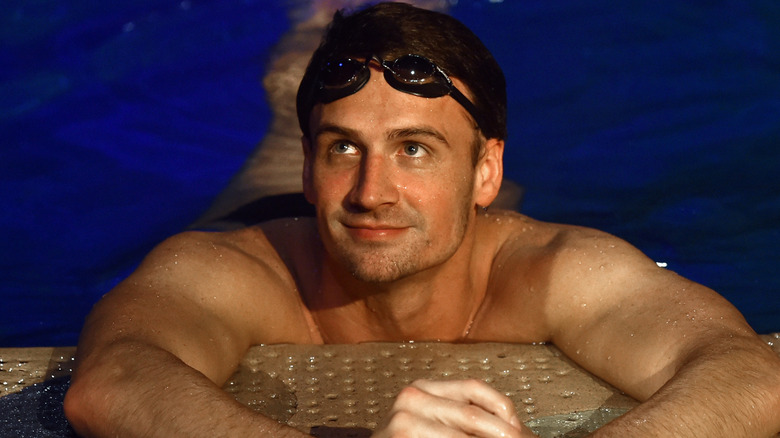
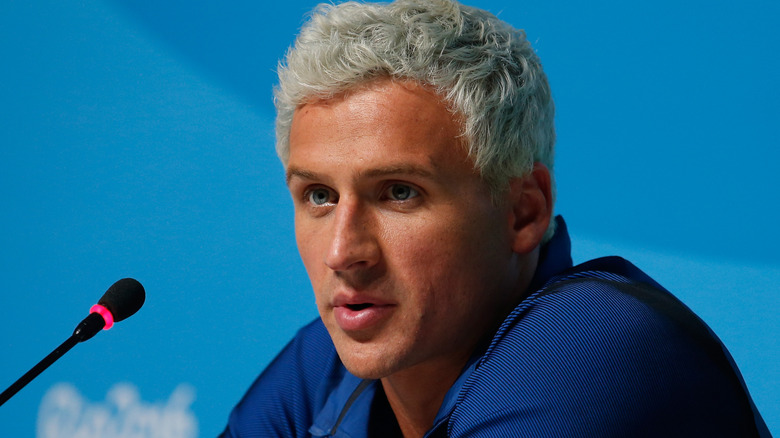
Already the owner of 11 Olympic medals, swimmer Ryan Lochte got even more famous when he won gold at the 2016 Summer Olympics in Rio de Janeiro in the 200-meter freestyle relay. And when Lochte and his teammates Gunnar Bentz, Jack Conger, and Jimmy Feigen were reportedly attacked by a gun-toting man in Rio, it made headlines around the world. "We got pulled over, in the taxi, and these guys came out with a badge, a police badge, no lights, no nothing just a police badge and they pulled us over," Lochte told NBC News. "They pulled out their guns, they told the other swimmers to get down on the ground — they got down on the ground. I refused." At that point, Lochte said, the man placed a gun to his head, seized his wallet, and fled.
Days later, Lochte gave an update via a statement on his social media feeds: The harrowing scene he described in detail and reported to police hadn't happened. "I want to apologize for my behavior last weekend — for not being more careful and candid in how I described the events of that early morning," Lochte wrote. The athlete was suspended from swimming events for 10 months and officially charged with falsifying a police report, though a judge dismissed the case five years later.
Salt Lake City's sketchy securing of the 2002 Winter Olympics
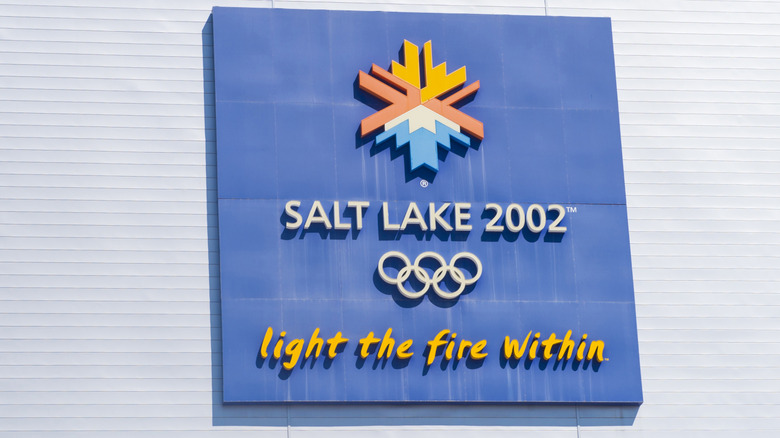
It was a massive secret that the Olympics likely didn't want to get out: To land the Winter Olympics in Salt Lake City for 2002, organizers didn't play by the rules. In 1995, the Utah capital city's bid was approved, following four previous unsuccessful attempts to get the International Olympic Committee to declare the mountainous, winter sports hotbed a host city. After learning that representatives of Nagano, Japan, spent $14 million to convince IOC bigwigs to give them the 1998 Winter Olympics, the Salt Lake City contingent realized that they'd have to be even more generous.
During the bid process, certain IOC members each received about $1 million worth of scholarships, luxury items, health care payments, and just plain cash, courtesy of the Utah collective. In its defense, what amounts to unbridled bribery was at the time very common among potential host cities and Olympics selectors. Notably, Melbourne tried to get the 1996 Summer Olympics but had refused to honor IOC member requests for brand-new automobiles and to arrange for them to visit brothels.
How it went down in Salt Lake City was all exposed when a letter detailing a tuition payment was obtained by local TV station KTVX. IOC representative Marc Hodler then called out the rampant bribery in his organization dating back to 1990. All of these secrets were divulged in 1998 — far too late for officials to even think about reassigning the intricately and expensively planned Olympics out of Salt Lake City.
The baffling boxing bout between Park Si-hun and Roy Jones Jr.

The gold medal match in the light middleweight boxing division at the 1988 Summer Olympics in South Korea pitted Roy Jones Jr. against local favorite Park Si-hun. The three-round match found Jones putting on a show, landing almost three times as many blows as Park, with a final count of 86 to 32. Jones controlled each round significantly, but because there was no knockout or technical knockout, the winner would be decided by judges, who generally look at things like total punches. Clearly, Jones was the objective winner — and yet Park was awarded the victory on a 3 to 2 vote, and with it the gold medal.
Fans, fighters, and onlookers were so stunned by the call that boxing's international governing body at the time, the International Amateur Boxing Association, had to investigate and dole out punishments to the pro-Park adjudicators if necessary. All three judges earned six-month suspensions, and Jones' advocates at USA Boxing sought lifetime bans for the trio. Two of them were permanently prohibited from such duties, and computerized, objective scoring was soon thereafter instituted. One of the disgraced judges, Hiouad Larbi, claimed to have vouched for Park because he wanted to give the host nation a win.
Sha'Carri Richardson's disqualification
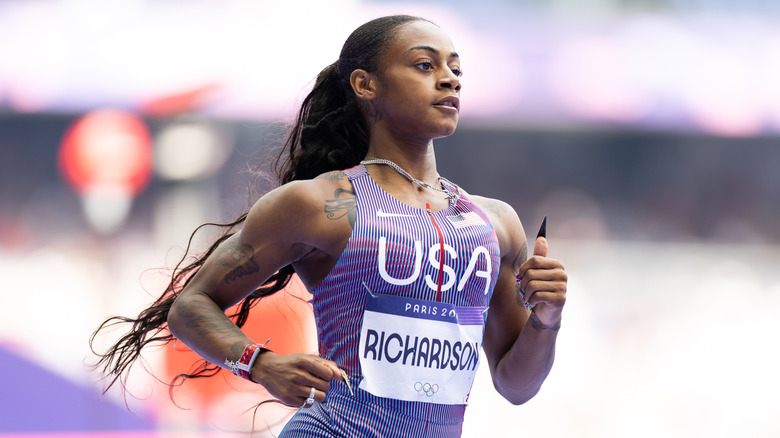
In June 2021, American sprinter Sha'Carri Richardson won the 100-meter race with a time of 10.86 seconds at the U.S. Olympic trials, which would've landed her a spot in the upcoming COVID-19-delayed 2020 Olympics in Tokyo. Instead, after the trials, Richardson's drug test came up positive for THC, the psychoactive chemical in marijuana. The ancient Greeks set the template for the modern Olympics thousands of years ago, and they may have used marijuana in their daily life, too. Nevertheless, the drug remains on the list of substances that amateur athletes are prohibited from using when competing in international events such as the Olympics.
While recreational and medicinal marijuana use are variously legal in most of the United States, the Olympics' rules outweigh U.S. state law. Richardson admitted to using marijuana, but as a form of self-medication to curb anxiety she experienced while grieving the death of her biological mother. USA Track and Field issued a 30-day suspension for Richardson, ensuring that she wouldn't be able to participate in the Summer Olympics.
The shocking outcome of the 1972 gold medal basketball game
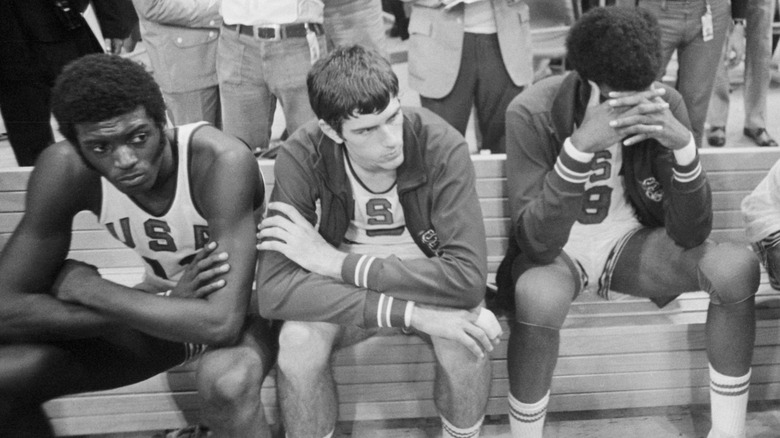
Men's basketball was an official Olympic event in 1936, and in every Summer Games through 1968, the U.S. team took home the gold medal. In 1972, the streak ended when the Soviet Union emerged victorious in the gold medal match — not merely a shocking and historic turn of events, but one mired in controversy and sketchy officiating. At the end of the game, Doug Collins of the U.S. made two free throws with three seconds remaining to give his squad a 50 to 49 edge. When the Soviet team then inbounded the ball into play, its assistant coach, Sergei Bashkin, ran to the scorer's table, claiming that his squad had called a timeout. So, the inbound was repeated, but the time taken off the clock wasn't restored.
The Soviet Union didn't have enough time to get off a shot, resulting in a gold medal win for Team USA. Only then did the referees realize their time-clock mistake, so they ordered three seconds restored and replayed. On its second try, the Soviet team pulled off a pass and a layup before time ran out. Final score: 51 to 50 — Soviet Union wins. The U.S. team protested the loss to global basketball overseer FIBA, which upheld the Soviet win. The U.S. players, so disgusted and angry, refused to ever take possession of their silver medals.
The fix was in on pairs figure skating in 2002
A cheating scandal rocked the sports world after it unfolded at the 2002 Winter Olympics in Salt Lake City, when Russian duo Yelena Berezhnaya and Anton Sikharulidze won the gold medal in pairs figure skating. That win was determined by a 5 to 4 decision, just after the skaters proved victorious in the free skate section. Canadian skaters Jamie Salé and David Pelletier were awarded silver medals. That judges' decision was later called into question and overturned when evidence of conspiracy, collusion, and rigging transpired. The International Skating Union determined that judges Marie-Reine Le Gougne and Didier Gailhaguet of France had voted for the Russian pair not because their skating was the best, but because Gailhaguet had made an arrangement with Russian ice dancing judges, who would falsely inflate the scores of French athletes in their own event.
Le Gougne initially claimed that she'd legitimately voted for the Russian team but then later claimed that she'd acted under orders from Gailhaguet, head of France's ice sports governing organization. Both officials were suspended from all international skating events for three years and were also banned from having anything to do with the 2006 Winter Olympics. Berezhnaya and Sikharulidze got to keep their gold medals, while Salé and Pelletier had their silver medals upgraded to gold.
If you or someone you know needs help with mental health, please contact the Crisis Text Line by texting HOME to 741741, call the National Alliance on Mental Illness helpline at 1-800-950-NAMI (6264), or visit the National Institute of Mental Health website.
If you or anyone you know needs help with addiction issues, help is available. Visit the Substance Abuse and Mental Health Services Administration website or contact SAMHSA's National Helpline at 1-800-662-HELP (4357).