

This Tongue-In-Cheek Love Song Held The No. 1 Spot The Longest In 1976
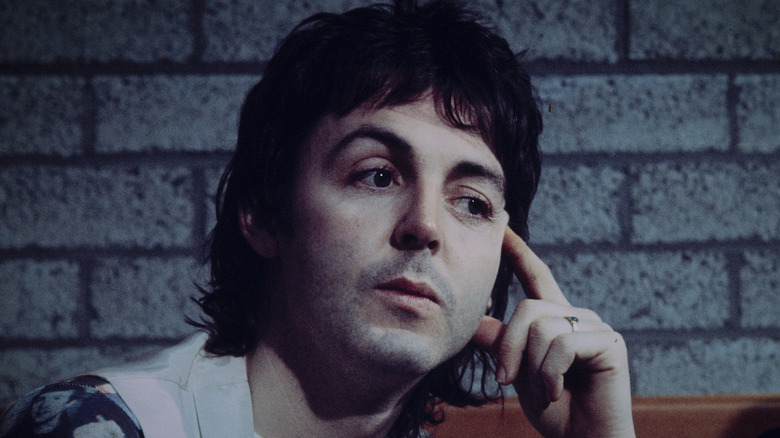
The monumental success of Wings' "Silly Love Songs" proves the point of Wings' "Silly Love Songs" — that the world will likely never get enough of them. (And there's nothing wrong with that.) It spent more time than any other song did at the top of the Hot 100 in 1976, and that's a big part of how it became the No. 1 song of the entire year, according to the music trackers at Billboard. Written and produced by Paul McCartney after the breakup of the Beatles, "Silly Love Songs" is the biggest hit any Beatle would have after the 1960s.
"Silly Love Songs" is a showcase of a lot of the things that made McCartney an enduringly popular rock legend — it's heavy on the bass guitar and characterized by lyrics both lovelorn and wryly humorous. The musician came up with something magical when he decided to write a self-referential song about writing songs, and here's the inside story of how it became such a long-running No. 1 smash.
Paul McCartney wasn't done with Silly Love Songs
Writing love songs was Paul McCartney's whole thing in the 1970s. For example, Wings' "My Love" held the No. 1 spot the longest in 1973, which perpetuated the notion that McCartney was a sentimental cheeseball. His former Beatles cohort John Lennon wrote and recorded the 1971 McCartney diss track "How Do You Sleep?" which includes a lyric comparing McCartney's output to elevator music. In response, McCartney whipped up "Silly Love Songs," both a love song and a defense of love songs. "There were accusations in the mid-1970s — including one from John — that I was just writing 'silly love songs.' I suppose the idea was that I should be a bit tougher, a bit more worldly. But then I suddenly realized, that's exactly what love is — it's worldly," the musician wrote in "Paul McCartney: The Lyrics, 1956 to the Present."
In "Silly Love Songs," McCartney attests that "some people want to fill the world with silly love songs / and what's wrong with that?" And then he proceeds with the song, which includes a simple profession of love ("I love you") and the declaration that "love isn't silly at all." If there was ever a public debate over the matter, the masses clearly sided with McCartney over Lennon. The cheeky and lovey-dovey "Silly Love Songs" earned a gold record in 1976, commemorating sales of 500,000 copies, a figure that helped make it the longest-running No. 1 and top single of the year.