

5 Love Songs From The '70s That Sound Even More Emotional Today
Almost everyone loves a good love song. And whether you're dancing with your sweetie, reminiscing on past loves, or wallowing in singledom, a great love song can bring out all kinds of emotions: joy, wistfulness, sadness, longing, yearning, nostalgia ... the list goes on.
The best love songs are truly timeless, resonating with listeners throughout the decades. Often, these songs can sound even more emotional as time goes on. Maybe the song makes you think of a past love you dated while the song was on the radio, or brings back memories of slow-dancing with your current partner. Maybe you know the backstory to the song, and it's even more meaningful now that the songwriter, performer, or muse has passed away. Or maybe the lyrics just connect to your own experience. Everyone has strong feelings about love, after all.
For this list, we chose five iconic love songs from the '70s that sound even more emotional today, either because events in the life of the artist have given the songs new weight, or because they resonate more powerfully as listeners grow older. Like with our list of 5 love songs that will have every boomer crying into their coffee, we wanted to choose songs that reflect a variety of artists, years, and themes.
Bill Withers — Ain't No Sunshine
Bill Withers released "Ain't No Sunshine" on his 1971 debut album, "Just As I Am." This melancholy love song reflects on how dark life is without your loved one: "Ain't no sunshine when she's gone / It's not warm when she's away." This darker side makes sense when you know that the song was inspired in part by the 1962 romantic drama "Days of Wine and Roses," a love story about two people dealing with alcoholism. "Sometimes you miss things that weren't particularly good for you," Withers told Songfacts in 2004. "It's just something that crossed my mind from watching that movie, and probably something else that happened in my life that I'm not aware of."
Thanks to its melancholy sound and yearning lyrics, the song has been re-interpreted over the years, used to comment on toxic relationships, breakups, and even deaths. For example, it's used in a post-breakup montage in the 1999 romance "Notting Hill" and to show characters mourning a death in the 1994 movie "Crooklyn." Whether these pop culture moments made you have a new connection to the song, or your own experiences of breakups and losses make you think of it, "Ain't No Sunshine" sounds even more emotional today.
Fleetwood Mac — Songbird
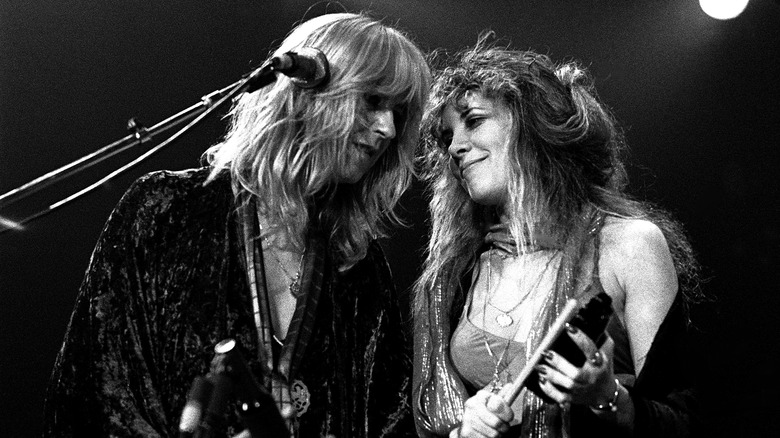
Released on Fleetwood Mac's iconic 1977 album "Rumours," the emotional ballad "Songbird" tells a story of unselfish love: "To you, I will give the world," Christine McVie sings. "And the songbirds are singing / Like they know the score / And I love you, I love you, I love you / Like never before." The song was so powerful that it was frequently the last one played during the Rumours tour. In a 2017 interview with Uncut magazine (via Far Out), McVie spoke about the song's legacy. "A lot of people play it at their weddings or at bar mitzvahs or at their dog's funeral," she said. "It's universal." After McVie died in 2022, the song took on a new resonance for Fleetwood Mac fans. McVie became the songbird in the lyrics, and the love expressed was the way fans felt about her. In an obituary, Rolling Stone even referred to McVie as "the songbird who knew the score."
Killing Me Softly With His Song — Roberta Flack
Roberta Flack didn't write this unrequited love song, but she made it a hit in 1973. Flack heard the original version of "Killing Me Softly With His Song" (recorded by Lori Lieberman in 1972) on an airplane and decided to record a cover, adding instrumentation and changing the tempo. These changes, as well as Flack's melancholy vocals, make her version sound very different from the folk-pop original. "In the studio, I gave my arrangement a 2/4 feel and took it a little faster than the original. I wanted a groove that deepened the song's meaning," she later said, as recounted in the book "Anatomy of 55 More Songs." "The groove is the heartbeat of a song."
The song's dramatic story of heartbreak and unrequited love make it resonate throughout generations, and it reached a new audience when the Fugees released a cover in 1996. The pain and loss expressed in the lyrics tend to be better understood by more mature listeners who have experienced a lot more of life. Additionally, Flack's fans might relate it to the singer's life experiences: She recorded the song soon after her 1972 divorce from Steve Novosel, a jazz musician, and her second marriage also ended in divorce. Flack died in 2025 at the age of 88.
Paul McCartney — Maybe I'm Amazed
Paul McCartney's debut solo album "McCartney" includes the unforgettable love song "Maybe I'm Amazed," inspired by his wife Linda. The lyrics express gratitude to a loving, supportive partner: "Maybe I'm amazed at the way you love me all the time / Maybe I'm afraid of the way I love you." Throughout the song, McCartney describes how he's going through a rough time (referring to the breakup of the Beatles) and asks for his partner's help. In the liner notes for the Wings compilation album "Wingspan," McCartney recalled that the song "reflect[ed] my feelings towards [Linda]. It's remained a favorite of mine" (via American Songwriter). When Linda died of breast cancer in 1998 at the age of just 56, a quartet performed the song at her memorial service in New York City, as well as "The Lovely Linda," another love song from the same album. McCartney still frequently performs "Maybe I'm Amazed" today, and now it tells not only the story of a great love but also its loss.
Marvin Gaye — Let's Get It On
Marvin Gaye's 1973 song "Let's Get It On" celebrates the erotic side of romance, with lyrics like, "There's nothing wrong with me loving you, baby, no, no / And giving yourself to me can never be wrong." Certain lines also highlight the spiritual side of sex: "Girl, you give me good feeling, so good, somethin' like sanctified," Gaye sings. The song takes on a new meaning when you put it in context of Gaye's life story. His father, Marvin Gay Sr. — Gaye added the "e" to his name early in his career — was a preacher in the Hebrew Pentecostal Church. Gay Sr. was abusive and raised Gaye to follow the rules of the church, including a ban on premarital sex. Gaye struggled with his relationship to sex, faith, and his father throughout his life, which ended in 1984 at the age of just 44, when his father shot and killed him. Today, listeners who know about Gaye's life, as well as those who listen closely to the spiritual themes in the lyrics, can hear an emotional narrative that goes beyond sex.