

Bizarre Things Found In Unsolved Missing Person Cases

Missing persons cases can be among the most chilling stories that come in under the true crime umbrella, and that goes double for cases that have never been satisfactorily solved. Families are denied closure, communities can lose a sense of safety, and even people with no connection to the case can come away from these accounts with a profound sense of unease: How does a human being simply vanish?
Some unsolved disappearances are haunting because of the lack of clues found, the without-a-trace of it all, while others stick in the mind precisely because of items that are found. Some of these feel like clues, like they could have, might have led to an answer if only their significance was clear: a little girl's backpack, a word carved into a tree, a pile of travel brochures. Other things left behind point to the interrupted life of the missing person, who needed her glasses to read or who planned to bring the treats he'd made into work to surprise his colleagues. And sometimes, of course, we simply can't know if a given object is relevant — because the person best placed to explain is the one who has gone missing.
Asha Degree's backpack

Early in the morning of Valentine's Day 2000, 9-year-old Asha Degree left her home in North Carolina, seemingly under her own power. Later that morning, two motorists saw a person answering Degree's description walking along the side of the road; when one of these people stopped to check on the girl, she bolted into the surrounding woods. If indeed this was Asha Degree, it's the last time anyone has reported seeing her.
When Degree left, she took her school book bag with her, packed with exactly what a child might take for a short trip: clothing, her purse and wallet, and her house key, among other small items. In 2001, a construction worker found Degree's backpack in a rural area just outside the original search perimeter that had been examined in the wake of Degree's disappearance. It had been wrapped in two trash bags and was found with a Dr. Seuss book and a New Kids on the Block T-shirt, both of which Degree's parents said were not hers. (The contents of the bag have not been itemized for the public.)
While occasional leads have surfaced, including reports of a green '70s-model car Degree may have been seen entering, neither Asha herself nor a clear indication of her fate has been located. Her mother believes she is still alive, and a sizable reward is on the table for information leading to answers.
Granger Taylor's note

Granger Taylor was apparently a near-genius and an eccentric, traits that often go hand in hand. He loved repairing anything mechanical, and he also loved smoking marijuana with his friends, a common if not necessarily constructive hobby. Fascinated by space, he used his tinkering abilities to build a model spaceship, of a generally flying-saucer construction, out of scavenged bits and bobs; inside, he set up a TV with a satellite dish and a sofa so he could nest. This charming weirdness got more unnerving, however: Taylor began to take large doses of LSD and to tell his parents he was in contact with extraterrestrials. And then one day in November 1980, he was gone, leaving behind only a note stating that he would be gone for 42 months on a voyage with aliens, and that instructions were in his will.
That was the last anyone heard of Taylor until six years later, when fragments of bone, of clothing, and of Taylor's distinctive pink Datsun pickup were found near the apparent site of an explosion in the woods. A coroner's report was satisfied that Taylor had died in an explosion, especially since he had the habit of carrying dynamite in his truck, but whether this was suicide, a delusional attempt to commune with aliens gone wrong, an accident, or a feint to cover up a plan to start over elsewhere — or hell, a real alien abduction — cannot be answered with current information.
Lord Lucan's bloody pipe
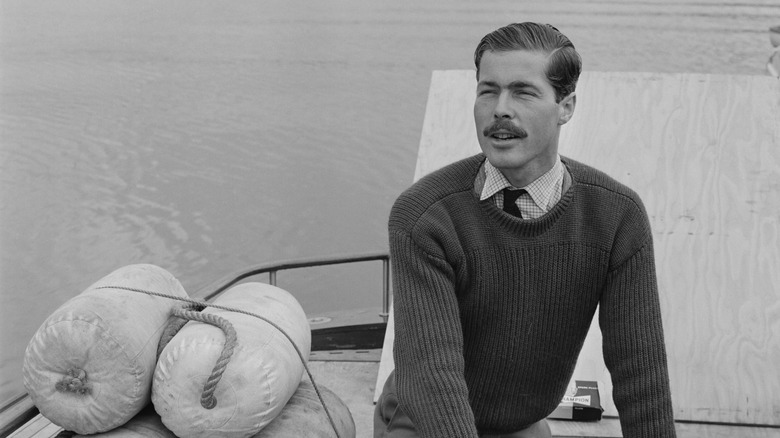
On November 7, 1974, someone broke into a house in a wealthy area of London and attacked the two women inside with a section of pipe. Sandra Rivett, the household nanny, was killed; her employer, the Countess of Lucan, survived, escaped, and reported that her attacker was her estranged husband, the Earl of Lucan. The Earl and Countess ("Lucky" and Veronica, to their fancy friends) had been locked in a savage divorce and custody battle, and both Lady Lucan and most subsequent commentators believe that Lord Lucan initially struck the wrong woman from behind in the dark.
As medics patched up the battered countess, Lord Lucan fled to the home of his friend Susan Maxwell-Scott. Once inside, he wrote two letters to his brother-in-law, claiming to have found the dead Rivett and Lady Lucan under attack by a man, whom he chased away, only to have his wife accuse him of sending a hitman after her. Therefore, he was going to skedaddle until the furor calmed down. He bid Susan farewell and slipped into the night forever.
"Lord Lucan" has subsequently been "found" in a camper in New Zealand, a Buddhist commune in Brisbane, San Francisco, Hong Kong, the Philippines, and many other places, all ultimately red herrings. His set of wealthy friends was suspected of helping him flee and start over, but his wife and putative victim felt he'd have chosen to die by suicide than to suffer the relative discomfort of a life on the run. His son won a court battle to inherit the title in 2016.
Al-Hakim bi-Amr Allah's donkey

In the year 996, 11-year-old Al-Hakim bi-Amr Allah succeeded his father as ruler of the Fatimid state, a sprawling empire in North Africa and the Middle East with its capital at Cairo, which the Fatimids themselves had built after their conquest of Egypt. The young ruler's record over his quarter-century of rule was mixed, and its evaluation both during his lifetime and in modern scholarship depends a lot on who's writing. He built an immense library and punished corrupt officials, but extended this same iron fist to the rest of his subjects: He forbade the consumption of alcohol, required women to stay indoors, and had Egypt's dogs killed. Diagnosed with "melancholy," a vague diagnosis that might mean depression, he became more and more interested in personal religious observance as he grew older.
And then, one night, he rode his donkey to the hills south of Cairo, as he sometimes did, and never returned. The donkey and some bloody clothing were found, but no Hakim. He was probably killed, either deliberately assassinated or attacked by a robber who didn't realize who he was (you don't expect to see a king on a donkey by himself), but some have speculated that he was tired of the demanding royal life and staged a disappearance to live a private life.
The Roanoke Colony's single word
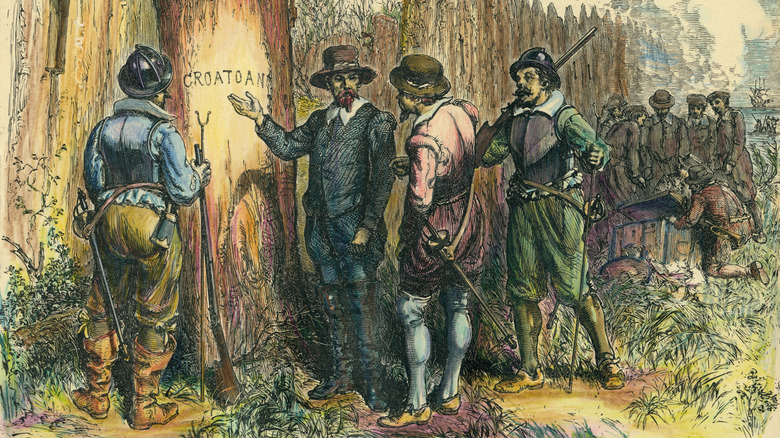
The famous "Lost Colony" of Roanoke was the second attempt to found an English settlement on a coastal island off what would, in the fullness of time, become North Carolina: The first, established in 1585, had collapsed spectacularly, with the would-be colonists forcing the ship bringing them supplies to take them home, and the garrison left to hold the territory in the absence of the colonists disappearing. So, of course, they tried again, with commander John White leaving a hundred or so colonists on the island in 1587 and promising to just run to England for supplies, like it was the corner store, and be right back. A war with Spain (the big one, with the fire ships) intervened, and by the time White returned in 1590, the colony was gone, with the only real clue to their fate being the word "Croatoan" carved into a tree.
"Croatoan" was the then-current name of today's Hatteras Island, and White tried to look there. Rough weather and the loss of the ship's anchor forced him back to England before the island could be searched, and so the Lost Colony remained just that. Various theories posit that the colonists were killed by local Native groups or were absorbed by them (and of course, it could have been a bit of both), but despite continuing public interest in the story, nothing conclusive can be said of the colonists' fate after the supply mission disappeared over the horizon.
Dorothy Arnold's travel brochures
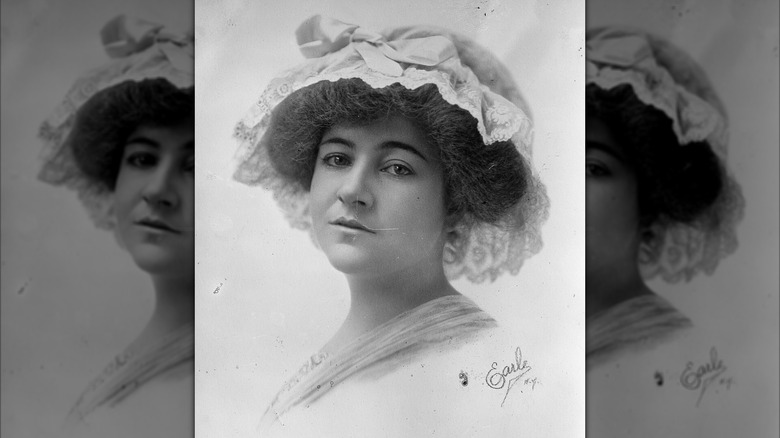
On December 12, 1910, 25-year-old Dorothy Arnold, the college-educated daughter of a wealthy family, went out for a casual day of shopping. She bought some candy and a book, then spoke briefly but pleasantly to an acquaintance she met on the street at about 2 p.m.; that was the last anyone saw of Dorothy Arnold. When her family entered her room to look for clues, they found some burned papers in the fireplace, thought to be manuscripts of short stories Arnold had submitted for publication and had rejected; letters with postmarks from abroad; and two brochures for transatlantic ocean voyages.
The family inquired privately at first, only informing the police of their daughter's absence six weeks later. No reliable trace of Arnold was ever found, but a bit of dirty laundry was: The seemingly prim Arnold had spent a secret, naughty week in Boston with a man. This man had been in Europe when Arnold disappeared (hence the letters), and maintained that he was as mystified about Arnold's whereabouts as anyone. Arnold's father stated that he believed she'd been murdered, with her body perhaps thrown in the Central Park Reservoir, while others speculated that Arnold had died by suicide, despondent over her stories' rejection, or simply run off, with or without a man. Wilder speculations include that she was trafficked (from Fifth Avenue, in broad daylight) or had fallen on the icy street, hit her head, and had sitcom-style total amnesia. In this case, any clues only lead to more speculation.
Bobby Dunbar's doppelganger
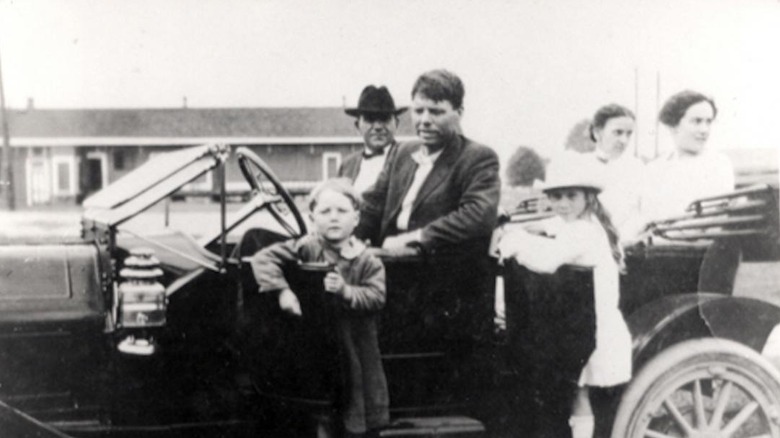
In 1912, a 4-year-old Louisiana boy named Bobby Dunbar disappeared on a camping trip. It seemed most likely he'd fallen into the lake and drowned, but the discovery of his hat a distance from the lake made some people suspect a kidnapping. The next year, Mississippi police arrested a vagrant who was traveling with a child that more or less looked like the missing boy; he said the child, whom he said was named Bruce Anderson, belonged to an acquaintance who had given him permission to travel with the boy ... whom he had then kept for a year.
The Dunbars went to Mississippi to see if the child was theirs; accounts differ as to exactly how this played out, but the consensus was a hesitant "probably" based on moles and scars. This tepid reaction didn't convince everyone, but ended in the child being proclaimed Bobby Dunbar and sent back to Louisiana with them. Julia Anderson, the alleged mother who had let her boy amble around with a drifter, later went to Louisiana to see "Bobby" but couldn't pick him out of a lineup.
Bobby Dunbar died in 1966. Once DNA testing became available, his descendants learned that he was not the original: He had indeed been born Bruce Anderson, and his mother had probably been unable to care for him and allowed a relative or connection to foster him. The original Bobby Dunbar is still missing.
Maura Murray's car

On February 9, 2004, Maura Murray emailed in her nursing homework and reported to her teachers that there had been a death in her family. She packed an overnight bag, withdrew some cash, and picked up some supplies at the liquor store before leaving Amherst, Massachusetts, and heading east. She drove off a snowy road in New Hampshire that evening; she was not visibly injured, but the car was undrivable. A passing motorist offered help, which Murray declined, but he called authorities from his nearby home anyway because he knew cell service was spotty and worried that Murray wouldn't be able to complete a call. That 911 call was made at 7:42, only a few minutes after the driver had spoken to Murray, but when police arrived at the disabled car at 7:46, Murray was gone.
No confirmed trace of Murray has been found since. The story of the death in the family was false, as her relatives later confirmed, and though they knew Murray enjoyed visiting New Hampshire, she had no clear reason for going that day. According to Mamamia, Murray had been having a rough time, getting in minor legal trouble, wrecking her car (the one linked to her disappearance was its replacement), and leaving work upset in the days before her disappearance. Suicide, murder by a passerby, death from exposure on a snowy night, and even a disappearance to start over have been theorized, but no evidence exists to confirm any of these possibilities.
Evelyn Hartley's glasses

Evelyn Hartley, 15, was conscientious about calling her parents from her babysitting gigs to check in, so when no call came the night of October 24, 1953, her father drove over to the house to check on her. He found the house locked and had no answer to his knocks, so he wriggled in through a window. The child was sleeping unharmed, and Evelyn was nowhere to be found. La Crosse, Wisconsin, police would find a shoe and Hartley's glasses in the living room, her other shoe in the basement, as well as a trail of blood on the ground outside. It was believed that she'd been abducted.
LaCrosse turned itself inside out looking for Hartley. Filling station attendants checked back seats and trunks for bloodstains (cars that passed inspection were given a sticker). Graves were reopened to see if Hartley's remains had been concealed in the loosened earth. Hundreds of Hartley's male classmates were given polygraphs. A pair of shoes with bloodstains and an unusual wear pattern on the soles and a jacket were discovered abandoned near where Hartley had vanished, but provided no real leads.
A number of known criminals and apparent innocents were held up as suspects, including one boy Hartley's age whose mother reported him to police, but no evidence tied any of them to the crime. Ed Gein, the killer and necrophile who inspired "Psycho," was explored as the culprit but ruled out.
Aeryn Gillern's Rice Krispie treats

Aeryn Gillern had a life many people would have envied, and few would have willingly walked away from. An American living in Austria and working for the United Nations, the well-built Gillern had been the runner-up in the Mr. Gay Universe pageant. Close to his mother, a devout Roman Catholic, and having just had his partner over to spend the weekend, Gillern had an apparently full life when he vanished the night of October 29, 2007. He even liked his coworkers enough that he had made Rice Krispies treats for them, which were found on the counter in his apartment.
Gillern's homosexuality was a problem for Austrian police, who initially tried to ignore the case because it involved a foreigner. They told his mother Gillern had been HIV-positive (he wasn't) and that his dismay over this diagnosis was probably why he had leapt into the Danube (a pure speculation); this attitude may have had its roots in complaints Gillern had made about bias and abuse he had suffered from Vienna policemen.
Gillern had visited a gay sauna the night of his disappearance. Accounts conflict about whether there was a fight or not, and the most salacious versions describe Gillern fleeing in only a towel. His clothes, complete with negative HIV test results in the pocket, were eventually recovered from the sauna, but no sign of Gillern himself has ever surfaced. The Austrian police admitted no fault in their investigation.
Ben McDaniel's diving tanks

After a terrible couple of years of divorce, a failed business, and the death of his brother, Ben McDaniel had moved in with his parents to retrench and was healing himself by spending a lot of time underwater. McDaniel was an experienced scuba diver reconnecting with his passion, and he was considering becoming a scuba instructor as a second act, but his disappearance during or after a dive on August 18, 2010, ended those plans.
The Vortex Springs site, where McDaniel disappeared, was so dangerous in places that a locked gate had been installed underwater to allow only very experienced divers into a part of the cave system; McDaniel was allowed access by staff but was not experienced enough to have his own key. Abandoned near the cave mouth were two of McDaniel's air tanks, unusual because these were filled with plain air and not the specialized gas mix experienced divers use to help them safely ascend out of high-pressure depths. The cave was searched so thoroughly that a diver looking for McDaniel's remains perished in the attempt, but no trace of McDaniel was found.
Some commentators have speculated that McDaniel was murdered after surfacing, with the cave a red herring. Experienced divers have come to conflicting conclusions about whether McDaniel could, perhaps in a panic, have simply gone into a part of the cave past where a search diver could reach. Still other commentators have proposed that he simply started over, a theory his parents reject: They say McDaniel would not have further bereaved his parents.