

These 5 Songs Define '60s Classic Rock
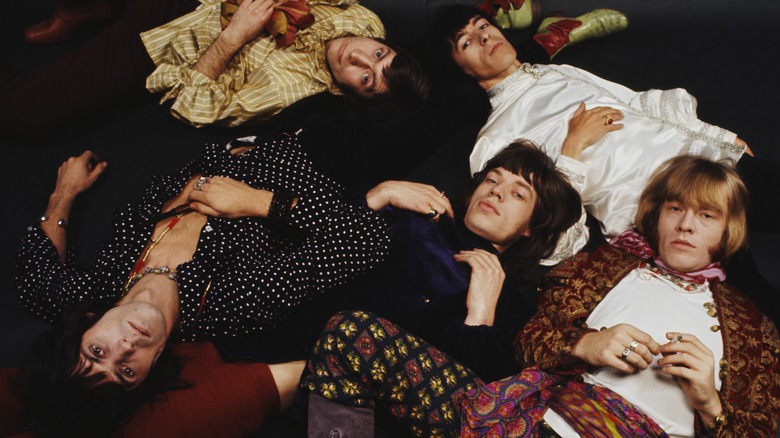
Anytime you turn your radio dial, you're probably going to land on a classic rock station. And while these days you're as likely to encounter a rock tune from the 1990s as you are something from the '60s or '70s, the genre's heart lies in these earlier decades. But what exactly defines classic rock? To answer that question, we have to go back to the mid-1960s and the groundbreaking college radio stations that began playing what would become known as album-oriented rock (AOR), which were longer rock songs taken from albums rather than the AM radio format that insisted on shorter 45 rpm singles.
Commercial radio soon followed. By the 1980s, some FM stations transitioned to playing rock music from the late 1960s and 1970s, which also helped define the sound. Some of the characteristics of classic rock include the basic instrumental set-up of guitar, bass, drum, and vocals. Another is a heavy guitar sound achieved via overdrive, distortion, or fuzz. Other key aspects include vocals drenched in emotive power and lyrics or a musical style that reflects the artist's rebellious attitude. We've chosen five rock songs from the '60s that not only exemplify these elements, but also helped solidify what we think of as classic rock today.
The Beatles - Helter Skelter
The Beatles not only helped change popular music and culture before the band's official dissolution in 1970, but their music also became a staple of classic rock radio. The Beatles' discography is rife with monumentally influential songs that are still on heavy rotation more than 50 years after the band broke up. But for sheer power, "Helter Skelter," from the 1968 self-titled album commonly referred to as "the White Album," is the one to beat. With its overdriven, fuzz-filled guitar, distorted bass, and Paul McCartney's raw vocals, this is by far the band's heaviest, most aggressive song. It helped lead the way for rock acts like Black Sabbath and Deep Purple, who further defined classic rock.
McCartney penned the tune after reading an article in Melody Maker in which The Who's Pete Townshend bragged that the band's song "I Can See for Miles" was the heaviest thing around. McCartney decided the Beatles could get even wilder. The recording process at Abbey Road Studios in July 1968 left drummer Ringo Starr's hands bloody. (His complaint, "I've got blisters on my fingers," can be heard at the end of the song.) Despite its unfortunate connection to Charles Manson and the Tate-LaBianca murders in Los Angeles in 1969, or perhaps partially because of it, the song remains a defining moment in classic rock.
The Jimi Hendrix Experience - Purple Haze
From Jimi Hendrix's distinctive tritone (aka devil's interval) guitar opening to his short, blistering solo, the Jimi Hendrix Experience's "Purple Haze" has become the exemplar of classic rock. Hendrix's potent mix of blues, rock, soul, and psychedelia wowed his contemporaries, including the Beatles and the Rolling Stones. He helped transform rock with his virtuosic guitar playing that influenced countless others, from Pink Floyd's David Gilmour to Stevie Ray Vaughan to Eddie Van Halen, and opened up the sonic possibilities of the genre.
Hendrix's raspy, earthy singing style on "Purple Haze," the opening track on the band's 1967 debut album "Are You Experienced," also became one of the hallmarks of classic rock. Beyond the music, which included a variety of experimentation in the studio during post-production, there are the song's haunting lyrics. Hendrix said they were inspired in part by a dream he had of walking underwater, but they have been interpreted as being about LSD, which marks it with classic rock's counterculture edge. Today, you're as likely to hear "Purple Haze" on a classic rock station as you would have been to hear it blasting on contemporary rock radio nearly 60 years ago when it came out. That's some longevity.
Led Zeppelin - Whole Lotta Love
Jimmy Page's driving three-note guitar riff kicks off Led Zeppelin's "Whole Lotta Love" and then keeps on going. It pushed the rock needle forward into the future and still remains popular, with Guitar Magazine readers voting it the greatest of all time back in 2021. And that's only one aspect of the song. There's Robert Plant's wailing, sometimes guttural, delivery of the suggestive lyrics, John Bonham's ferocious drums, and John Paul Jones' heavy blues bass, not to mention the song's prog-drenched, spacey middle section that included a theremin. "Whole Lotta Love," the opening track on their second album, 1969s "Led Zeppelin II," defines rock history, not just 1960s classic rock. It's sleazier, sexier, weirder, spacier, and wilder than its predecessors.
"Whole Lotta Love" was released as a single in the U.S., apparently against the band's wishes. Led Zeppelin was a strict album-only band, but the single helped launch the group in America. At more than five and half minutes, the song fit in with the new FM radio album-oriented rock format. (The record label also released a shorter version for AM radio.) All that airplay helped the song shoot to No. 4 on the Billboard Hot 100. And if you're an avid listener of classic rock radio, you know it's remained a mainstay.
Janis Joplin - Piece of My Heart
When Janis Joplin sings, "Oh, come on, come on, come on, come on ..." at the beginning of "Piece of My Heart," her emotion-laden, raw, and powerful delivery immediately draws you in and tugs at your heart, making you believe every word she sings on this tune about returning to a bad relationship. Her emotive style would help cement her place as one of the defining female voices in rock. While Joplin didn't write the song, her 1968 psychedelic reinterpretation of this R&B tune with her band Big Brother and the Holding Company became a cornerstone of classic rock.
"Piece of My Heart" was written by Bert Berns — who had penned such classics as "Twist and Shout" and "Hang on Sloopy" — and Jerry Ragovoy, whose "Time Is on My Side" was a hit for the Rolling Stones. "Piece of My Heart" was first recorded by Erma Franklin (Aretha Franklin's older sister) in 1967. Dusty Springfield also recorded the song in 1968, but it was Joplin's version that became the best known and one of the best rock songs by a female musician. The song, from Big Brother and the Holding Company's major-label debut, "Cheap Thrills," became a Top 20 hit and helped send the album to the No. 1 spot. And today you're just as likely to catch it on classic rock radio.
The Rolling Stones - (I Can't Get No) Satisfaction
The Rolling Stones' "(I Can't Get No) Satisfaction" from the 1965 U.S. version of the album "Out of Our Heads" is perhaps the most quintessential classic rock tune in history. The song has all the hallmarks of the genre. It starts with Keith Richards' seminal three-note riff on an overdriven electric guitar, achieved with a Fuzz-Tone pedal. Then there's the dual guitar, bass, drums, and vocal format. Finally, there's Mick Jagger's delivery — by turns seductive, sneering, and growling — of lyrics that tapped into a generation's disillusionment.
The song went to the No. 1 spot in both the U.S. and U.K. and helped turn the Rolling Stones into one of the most influential rock bands of all time. "(I Can't Get No) Satisfaction" became an instant classic and has been covered by a diverse range of acts, from Otis Redding to Devo. Now, 60 years later, the song still reverberates over the FM airwaves, as do the other songs from this list, marking them all as the textbook definition of classic rock.