

Former Members Of Classic Rock Bands Who Still Can't Stand One Another
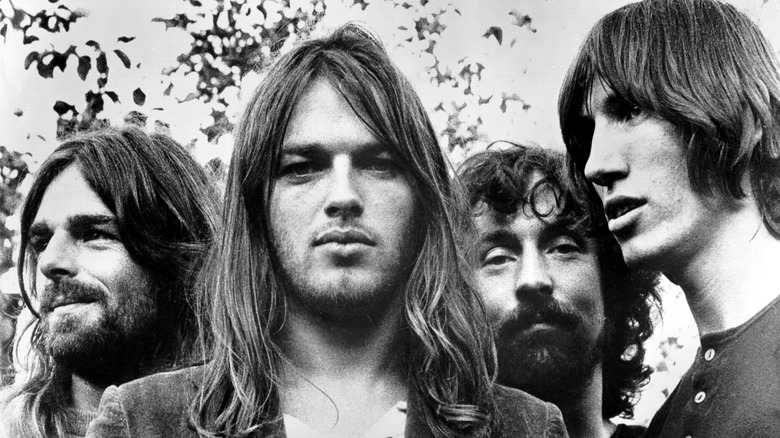
Though they haven't played together in years, or perhaps even decades, some musicians who found fame and fortune as the members of classic rock acts just can't bring themselves to even speak to ex-bandmates. From the outside, it may seem sad or disappointing. After all, before they sold millions of records and made songs that literally changed the face of music, those singers, guitarists, bassists, and drummers were just a bunch of friends with a lofty dream. Then, wild success and business arrangements complicated those relationships to the point where the bands broke up under a haze of animosity or disappointment. And while time is supposed to heal all wounds, it just plain didn't with many bandmates of yore who have publicly sworn off the possibility of any reunion, let alone even holding a private conversation. Personal dislike bordering on loathing can be a strong motivator.
Some of the biggest bands in classic rock broke up or fizzled out due to creative, personal, or professional disagreements. And unlike their groups, plenty of those tensions never died. Here are some former classic rock band members who, to this day, still can't bear to be around other people from their legendary acts.
Grand Funk Railroad
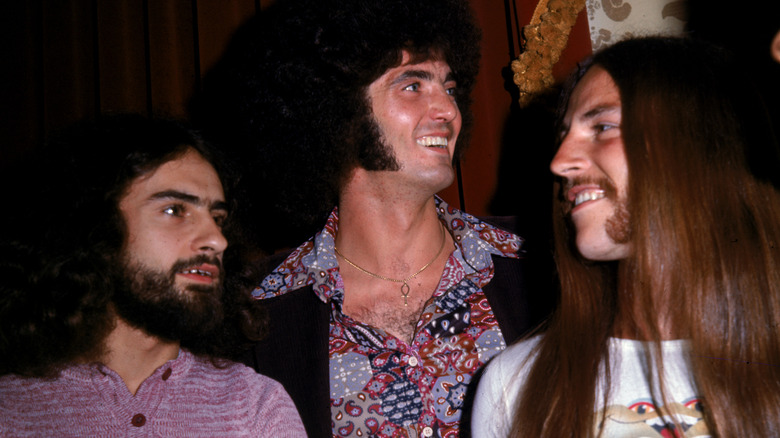
Grand Funk Railroad's "We're an American Band" was a classic rock hit that snagged the No. 1 spot for just one week in 1973. Two years later, Grand Funk Railroad was through. Front man and primary songwriter Mark Farner blames drummer Don Brewer. "He came in late to a rehearsal and he announced to us that he had to find something more stable to do with his life," Farner told Sofa King Cool. "I won't point fingers, but Mel and I are still together," Brewer countered to Vinyl Writer Music, pointing the finger at Farner and vouching for bassist Mel Schacher.
Grand Funk Railroad's original lineup reunited in the late 1990s, but it soon fell apart. "Things were going pretty well, but even then, we went through three different managers," Farner told Ultimate Classic Rock. "You could feel that it had an ending." Brewer and Schacher continued with Grand Funk Railroad; Farner hit the road as Mark Farner's American Band, which invited formal legal protests from his former bandmates, though he ultimately won the case.
Farner hasn't spoken with Brewer or Schacher in years, but he's forgiven his former cohort even if he can't forget. "When people ask, I say, 'Life has got to be about forgiveness.' That's real, true, ultimate love," Farner told Goldmine in 2024. "It's just disappointing, I cannot let myself get angered over it. I can't fight the disappointment that somebody would actually do that, you know, using my songs to have a career."
Jethro Tull
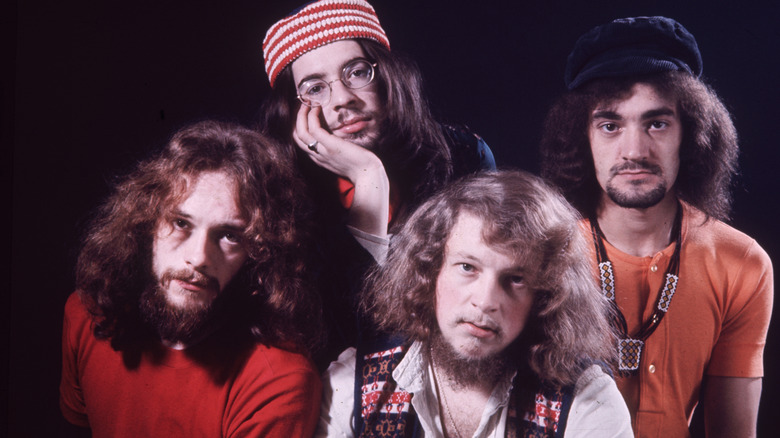
Equal parts progressive rock and folk, and both creepy and fanciful with the combo of singer Ian Anderson's flute flourishes and guitarist Martin Barre's thunderous riffs, Jethro Tull emerged in the late 1960s to become a unique entry in the classic rock canon. In 2011, after more than two dozen albums and memorable hit jams like "Aqualung" — which helped make 1971 the best year for music ever — Jethro Tull broke up. At that time, the only '60s-era members that remained were its two chief musical forces: Anderson and Barre.
Anderson went on to record multiple solo albums, but then in 2023 he acted in a way that Barre found to be offensive and unconscionable: He revived Jethro Tull for the studio album "RökFlöte" and a string of concert dates called "The Seven Decades Tour." The tour name suggested it was an actual Jethro Tull reunion, but it only included Anderson and some recently hired associates. At any rate, Barre was completely excluded from all of it, which led him to cut ties with his musical partner of more than 40 years. "It's a shame, you know?" Barre told the VRP Rocks podcast. "Me and Ian had a connection ... much more than music, and it's gone forever. And that's really sad."
Pink Floyd
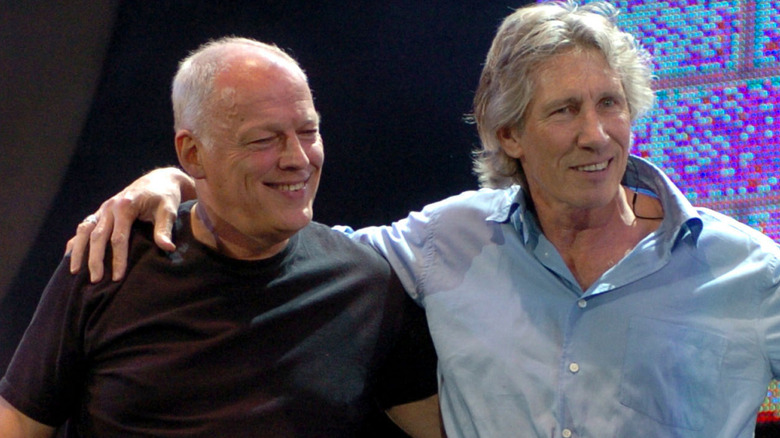
When Syd Barrett departed Pink Floyd in 1968, songwriting duties fell mainly to bassist Roger Waters, who turned the band into an epic progressive machine responsible for classic albums like "The Dark Side of the Moon" and "The Wall." Bolstered by the success of the latter, as well as an intimate concept album about Waters' harrowing childhood and mental health issues, the virtually solo 1983 LP "The Final Cut," and his 1984 solo effort "The Pros and Cons of Hitch Hiking," Waters very angrily walked away from Pink Floyd, claiming he'd outgrown it and later unsuccessfully suing his ex-partners for use of the band's lucrative name brand.
But under the direction of guitarist David Gilmour, Pink Floyd soldiered on and continued to sell millions of records. After putting aside tensions to play a one-off show at the Live 8 charity concert in 2005, hostilities between Waters and the Gilmour contingent were re-established. In 2022, Pink Floyd emerged from dormancy as Gilmour and drummer Dave Mason released a Ukrainian invasion protest song, "Hey, Hey, Rise Up!" Waters criticized the tune in a German newspaper; Gilmour's spouse and songwriting partner, Polly Samson, responded on X, labeling Waters "antisemitic" and "a lying, thieving, hypocritical, tax-avoiding, lip-synching, misogynistic, sick-with-envy, megalomaniac." Gilmour reposted the tweet, adding, "Every word demonstrably true."
Creedence Clearwater Revival
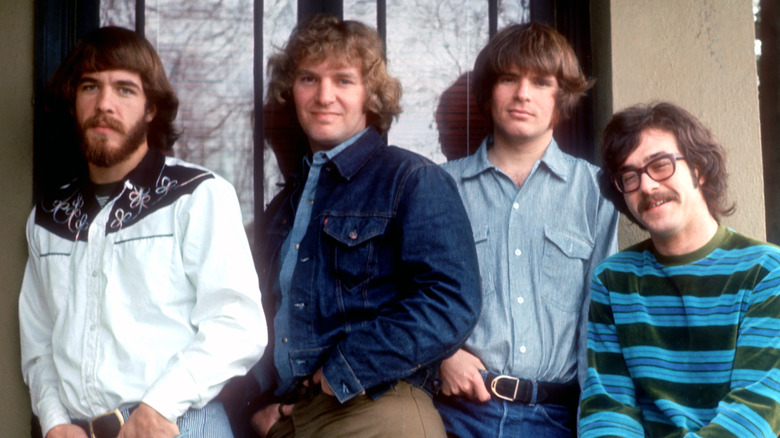
Hit-making swamp-rockers Creedence Clearwater Revival fractured in 1972, following the departure of guitarist Tom Fogerty and its poorly reviewed final album "Mardi Gras." Animosity kicked in: John Fogerty wanted out of what he saw as unfair contracts with Fantasy Records, and when the rest of CCR sided with the label, he felt scorned and remained angry. In the mid-1990s, Doug Clifford and Stu Cook of CCR toured under the name Creedence Clearwater Revisited, until John Fogerty sued in 1996 over illegal use of the "Creedence" brand, which he controlled. Clifford and Cook agreed to pay Fogerty a royalty fee from each performance, an agreement ruled null in 2011, when Fogerty criticized the newer Creedence band to the media.
Only once did all four members play together again: at Tom Fogerty's 1980 wedding. When Tom Fogerty died in 1990, he and John were almost entirely estranged. However, there were opportunities for reconciliation and reunion among CCR's ex-members. On behalf of the group, John Fogerty rejected a request from President Bill Clinton to play his 1993 inauguration. "I said, 'I'm not playing as a band with Creedence. I don't play with those guys. We will never play as a band again,'" he wrote in "Fortunate Son" (via Rolling Stone). They didn't even perform together at CCR's Rock and Roll Hall of Fame induction in 1993 — Fogerty stopped Clifford and Cook from joining him on the stage.