

Classic Rock Musicians Who Aren't As Rich As You Might Think

When you think of rock musicians who have made it to the top of the record business, have had outsized cultural cachet, or at least have had a hit that's still getting played 50 years on, you tend to imagine that they have managed to squirrel away fistfuls of cash. And in some cases, you'd be right. Most of the members of bands like the Rolling Stones or Fleetwood Mac have astounding net worths in the hundreds of millions. But in the case of other musicians, including Mick Taylor, the former Stones' guitarist, and Mick Fleetwood, the drummer and a founding member of Fleetwood Mac, their bank accounts are comparatively meager when measured against those of their old bandmates.
Then there are the musicians who shot to fame, sold tons of records, and then were unable to stay on top for whatever reason, resulting in their bank accounts slowly dwindling. This was the case for Norman Greenbaum, whose 1969 song "Spirit in the Sky" was a smash hit, and while he's been able to live comfortably off that one song, he's by no means rich. These are just a few of the classic rock musicians who aren't poor by any means, but they're not as wealthy as you might think.
Mick Taylor left the Rolling Stones at the wrong time
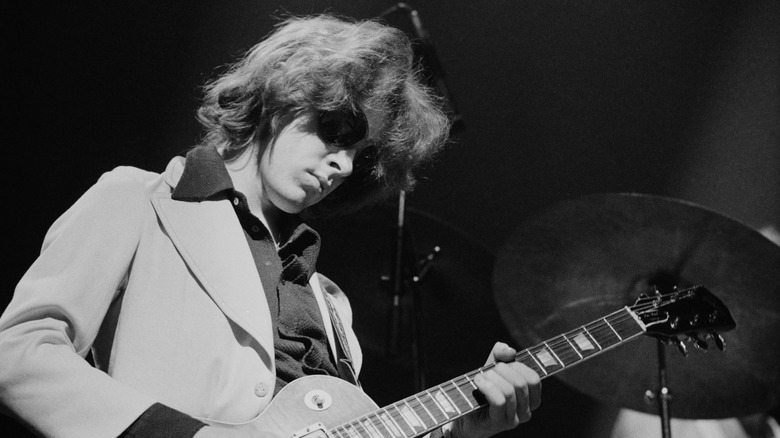
Guitarist Mick Taylor was an integral part of the Rolling Stones during his time with the band, beginning in 1969 and ending when he left in 1974 over tensions with Keith Richards, addiction issues, and frustration over not getting songwriting credits on several songs, including some from the band's seminal 1971 album "Sticky Fingers." It's this lack of songwriting credit that may play into the massive difference in the net worth of Taylor compared to the rest of the Stones.
The site Celebrity Net Worth estimates Taylor's net worth at a mere $300,000, as compared with Mick Jagger and Keith Richards, the band's main songwriters, who have around $500 million each. Taylor was a pivotal member of the Stones during the band's golden era that also included such masterpieces as "Exile on Main Street" and "Let it Bleed." But after he quit the band his drug dependence deepened, and in 1982, the Stones stopped paying him royalties. On top of that, Taylor left the band before they began their lucrative stadium tours. Additionally, after Taylor left, his career stalled. By 2009, he was living in a small apartment in Suffolk, England, and having financial troubles, per the Daily Mail. He later reunited with the Stones for the band's 50th anniversary tour, which may have helped him get back on his feet.
Timothy B. Schmit joined the Eagles too late
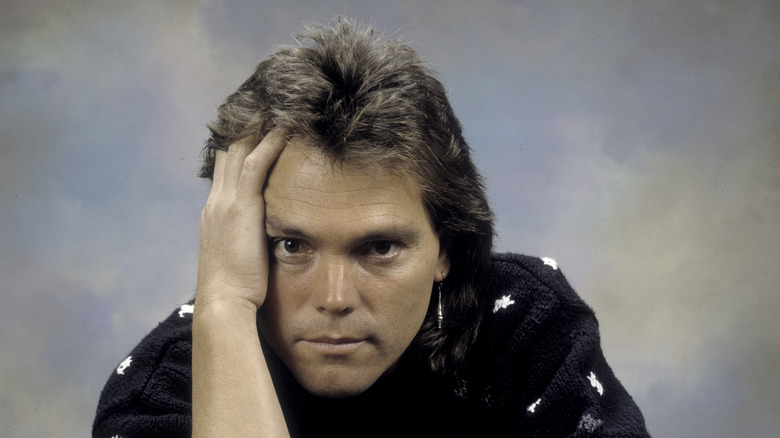
When you think of the Eagles, hits like "One of These Nights" from 1975 or "Hotel California" from the next year probably come to mind. Or maybe it's "Their Greatest Hits (1971-1975)," that you think of, after all, it's the best-selling album in American history. Which is why it's no wonder band members Don Henley and Joe Walsh have net worths estimated at $250 million and $75 million, respectively. Even Don Felder, who got booted from the band in 2001, is worth $60 million. But for bassist and vocalist Timothy B. Schmit, who joined the Eagles in 1977, after these albums were already released — his bank account isn't quite as large.
That's not to say Schmit is in the poor house. With a net worth of $25 million, he's doing just fine. Still, there is definitely a big income gap between him and the rest of the remaining members of the band, especially Henley, the richest member of the Eagles. Henley, along with the late Glen Frey, was the band's main songwriter, which helps explain part of this. Additionally, the Eagles broke up in 1980 and reunited in 1994, and in those intervening years Schmit's solo albums didn't sell all that well, while Henley did much better with his solo career. Still, Schmit continues to perform with the band, and considering that in 2019 alone they raked in around $2.5 million per concert, it appears he's only going to make more.
Mick Fleetwood blew through his money
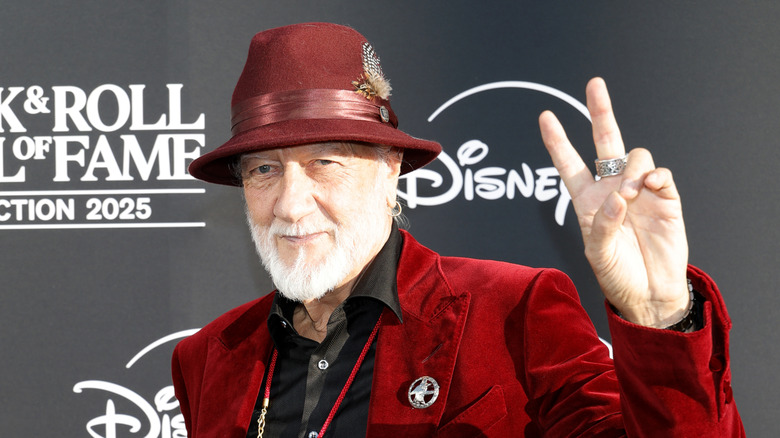
Fleetwood Mac's 1977 album "Rumours" has sold more than 40 million copies, pushing it into the list of the top 10 best selling albums in history. It's still on the charts nearly 50 years later. With that kind of success, you'd be right in thinking the surviving members of the band are extraordinarily rich, and some of them are. Singer and guitarist Lindsey Buckingham has a net worth of $150 million, with Stevie Nicks not far behind at $120 million. Then there's drummer Mick Fleetwood, who lends his name to the band he helped found in 1967 as a British blues act before it morphed into an Anglo-American pop-rock juggernaut a little less than a decade later.
While Fleetwood isn't hurting. He's worth around $30 million, that's far below the wealth of the other members of the band. And it was his extraordinarily decadent lifestyle during the band's heyday in the 1970s and 1980s that helps explain that immense gap. He blew through thousands of dollars a month on cocaine, made bad investments in restaurants, and snapped up real estate that eventually led to him having to declare bankruptcy in the 1980s. Afterwards, Fleetwood got sober and got serious about his finances, helping him recover from the hole he'd dug.
Marky Ramone, an icon who's still working
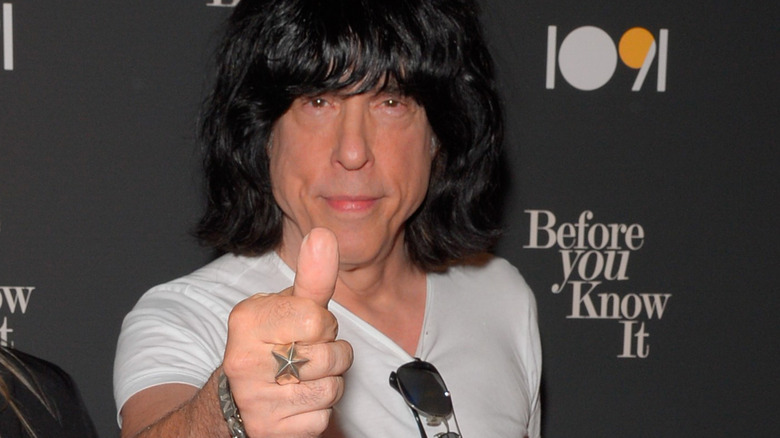
The Ramones were one of the most influential bands of their generation, helping to lay the groundwork for punk rock with their raw sound played at breakneck speed. With such an oversized role in music history, you'd think the band would have been able to make bank. But the Ramones weren't really chart toppers during their heyday in the 1970s and early '80s. The band did enjoy later success. They were inducted into the Rock & Roll Hall of Fame, and their debut self-titled album from 1976 eventually achieved gold record status by selling more than 500,000 copies (but it took 38 years).
Marky Ramone, born Mark Bell, who is the only remaining member of the classic lineup still alive, is worth around $6 million, according to Celebrity Net Worth. Nothing to sneeze at, but far from what many rock stars from bands with much less clout have managed to earn. Marky joined the Ramones in 1978 after leaving another groundbreaking band, Richard Hell and the Voidoids. He was in the Ramones until 1983 and then again from 1987 until they disbanded in 1996. He played on 12 albums and performed around 1,700 shows with the band. But at least some of what he's earned is likely from his other gigs. He's still touring with his band Marky Ramone's Blitzkrieg, released his own pasta sauce in 2008, worked with Tommy Hilfiger on a clothing line back in 2009, and currently has a SiriusXM radio show.
Norman Greenbaum, rock star, farmer, cook

"Spirit in the Sky" has become one of those songs that are shorthand for their era, in this case, the 1960s. This song, with its fuzzy electric guitar and spiritual lyrics, has been featured in more than 60 films and TV shows and 30 ads over the years, per Neighborhood View. Norman Greenbaum's hippy-boogie rock anthem skyrocketed to the top of the charts in 1970, reaching No. 3 on the Billboard Hot 100 chart and No. 1 across the globe. In 1969, the song sold 2 million copies, and as of this writing, "Spirit in the Sky – Deluxe Edition" has nearly 650 million streams on Spotify. If Greenbaum's name doesn't sound all that familiar, that's likely due to the fact that this ubiquitous song was his one and only top 40 hit.
In the early 1970s, he was splitting his time between his goat farm and music. But by 1980, after Greenbaum's other singles didn't sell well, his label dropped him. To pay the bills, he worked as a restaurant cook. Beginning in 1987, "Spirit in the Sky" began to see a resurgence via film and TV soundtracks and Greenbaum was able to buy a house and live off the royalties, having made an estimated $2 million. Still, like the other artists on this list, he's certainly not at the top of the rock and roll food chain.