

4 Frontmen Like Journey's Steve Perry Who Passed On The Farewell Tour Of A Lifetime
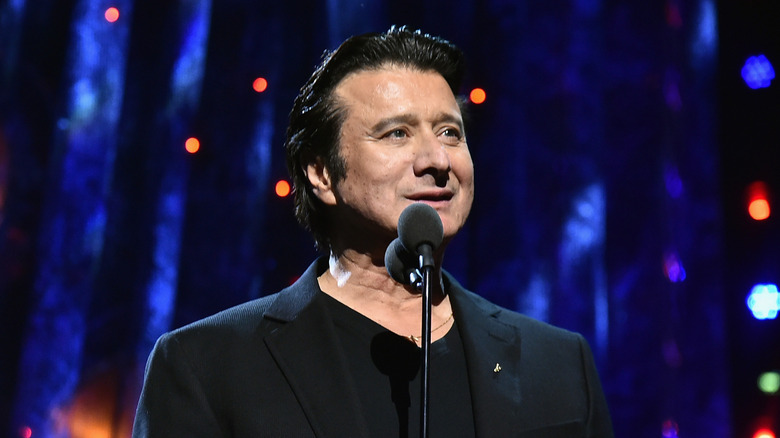
In February 2026, Steve Perry, the former vocalist of stadium-filling classic rock giants Journey, scotched fans' hopes that he would finally reunite with his former bandmates. With Journey planning its farewell tour to cap a spectacular 50-plus-year career, many believed there was a chance the much-loved singer might be tempted to finally come back to the group he last recorded with in 1996.
Earlier that month, keyboardist Jonathan Cain told Ultimate Classic Rock that Perry was considering whether to make a return. "It's never too late. We've got 100 shows, so he's welcome at any one of them," Cain said, opening the door for Perry to potentially make a huge profit performing one last time for Journey's enormous fanbase. However, days later Perry posted a statement on his social media channels, thanking fans for their love and support but admitting: "While I'm always grateful for the love people still have for Journey, the rumors about me rejoining the band are simply not true, and I want to gently put them to rest" (via Instagram). He explained that he was focused on creating new music that "reflects where I am today."
But Perry isn't the only rock frontman who has declined to reunite with former bandmates for what looks to be a massive final payday. Here are four more singers who have all said no to potential farewell tours, whether it's out of loyalty to their legacy and former bandmates, to maintain creative freedom, or due to ongoing tensions that still simmer decades on.
Robert Plant (Led Zeppelin)
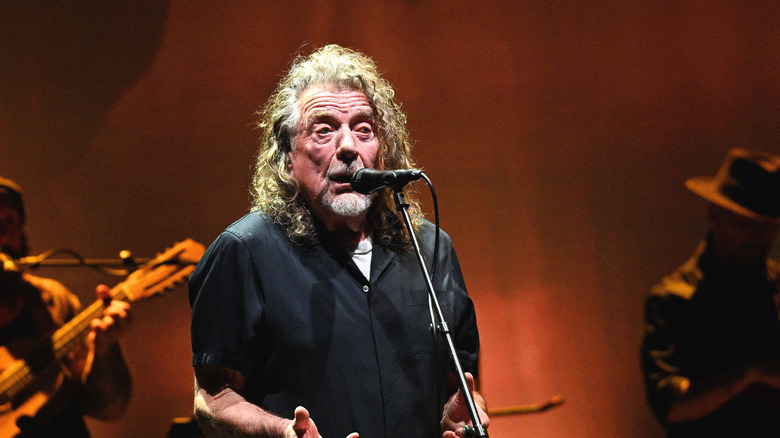
The legendary vocalist Robert Plant has been resisting calls for a full Led Zeppelin reunion tour for almost half a century at this point. The defining rock band of the 1970s, Zeppelin came to a tragic end with the death of the band's singular drummer John Bonham, who was found dead after a period of heavy drinking on September 25, 1980.
The tragedy was devastating for the band, which had already dealt with awful personal issues such as the death of Plant's 5-year-old son, Karac. The surviving members released a statement in December 1980 confirming that, despite rumors of their bringing a new drummer into the fold, the band had split, protecting its legacy and reiterating the importance of Bonham to the group. Since then, Plant et al. have reunited on only a handful of occasions. Their one-off 2007 show attracted an enormous 20 million ticket applicants, revealing the depth of their fanbase in the 21st century.
Even in the era of legacy acts being offered hundreds of millions of dollars to reform, Plant prefers to focus on his solo projects and collaboration with singer Alison Krauss. His attitude seems to have remained the same since 1982, when he explained: "There's certain people you don't do without in life, you don't keep things going for the sake of it ... I listen to Zeppelin stuff now and I realize how important John was ... you couldn't have found anybody with the same kind of ingredient to make the band really take off like John did" (via Louder).
Mark Knopfler (Dire Straits)
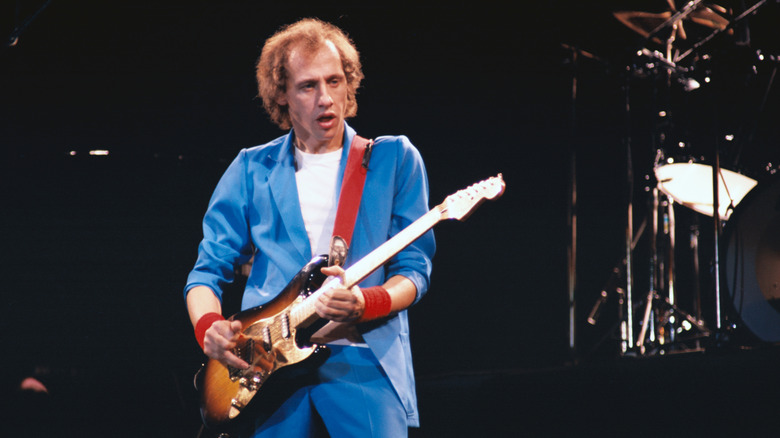
Dire Straits delivered some of the biggest rock hits of the late 1970s and early 1980s, turning into a rock juggernaut in the process. While much of the band's success came from the catchiness of classic tracks such as 1978's "Sultans of Swing," central to Dire Straits' appeal is frontman Mark Knopfler, a virtuoso guitarist and effervescent performer who has become legendary in his own right. Dire Straits last played together in 1992, after which Knopfler enjoyed a successful solo career. However, though many fans have called for Dire Straits to reform and tour again, Knopfler has made it clear he has no interest in doing so.
Speaking to "BBC Breakfast" in 2024 in support of his star-studded charity single "Going Home," he explained that while he loved being in Dire Straits, he has since focused on working with a larger and more diverse set of musicians, a way of working that allows for greater creative freedom. He also claimed that having his own self-built studio means he prefers to focus on his solo work. "I haven't had a bad day in there," Knopfler said. With Dire Straits having sold more than 110 million records, he is undoubtedly walking away from an incredible amount of money were he willing to get the band back together.
Roger Waters (Pink Floyd)
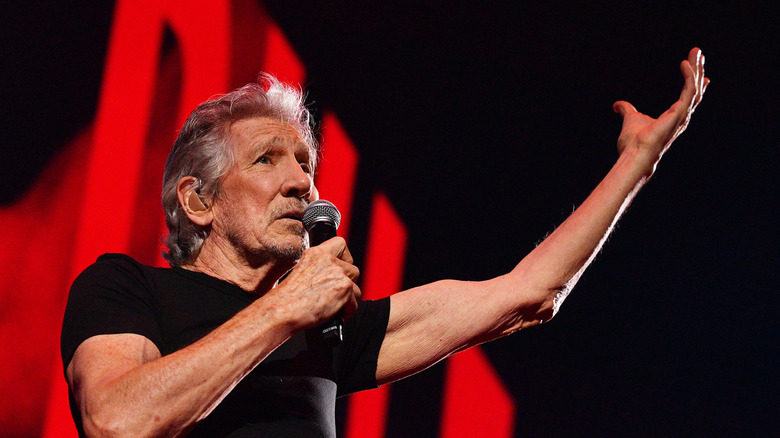
Pink Floyd frontman Roger Waters emerged as the band's creative powerhouse in the 1970s but has now left the band behind him. Despite masterminding some of its biggest commercial and critical hits including "Dark Side of the Moon" and "The Wall," Waters has not been an official member of Pink Floyd for decades. He abruptly quit Pink Floyd in 1985, two years after the album "The Final Cut" failed to replicate the band's former successes. At the time, Waters assumed that the band was at an end. But when his former collaborators David Gilmour and Nick Mason indicated they intended to continue as Pink Floyd, it caused a feud that would overshadow their relationship right up until the present day, with Waters unsuccessful in taking legal action to stop them.
While Gilmour and Mason continued performing as Pink Floyd, Waters shepherded his own projects, including an ambitious "The Wall Live" stage show, first attempted with Floyd, which has been a regular fixture of his solo career up until the present day. It is a project he returned to after charity reunions in 2005 (for Live 8) and 2010 (at a Hoping Foundation fundraiser). The members of Pink Floyd made one last appearance together in 2011, when Gilmour and Mason joined Waters onstage during a "The Wall Live" performance in London.
For a time, the animosity had cooled. However, Waters has since stated explicitly that he wouldn't be interested in further Floyd reunions. "I'm really glad that I was in that band for the 20 years that I was in it, and I really enjoyed it. I think we did some great work together, but I have no wish to do it ever again," he told the BBC in 2011 (via NME).
Peter Gabriel (Genesis)
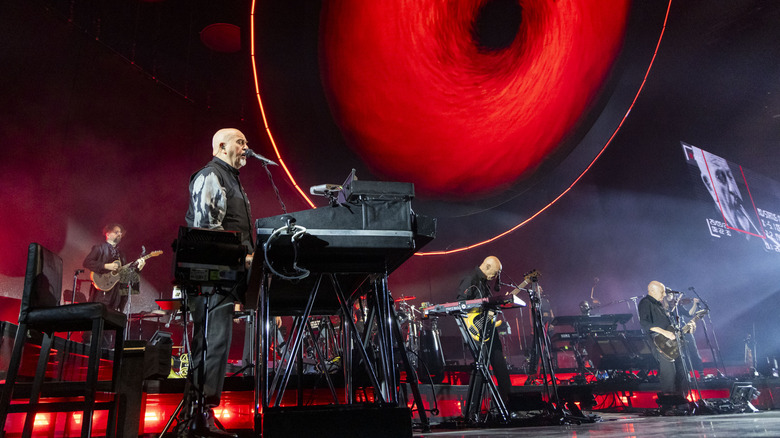
Peter Gabriel surprised many Genesis fans by turning up to the band's final show in 2022, but only as a member of the audience. The British performer spearheaded much of the band's early work but left in 1975 to pursue a more pop-oriented solo career. After he left, vocal duties fell to drummer Phil Collins, who largely attempted to balance his commitments to Genesis with his own solo work before leaving in 1996.
Genesis continued largely without either of its star frontmen in the years that followed, though both Gabriel and Collins return to record a new version of the classic track "Carpet Crawlers" in 1999. However, whereas Collins returned to Genesis for later reunions, Gabriel largely stayed away, avoiding both performing at Genesis' induction into the Rock and Roll Hall of Fame — he didn't attend due to other touring commitments — and turning down joining the band for its final concerts. Gabriel has grown selective about his public appearances and the amount of music he releases, telling MOJO magazine in 2023: "I think you can oversaturate people and they get bored with you ... One of the reasons I am still able to make a living doing this is that there are long periods of absence." However, though he wasn't willing to join Genesis on stage, he felt the need to be present to see its final performance, adding: "Me going was a rite of passage, really. I'd been part of the creation of Genesis so I wanted to be there at the end."