

5 High School Hits From The '90s That Will Stir Up Emotions In Generation X
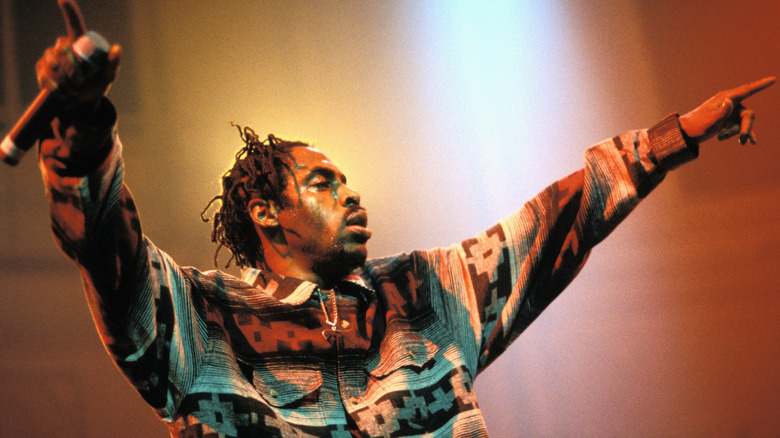
It was the 1990s and grunge ruled, as did thrift-shop flannel shirts and ratty cardigans, MTV was still actually playing music videos (although "The Real World" and its ilk were creeping in), and we were willing to fight anyone over our musical choices. There were many great tunes blasting from portable CD players, car radios, and Walkmans during that decade. But for us, there are a few songs that were topping the charts (or percolating just below the mainstream airwaves) back then that bring us, and likely most of Gen X, right back to that time whenever we stream them on our laptop or cell phone (a hard-to-imagine concept 30+ years ago).
Among others, there was Sinéad O'Connor's "Nothing Compares 2 U," which became a surprise hit in 1990, turning the Irish singer from underground rocker to unwilling pop star and Prince's tune into the best breakup song ever. Then, of course, there was Nirvana, the Seattle band that was everywhere in the early '90s, and while "Smells Like Teen Spirit" was their breakout song, we have a special fondness for the band's later hit "All Apologies," from 1994, with its melancholic theme of resignation that wavers between honesty and irony.
Nothing Compares 2 U — Sinéad O'Connor
There's nothing as topsy-turvy and intense as young love, including the inevitable break-ups that occur. Many a Gen Xer likely played Sinéad O'Connor's "Nothing Compares 2 U" on repeat in the wee hours in the days — and maybe even weeks — after splitting up in the early '90s. Or maybe even cried along with O'Connor in the emotionally turgid video (likely recorded off of MTV or "Night Flight" on the USA Network with the family's VCR). The song was seemingly everywhere after it was released as the first single from her second album, "I Do Not Want What I Haven't Got" in early 1990, propelled by the accompanying video.
The somewhat stark video is almost entirely a close-up shot of O'Connor, with her doe eyes and shaved head, wearing a black turtleneck against a black background and singing her heart out. The Prince cover was a smash hit, connecting with millions of Gen Xers who couldn't resist this tune about roller-coaster post-break-up emotions. Even for fans who'd fallen in love with O'Connor's passionate and tough debut album, "The Lion and the Cobra" from 1987, this song, which revealed the singer's softer side, was impossible to ignore. Even today, every time we hear "Nothing Compares 2 U," we're right back in 1990.
All Apologies — Nirvana
In the early 1990s, there was no one bigger than Nirvana. In April 1993, Kurt Cobain, Krist Novoselic, and Dave Grohl released their third and what would sadly turn out to be their final studio album, "In Utero." In general, "In Utero," produced by Steve Albini, was on the whole a more abrasive and raw album than the band's hugely successful sophomore effort, "Nevermind." But it included several softer and more introspective tunes, with "All Apologies" being perhaps the one that Generation X would become the most attached to. The song closed out the album and hit all the right notes emotionally, musically, and lyrically for a generation torn between cynicism and emotional authenticity, with Cobain's lyrics veering between self-flagellation and winking irony.
After Cobain died by suicide in April 1994, the song got heavy airplay on alternative radio and on television thanks to the video from the MTV "Unplugged" show (released as an album that November). "All Apologies" became a song that many of our generation gravitated to in the wake of Cobain's death, a final farewell from the iconic singer. This feeling may have been helped along thanks to Sinéad O'Connor's tribute to Cobain — a heart-rending cover of "All Apologies" on her 1994 album "Universal Mother."
If you or someone you know is struggling or in crisis, help is available. Call or text 988 or chat 988lifeline.org
Killing in the Name — Rage Against the Machine
Besides the turgid emotions of young love and a bit of cynicism, Gen X had a lot of angst and righteous anger in the early 1990s, and no one better exemplified these emotions than Rage Against the Machine. They were one of the most important bands of the 1990s and had the unique ability to get us to rock out while harnessing our outrage towards making positive change. The song "Killing in the Name," from the band's 1992 self-titled debut album, initially wasn't a chart topper in the U.S. (it did better in the U.K), yet that was just another reason to love them. Gen X was a generation that liked to hoard its heroes and preferred them to stay underground rather than sell out — a pejorative term with multiple meanings.
The song featured Tom Morello's unique guitar wizardry, Tim Commerford's gnarly bass, and drummer Brad Wilk's unusual use of a cowbell, with singer Zack de la Rocha's snarl at the fore. "Killing in the Name" was written following the brutal beating of Rodney King by Los Angeles police and the subsequent riots. And while the song's lyrics revolved around the systemic racism in policing, it's the end of the song that many of our generation latched on to, with de la Rocha's repeated f-bomb-laced lyric about not doing what we've been told to do. It captured a generational spirit that is as relevant today as it was back in the 1990s.
1979 — Smashing Pumpkins
The Smashing Pumpkins' sprawling 1995 masterpiece "Mellon Collie And The Infinite Sadness" encompassed a variety of sounds, from psychedelia to dream pop, and numerous subjects, including nostalgia. The song "1979" beautifully captured the sense of unbridled freedom and pure potential of youth, with the gaping maw of adulthood just over the horizon. It had us Gen Xers, who were really still kids ourselves, thinking about those earlier years when anything was possible. Billy Corgan's voice reverberates with an understated emotionality, perfectly suited for the subject and the song's layered dream-like sound.
Corgan has said he recalled the exact moment that gave rise to the song. It was 1984, and he was delivering pizza in his family's beat-up car on a dreary Chicago day. "There was a particular feeling that I got, which was, like, in the rearview mirror of my life was youth, childhood," he said. "And it was about to go away. And in front of me was everything that I hoped to become, everything that I was hoping to do in life."
We fellow Gen Xers deeply understood that feeling. The song became the band's biggest single, spending 22 weeks on the charts and peaking at No. 12 on the Billboard Hot 100. Today, when we hear "1979," it's like a hall of mirrors recalling how we felt listening to the song so long ago, and now looking back at ourselves from three decades on.
Gangsta's Paradise — Coolio
In 1995, in the midst of the East Coast-West Coast hip-hop rivalry that would eventually claim the lives of the Notorious B.I.G. and Tupac Shakur, LA artist Coolio released "Gangsta's Paradise." You may not remember the movie that the song appeared in (the Michelle Pfeiffer vehicle "Dangerous Minds"), but "Gangsta's Paradise" is unforgettable. Coolio stripped away the artifice of gangster rap with an introspective look at the reality of street life, full of paranoia and anxiety.
From the opening strains of the sample taken from Stevie Wonder's "Pastime Paradise" to L.V.'s gospel-inflected vocals and Coolio's melodic flow, all masterminded by producer Doug Rasheed, this song was bound to become a Gen X classic that takes you straight back to 1995 whenever you hear it. Appearing on Coolio's second album, "Gangsta's Paradise" was everywhere that year and became the year-end No. 1 Billboard Hot 100 hit. The video, directed by Hollywood director Antoine Fuqua, only cemented its place in our memories. "Gangsta's Paradise" continues to resonate and has become one of the hits from the 1990s that still stirs Gen X emotions 30 years on.