

Neil Sedaka's 1962 Breaking Up Is Hard To Do Has Two Versions — And Both Are Stone Cold Classics
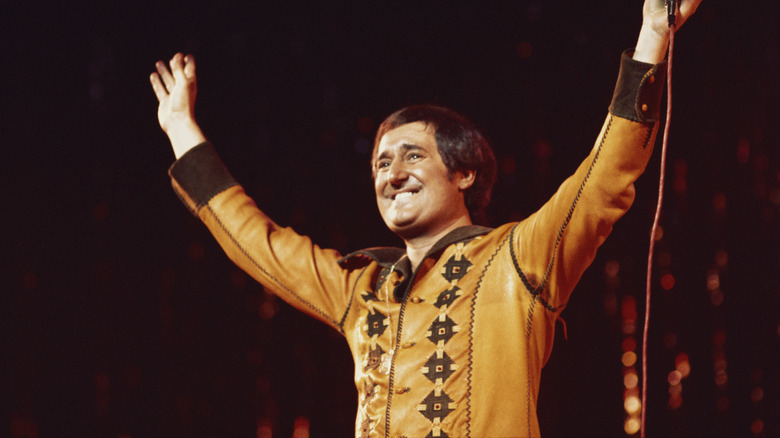
Rare is the singer-songwriter who can strike gold in different decades, who can withstand the changing weather patterns of pop music and re-emerge more relevant than ever. Like Bob Dylan or Neil Diamond, Neil Sedaka's songs and performances touched several generations of audiences. Hits he either performed or wrote for others topped charts first in the late '50s and early '60s, then again in the mid to late '70s and beyond. With his passing at age 86 in February of 2026, we lost a rock 'n' roll legend whose mark on pop music is indelible and unmatchable.
Not only did Sedaka enjoy periods of full-on chart dominance — including 10 top 10 hits between 1959 and 1962 — he pulled off something even tougher. Having scored a U.S. No. 1 with "Breaking Up Is Hard To Do" in 1962, he reinvented it and brought it back to the charts in 1976. The original is a pre-British Invasion doo-wop classic: a teeny bopper's lament guaranteed to give boomers instant party flashbacks. The second version is slower and more grown-up; it's almost as if the kid in the original has found himself in the same predicament as an adult. Adding to many examples of Sedaka's brilliance, range, and skill, both versions are pop perfection: stone-cold classics.
A Shimmering Doo Wop Original
At age 13, Neil Sedaka, a piano prodigy from Brooklyn, New York, met one of his main songwriting partners, Howard Greenfield, and the two would work together for the following decades. In the late '50s, the pair joined the ranks of songwriters like Carole King and Burt Bacharach in the legendary Brill Building in Manhattan, a nerve center for pop music which housed publishers, publicists, studios, and radio promoters. In addition to co-writing hits for others, like "Stupid Cupid" and "Where The Boys Are" for Connie Francis, Sedaka started making an impact as a performer. The original version of "Breaking Up Is Hard To Do" became his first Billboard Hot 100 No. 1, peaking at the top for two weeks in the Summer of 1962.
From its unforgettable opening doo-wop scatting ("do do do / down dooby doo down down," etc.) through its shimmering harmonies, the original is a master class in heart-rending, high school romance pop. The arrangement, which includes strings and hand claps, is jaunty and light. This becomes an ornate pop scaffolding for classic lines of teen heartbreak and lament like "I beg of you don't say goodbye / Can't we give our love another try? / Come on, baby, let's start anew." No doubt, with the original, Sedaka encapsulated the post-Elvis and pre-Beatles rock 'n' roll and pop sound: sweet sonic bubblegum for the sock-hop crowd.
A Suave Reinvention
Pop music success can be fleeting, and Sedaka fell off the map by the mid-'60s. In the U.S., the doo-wop rock 'n' roll that had made his name seemed to die the moment the Beatles stepped off the plane at John F. Kennedy Airport on February 7th, 1964. Though he continued writing for others, Sedaka's solo career was largely sidelined as the British Invasion gave way to psychedelic rock and the explosion of musical styles of the early '70s.
But fortunes shifted; in 1974, he released "Sedaka's Back" on Elton John's label, and "Laughter In The Rain" off that album would return him to No. 1 in early 1975. And in early 1976, a slowed-down, piano-driven version returned "Breaking Up Is Hard To Do" to the Billboard top 10, peaking at No. 8. After nearly a decade and a half off the charts, Sedaka had persevered. The song delighted his nostalgic older fans while reaching new generations.
The '70s edition of "Breaking Up Is Hard To Do" is brilliant because of how it transforms the original. After directly quoting the 1962 version's doo-wop opening, it morphs into a song of grown-up melancholy. Now in his mid-30s, the Sedaka on this version croons alone, without a chorus: more cocktail lounge than sock-hop soundtrack. Whether you prefer the innocence and sweetness of the original or the more adult heartbreak of the reinvention, these tracks sound even cooler today than they did then. Sedaka struck gold with this song twice, and that is also hard to do.