

Why David Bowie's Best Album Isn't The One You're Thinking Of
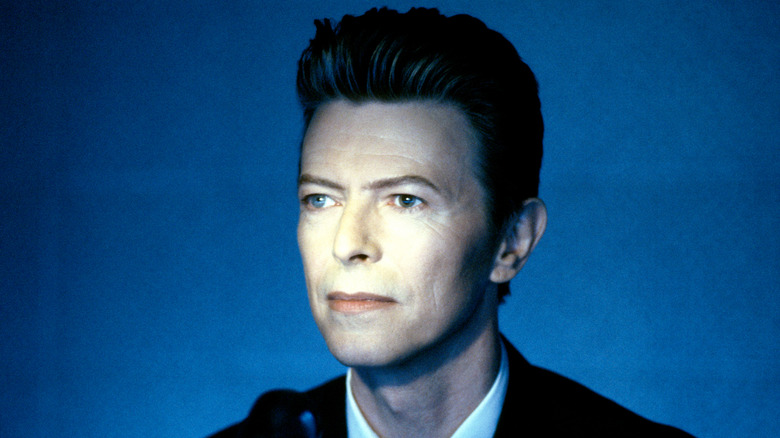
When he succumbed to cancer on January 10th, 2016, at the age of 69, David Bowie left earthlings an endlessly inventive and iconic body of work. Starting with a self-titled debut in 1967, he released no less than 25 studio albums (plus two with the band Tin Machine) over the following 49 years. With so many different sounds and styles on so much vinyl, there's going to be debate about which is best; like weighing in on the "Beatles vs. Stones" question, it's a rock 'n' roll Rorschach test.
Most would go for the Bowie that got sold to the world, selecting from his fertile early and mid '70s period: era-defining classics like "Hunky Dory," "The Rise And Fall Of Ziggy Stardust And The Spiders From Mars," and "Aladdin Sane." Others might choose the relentless invention of his work in the late '70s, with electronic-influenced albums like "Low" and "Heroes." Some may even pull for his '80s confections, like "Let's Dance," or the industrial music-inflected "Earthling."
You can make a case for any of these; most sound cooler today than they did then. But to us, Bowie's best work was his last: "Blackstar," released just days before his death. Steeped in a sense of his own mortality and representing a final, fascinating shift in sound, it's haunting and profound in ways his others could never be.
A final voyage for the Starman

Even when he wasn't adopting outright alter-egos like Ziggy Stardust and The Thin White Duke, David Bowie never shied from changing musical direction. For "Blackstar," he and producer Tony Visconti recruited the Donny McCaslin Quartet, young jazz musicians they'd caught playing a small club in Greenwich Village. As with collaborations in the '70s with Mick Ronson (the Spiders From Mars, glam-era guitarist) and '80s with Niles Rogers (of Chic fame), the infusion of talent shaped the direction of the album. But perhaps the greatest shadows cast on "Blackstar" were those the doctors saw on his liver X-rays.
The day before the first recording session, Bowie confided to Visconti that he was going through cancer therapy. "The next day we were in the studio, and he told Donny and the band," he recalled to Spin in 2026, "They took it a lot better than I did." This news was kept mostly under wraps. Those who knew, like Ivo Van Hove, the director of Bowie's musical, "Lazarus," were shocked by how driven he was in his last days. As Van Hove told the Guardian, "I really am convinced that he was fighting death and he wanted to continue and continue." Bowie's final album brims with the urgency of an artist desperate to keep on creating, even as he knows his time is running out.
Lazarus and the sonic supernova
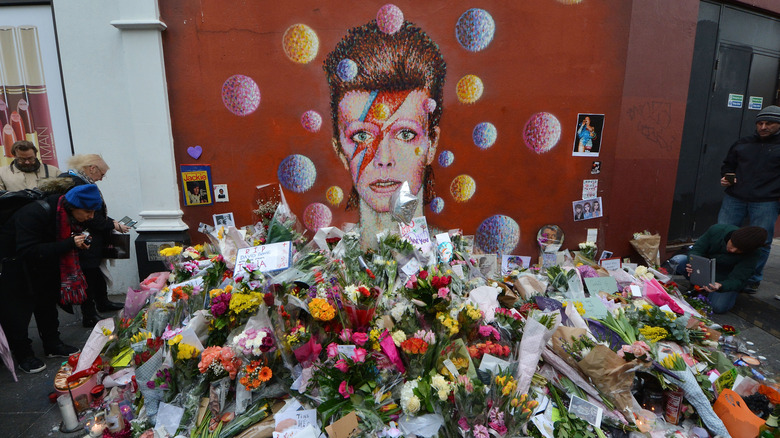
From its dream-like opening tapestry of strings and guitar to its final fade-out, "Blackstar" sets an unmistakable, otherworldly mood. "Something happened on the day he died / Spirit rose a meter and stepped aside," David Bowie sings in the opening, title track, establishing the themes of death, reckoning, and resurrection that permeate the album. In "Lazarus," the speaker addresses us from the afterlife, looking back on his memories and legacy: "Look up here, I'm in heaven / I've got scars that can't be seen," the song begins, "I've got drama can't be stolen / Everybody knows me now." Heavy and serene, it's an album that could only emerge at the end of a remarkable life.
The product of a true creative chameleon, Bowie's career was a cavalcade of masks, adopted personas, and dressed-up alter-egos guiding shifting sounds and songs. Not just accessories or merely aesthetics, his most famous looks actually mean something. Ziggy, Alladin Sane, and the others were vehicles for him to work through ideas about art, life, society, and so on. But on "Blackstar," it's almost as if the final mask has been lifted: as if the persona Bowie's adopting is none other than David Bowie, staring down death, looking back at a remarkable life, and floating (back) into the sky. Every time we put it on, he's resurrected.