

Classic Rockers Who Quit Struggling Bands Right Before They Hit The Fame Jackpot
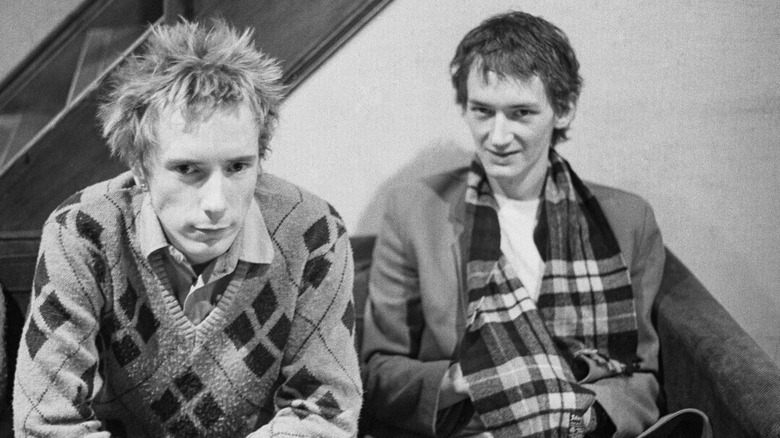
If they were after fame, fortune, and immortal rock star glory, it's unfortunate that these early members of classic rock bands walked away from the group during a fallow period and just before they'd become incredibly successful. Most bands experience some turnover at least early in their existence — they're usually a bunch of young people whose priorities vary, and for some, playing in a group is just a fun thing to do on the side of their true passion or interest. There was nothing much wrong with their musicianship or talent — they just didn't want to take the band (or that band) as seriously as the others did. And so, after disagreeing on creative grounds or enduring a motivation gap, that foundational member will leave the band they helped develop. Little did they know that the act was on the verge of superstardom and legendary classic rock band status.
Regrets? They may have a few, but ultimately, these stories of rock 'n' roll also-rans and near misses are a glimpse into an alternate history of music. Here are the stories of five musicians who departed some of the most famous and most beloved classic rock bands ever on the eve of creative and commercial breakthroughs.
John Rutsey of Rush
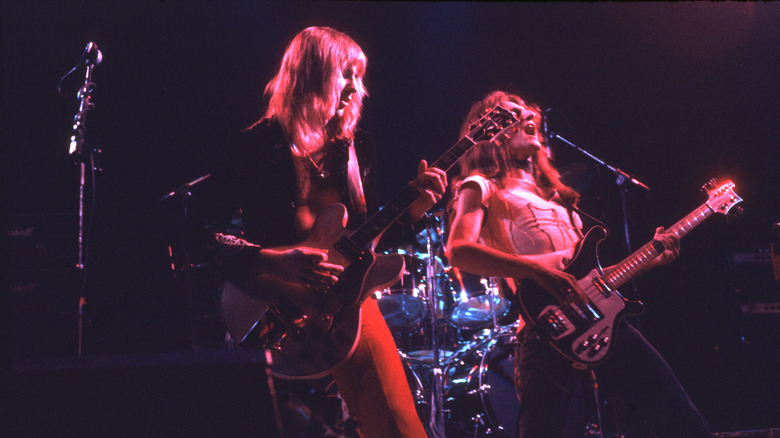
Rush, a dominant prog-rock power trio of the 1970s and 1980s, began as the Projection, a Toronto garage band in 1968 consisting of guitarist Alex Lifeson, bassist Jeff Jones, and drummer John Rutsey. After breaking up and reforming as Rush and playing one show, Jones essentially quit because he wanted to go to a party the same night as a gig. Lifeson wanted to forge ahead and quickly found a replacement in Geddy Lee, who'd play bass and sing lead for Rush until its end in 2015 and the 2020 death of drummer Neil Peart, who joined the band initially as a replacement for Rutsey.
Rutsey played on Rush's first and self-titled album, released in 1974. After recording and before promotion could begin, Rutsey quit the band because he wasn't up to the rigors of touring, potentially because he was dealing with type 1 diabetes at the time. But he also was no longer a musical fit, a straightforward rock drummer in a band increasingly progressive and experimental. Original Rush member John Rutsey died in 2008 at age 55.
Keith Levene of the Clash
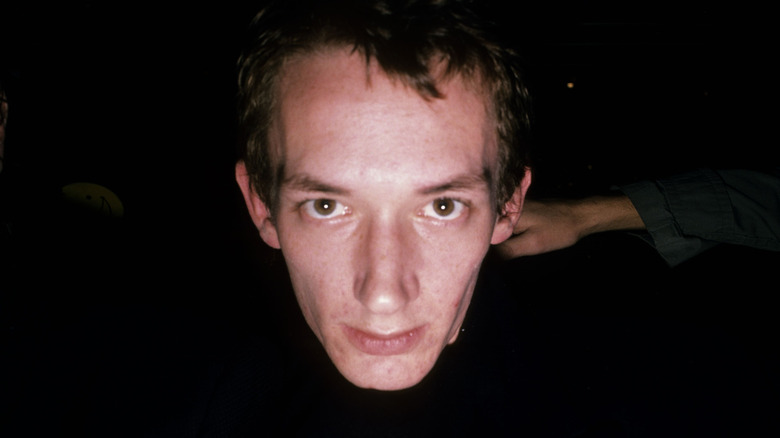
Inspired by the rise of the Sex Pistols, the Clash came together in 1976, forming from the remnants of the London hard rock band the London SS and the pub rock band the 101'ers. Original guitarist Keith Levene helped provide the gritty, agitated sound it was after, and he's also who convinced Joe Strummer to dissolve the 101'ers so that he'd joined this new project. For its first-ever live performance, the Clash managed to land an opening spot for the band that had inspired it, the Sex Pistols.
Strummer had a keen interest in following a deeply political punk trajectory, but Levene didn't enjoy it. He played with the Clash for only a handful of its first gigs while also helping to prepare the songs that would appear on the band's first, self-titled album. When "The Clash" was released in 1977, it included Levene's "What's My Name." But by then, Levene had left the band. Months later, after the Sex Pistols split, its frontman John Lydon created the noisy post-punk band Public Image Ltd. that had some hits in the U.K. but never reached the cultural ubiquity or influence that the Clash had enjoyed.
Bob Klose of Pink Floyd
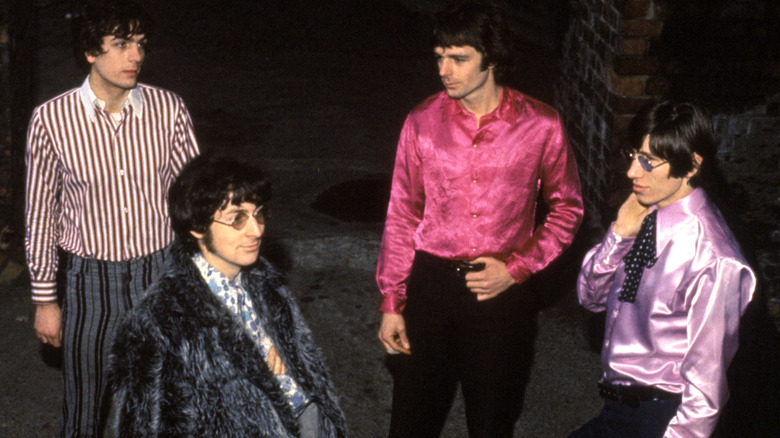
The story of Pink Floyd began in 1965, when guitarist Bob Klose (who later began going by Rado Klose) joined his old Cambridge school friend Roger Waters along with Richard Wright, Nick Mason, and later Syd Barrett, in a band that couldn't decide on a name. The group variously referred to itself as the T-Set, the Meggadeaths, the Abdabs, and Sigma-6, before settling on Pink Floyd.
At the same time as Pink Floyd was taking shape and finding its pop-psychedelic rock sound, and soon after, under the direction of frontman and fellow guitarist Barrett, Klose felt the pull of other, even more intellectual pursuits. That was unfortunate, because as Bassist Waters said in 1984's "Shades of Pink: The Definitive Pink Floyd Profile, "He was really a far better musician than any of the rest of us."
Klose only stayed with Pink Floyd for about a year before he departed to focus on school. "I think he had some exam problems and really felt that he had to apply himself to work, whereas the rest of us were not that conscientious," Waters explained. After barely making the marks to receive a degree in science, Klose developed a passionate interest in photography, and that's the discipline he followed for the remainder of his adult life. In 1967, just two years after Klose left, Pink Floyd released its acclaimed debut album "The Piper at the Gates of Dawn."
Anthony Phillips of Genesis
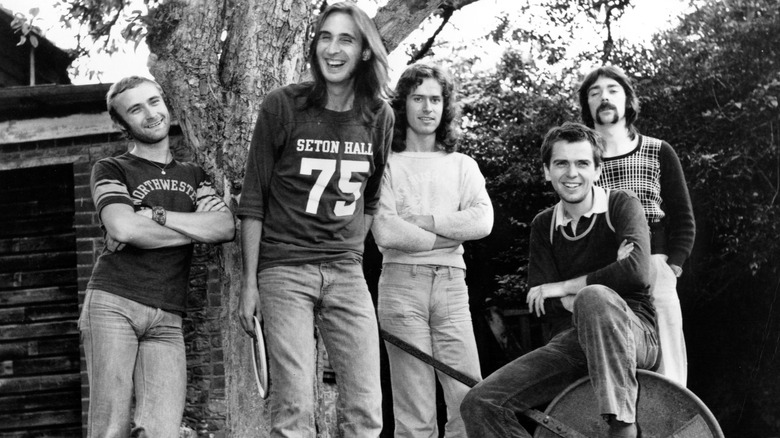
While it would evolve into a radio-friendly pop-rock band in the 1980s after drummer Phil Collins became its lead singer, Genesis started out as an ambitious progressive rock outfit led by Peter Gabriel. Of importance in the band's earliest era: Anthony Phillips. He had a hand in writing nearly every song on Genesis's first album, "From Genesis to Revelation," and participated in the composition of the entirety of album number two, "Trespass."
Both records flopped. For example, "From Genesis to Revelation" didn't reach the album chart in the band's native U.K. at all, and not in the U.S. until 1974, four years after Phillips had left Genesis after a tour gone awry. "When the band went on the road things began to go wrong and I think I realized at that point that this just wasn't the life for me," Phillips wrote on his website. "I just found that the pressure of the whole thing got to me after a while as we had all these gigs where agents were coming along and I thought 'I'm not sure I can deal with this.'"
Two weeks after giving notice, Phillips played a scheduled gig with Genesis in July 1970; "Trespass" hit stores two months later. The rest of Genesis toyed with the idea of splitting up, and after a hiatus, decided to soldier on with new guitarist Steve Hackett while Phillips studied music and music education at the Guildhall School of Music and Drama.
Tony Chapman of the Rolling Stones
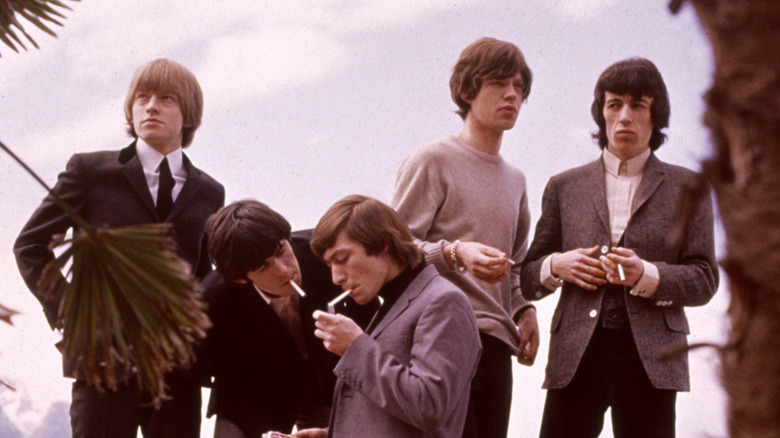
In 1960, Tony Chapman became the drummer for the British band the Cliftons, an early project by bassist Bill Wyman just before he joined the Rolling Stones. Chapman followed Wyman into that band, and according to some reports, he sat behind the kit during the Stones' first gig in July 1962 at London's Marquee club. He definitely played on the Rolling Stones' first studio recordings in October 1962, his drumming keeping the beat when laying down three covers that would serve as a demo tape.
By early 1963, Chapman was no longer a Rolling Stone. He wasn't a good fit, and the band proved too much of a distraction from his job as a salesman. The group's scouted and preferred drummer of choice, Charlie Watts, finally entered the group. With Watts entrenched, the Rolling Stones went on to sell more than 85 million albums worldwide, per Best Selling Albums, and he was a member of the group until his death in 2021.