

Classic Rockers Who Quit Struggling Bands Right Before They Hit The Fame Jackpot
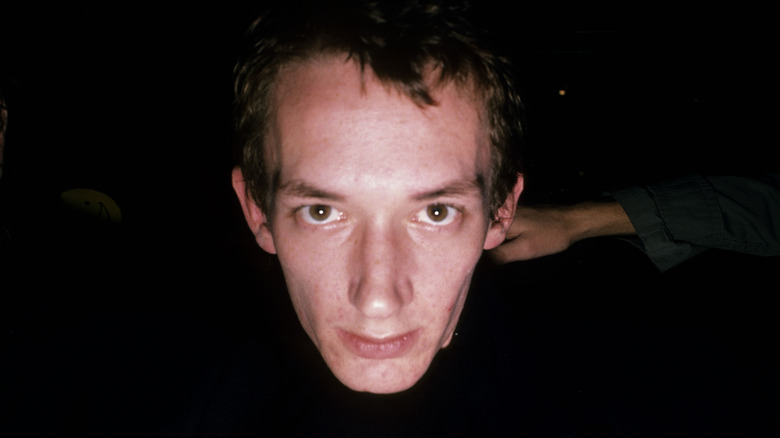
If they were after fame, fortune, and immortal rock star glory, it's unfortunate that these early members of classic rock bands Rush, the Clash, Pink Floyd, Genesis, and the Rolling Stones walked away from those groups during a fallow period and just before they'd become incredibly successful. There was nothing much wrong with their musicianship or talent — they just didn't want to take the band as seriously as the others did. And so, after disagreeing on creative grounds or enduring a motivation gap, these foundational members left the band they helped develop. Little did they know that the act was just about to become the kind of band that would sell tens of million of albums, repeatedly send singles to the top of the charts, release unassailed masterpieces, and rank among the most influential rock bands ever.
Regrets? There may be a few, but ultimately, these stories of rock 'n' roll also-rans and near misses are a glimpse into an alternate history of music. Here are the stories of five musicians who departed some of the most famous and beloved classic rock bands just before they'd make some of the greatest and most consumed music ever recorded.
John Rutsey of Rush
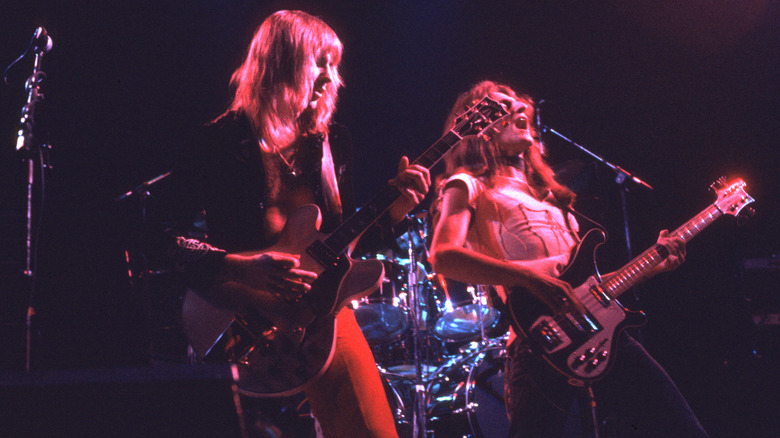
Rush, a dominant prog-rock power trio of the 1970s and 1980s, began as the Projection, a Toronto garage band in 1968 consisting of guitarist Alex Lifeson, bassist Jeff Jones, and drummer John Rutsey. After breaking up and reforming as Rush and playing one show, Jones essentially quit because he wanted to go to a party the same night as a gig. Lifeson wanted to forge ahead and quickly found a replacement in Geddy Lee, who'd play bass and sing lead for Rush until its end in 2015 and the 2020 death of drummer Neil Peart, who joined the band as a replacement for Rutsey.
Rutsey played on Rush's first and self-titled album, released in 1974. After recording and before promotion could begin, Rutsey quit the band because he wasn't up to the rigors of touring, potentially because he was dealing with type 1 diabetes at the time. But he also was no longer a musical fit, a straightforward rock drummer in a band that was increasingly progressive and experimental.
Its next album, "Fly by Night" would be certified platinum for sales of a million copies in the U.S. While the self-titled Rush LP with Rutsey would eventually sell half a million copies over the next two decades, he wasn't with the band on its many other studio LPs that went gold or platinum, nor its 42 Top 40 Billboard Mainstream Rock chart singles. Original Rush member John Rutsey died in 2008 at age 55.
Bob Klose of Pink Floyd
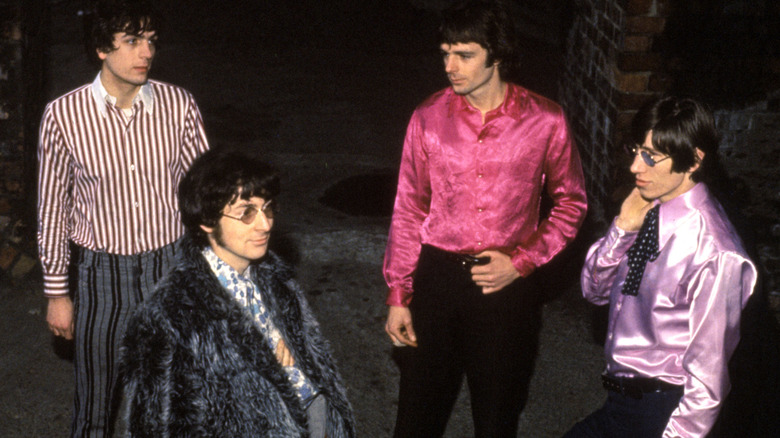
The story of Pink Floyd began in 1965, when guitarist Bob Klose (later going by Rado Klose) joined his school friend Roger Waters, along with Richard Wright, Nick Mason, and later, Syd Barrett, in a band. The group variously referred to itself as the T-Set, the Meggadeaths, the Abdabs, and Sigma-6, before settling on Pink Floyd.
At the same time that Pink Floyd was taking shape, the highly regarded Klose felt the pull of other pursuits. "I think he had some exam problems and really felt that he had to apply himself to work, whereas the rest of us were not that conscientious," bassist Roger Waters explained in 1984's "Shades of Pink: The Definitive Pink Floyd Profile. "He was really a far better musician than any of the rest of us."
Klose only stayed with Pink Floyd for about a year before he departed to focus on school, and then he pursued photography. In 1967, just two years after Klose left, his band released its acclaimed debut album "The Piper at the Gates of Dawn," well on its way to becoming the Rock & Roll Hall of Fame- enshrined progressive rock band responsible for some of the best-selling albums of the 1970s, including "The Dark Side of the Moon" (15 million copies) and "The Wall" (23 million copies).
Anthony Phillips of Genesis
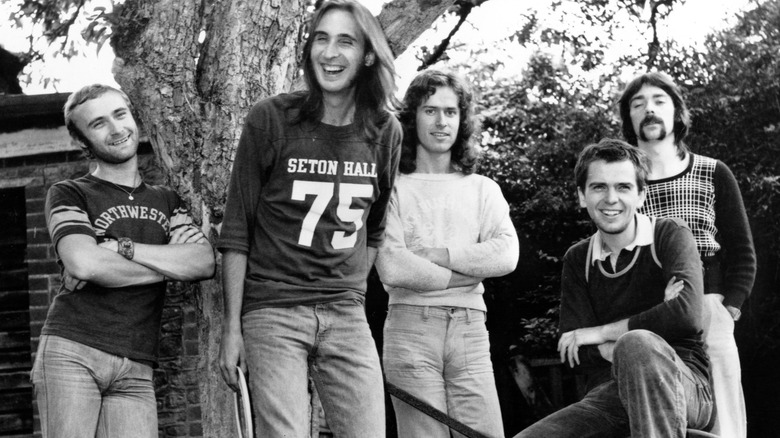
Genesis triumphed in two eras, first as a progressive rock band fronted by Peter Gabriel that made top-selling LPs like "Selling England by the Pound" and "The Lamb Lies Down on Broadway." In the 1980s and 1990s, after Genesis's drummer Phill Collins became the singer, it was a pop-rock band that routinely made the Top 10 with singles like "Invisible Touch" and "I Can't Dance." Not around to enjoy the fruits of either period: guitarist Anthony Phillips.
He'd at least helped write nearly every song on Genesis's first two albums, "From Genesis to Revelation" and "Trespass" — which both flopped. "From Genesis to Revelation" didn't reach the album chart in the band's native U.K. at all, and not in the U.S. until 1974, four years after Phillips left Genesis after a tour gone awry. "When the band went on the road things began to go wrong and I think I realized at that point that this just wasn't the life for me," Phillips wrote on his website.
Two weeks after giving his notice, Phillips played one last scheduled show with Genesis in July 1970. The rest of Genesis toyed with the idea of splitting up, and after a hiatus, decided to soldier on with new guitarist Steve Hackett while Phillips studied music and music education at the Guildhall School of Music and Drama.
Keith Levene of the Clash

Inspired by the rise of the Sex Pistols, the Clash came together in 1976, forming from the remnants of the London hard rock band the London SS and the pub rock band the 101'ers. Original guitarist Keith Levene helped provide the gritty, agitated sound it was after, and he's also who convinced Joe Strummer to dissolve the 101'ers so that he'd joined this new project. For its first-ever live performance, the Clash managed to land an opening spot for the band that had inspired it, the Sex Pistols.
Strummer had a keen interest in following a deeply political punk trajectory, but Levene didn't enjoy it. He played with the Clash for only a handful of its first gigs while also helping to prepare the songs that would appear on the band's first, self-titled album. When "The Clash" was released in 1977, it included Levene's "What's My Name." But by then, Levene had left the band.
Months later, after the Sex Pistols split, its frontman John Lydon created the noisy post-punk band Public Image Ltd. with Levene on guitar. The group had some hits in the U.K. but never reached the cultural ubiquity, influence, or commercial success that the Clash had enjoyed. Credited for taking British punk rock into a political and pointed direction, the Clash also released some smash hit singles such as "Rock the Casbah," "Train in Vain," and "London Calling," the title track of an album that Rolling Stone called the best LP of the 1980s.
Tony Chapman of the Rolling Stones
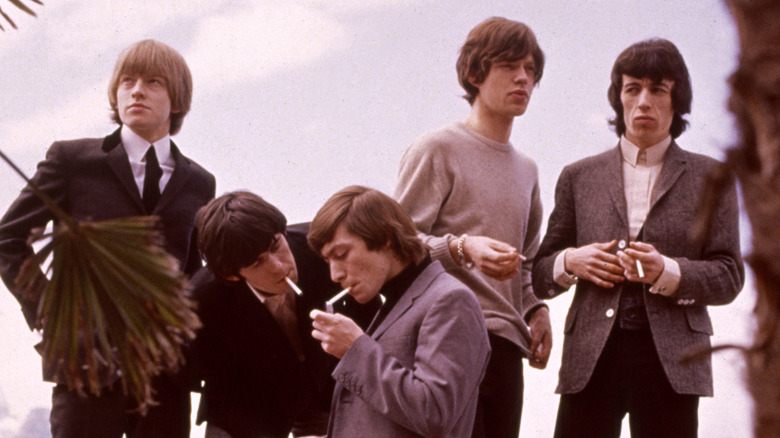
In 1960, Tony Chapman became the drummer for the British band the Cliftons, an early project by bassist Bill Wyman just before he joined the Rolling Stones. Chapman followed Wyman into that band, and according to some reports, he sat behind the kit during the Stones' first gig in July 1962 at London's Marquee club. He definitely played on the Rolling Stones' first studio recordings in October 1962, his drumming keeping the beat when laying down three covers that would serve as a demo tape.
By early 1963, Chapman was no longer a Rolling Stone. He wasn't a good fit, and the band proved too much of a distraction from his job as a salesman. The group's scouted and preferred drummer of choice, Charlie Watts, finally took the job. With Watts entrenched, the Rolling Stones went on to sell more than 85 million albums worldwide, per Best Selling Albums, had 57 songs on the Billboard Hot 100, 23 of those in the top 10, with eight hits reaching the No. 1 spot.