

Musicians Who Switched Genres And Betrayed Their Most Loyal Fans
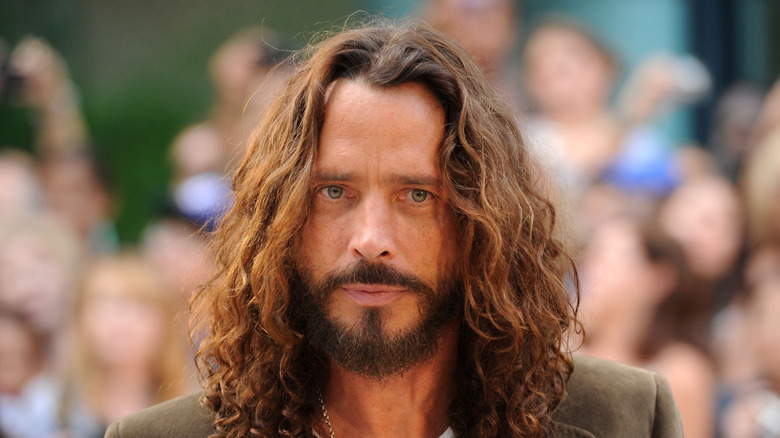
For every Taylor Swift or Shania Twain who crossover and expand their audience while bringing along old fans, there's a Chris Cornell or a Jewel whose following isn't willing to come along for the ride. Some of these artists may end up with a hit or two out of the deal, but ultimately, they become the subject of derisive smack-talk and end up shifting back toward center to keep their fanbase happy and the dollars rolling in.
There are even artists who swing all the way around to the opposite side of the musical spectrum in an attempt to demonstrate their relevance. If you've heard Pat Boone's take on classic heavy metal tunes or Garth Brooks cosplaying as rock star Chris Gaines, you know exactly how it's gone. It's one thing to want to expand your creativity into new areas; it's something entirely different to throw your devoted listeners a curveball in hopes of expanding your audience and your marketability.
Through the years, the worst of the genre-shifting musicians have given critics and listeners plenty of fodder for their complaint cannons. Even if they ended up right back where they started, these acts found out that trying to change their tunes was a major misstep.
Jefferson Starship
Jefferson Starship was a band with a million lives — or at least a million names. Okay ... so it was only three names. But with each name change, the sound changed along with it. The early psychedelic stylings of Grace Slick's hypnotic '60s drug paean "White Rabbit" fell back when Jefferson Airplane changed into Jefferson Starship, a more commercial version poised for success in the '70s. The band had mellowed a bit by the decade's end but kept its rock spirit — and its place on the charts, helped greatly by the talented Marty Balin and songs like "Miracles" and "Count on Me." In this case, with each name change and genre hop, the band's audience followed along.
But something terrible happened when the mid-'80s arrived, and "No Way Out" became the last we heard of the rock-oriented Jefferson Starship. In 1985, the band rebranded as simply Starship and began a disturbing descent into plastic pop music. The band reached No. 1 and hit rock bottom at the same time with "We Built This City," a glib, chart-topping fiasco. We think it's the worst song of the '80s, and we're not alone in that.
Other commercialized No. 1 dreck like "Nothing's Gonna Stop Us Now" proved the sharp-edged early-80s sound had been bleached clean of any remaining artistry. There would be two more synth-drenched albums before Starship came in for its final landing, though a new Starship launched in 2012 and continues touring today (hopefully without that terrible song).
Garth Brooks
Remember when Garth Brooks conjured up imaginary rock star Chris Gaines to spring on his fans? It was just the kind of thing an overly dramatic performer like Brooks would do. Anyone who'd ever seen his overwrought delivery of "The Thunder Rolls" knew the guy's cinematic ambitions were bound to escape someday. But few could have guessed they'd take the form of a poorly executed alt-rock alter ego.
This was one of the most ridiculous and unsuccessful genre shifts in the entire history of modern music. Nothing about it rang true; not the photos of a shaggy-wigged Brooks with a soul patch making moody eyes at the camera, not the pretense that it was someone entirely different from Brooks himself. Certainly the music didn't sound sincere, with a key single being "Right Now," where Brooks/Gaines "rapped" to a sampled version of the Youngbloods' hopeful folk classic, "Get Together."
At least when some artists hop to a new genre, it's a sincere attempt at expanding their musical canon. For Brooks and his failed Chris Gaines experiment (pay no attention to the fluke top 5 R&B-tinged single "Lost in You" that could easily be mistaken for a Kenny Loggins song produced by Babyface), it was simply an off-putting way for the artist to crossover to pop without fearing the loss of his core country audience. Once it was over, Brooks went right back to country music and stayed there.
Jewel
You don't hear much about Jewel anymore, though her music was a striking addition to the mid-'90s radio landscape. She arrived as female singer-songwriters were mounting a resurgence on the scene. Tunes like "Who Will Save Your Soul" were kind of bluesy, sort of country-folk, a little bit pop, and a whole lot personal. The heart-wrenching "Foolish Games" and "Hands" took the singer into the top 10. She struck a literal chord with listeners looking for a performer who didn't restrict herself to simple descriptions.
But after establishing herself as an earthy girl-with-a-guitar presence who eschewed commercial glam, Jewel took a sharp left turn into the land of techno-dance-pop music with her fourth studio album, 2003's "0304," throwing her fans for a sonic loop. The most visible attempt at redefinition was "Intuition," a song that's undeniably catchy, but in the most non-Jewel way possible. Sure, the lyrics may be telling listeners to let their hearts be their guides instead of keeping up with trends, a message social media-obsessed followers can't seem to heed. Dance chart success followed, but the presentation was staunchly in the glossy manner that Jewel seemed to be singing against.
The cognitive dissonance didn't stop the song from hitting No. 20 on the Billboard Hot 100. But the singer came to her senses and went back to her origins with her next release, "Goodbye Alice in Wonderland" in 2006, a rootsy and confessional guitar-oriented album that felt much more authentic.
Chris Cornell
Kudos to grunge god Chris Cornell for stretching his vocal cords from crunchy rock into other realms of musical creativity. The late leader of Soundgarden and Audioslave had a searing voice like few other rock stars have unleashed upon the world, and his devoted following adored him for it. But scooting out of the heavier rock genres and moving into the sphere of R&B pop wasn't something his fans were willing to tolerate.
Cornell tried a shift from grunge to hip-pop with the help of producer extraordinaire Timbaland, the genius who helped bring Missy Elliot and Nelly Furtado all sorts of glossy ear candy. The result was the 2009 album "Scream." Fans still take to Reddit to debate the merits of Cornell altering his lyrical creations to suit the sounds Timbaland was conjuring for him. The more personal lyrical content was peppered with lines that degraded women and talked about being in "the club," which were so far afield from the core Cornell credo that listeners couldn't buy it as a sincere shift. There was also a sense that Cornell was shrinking his voice to fit the songs rather than unleashing in his usual manner.
Reviews for "Scream" were mixed overall, but Cornell seemed to get the message. His follow-up album, 2011's acoustic "Songbook," was a welcome return to his rock roots, but with the amps unplugged — and no drum machines.
Pat Boone
Who would've thought Pat Boone, America's sweetheart crooner from the '50s and '60s, would ever go metal? Boone spent the first decades of his career building a musical repertoire that was strictly representative of so-called wholesome family values. In the '70s, he moved into gospel music and became a musical beacon for the Christian community, establishing himself as a contemporary pop star for those with a taste for the holier side of life.
Then, out of the blue and prompted by none other than Dick Clark himself, Boone did a 180 more confusing than an "Exorcist" head-turn in 1997 and released his own album of metal cover songs, called "No More Mr. Nice Guy." He gave compositions like Metallica's "Enter Sandman" his own cheesy big band treatment and enlisted some of the original acts to contribute backing vocals, but he sang the lyrics as written. It was the definition of cringe, and it still makes our teeth ache when we think about it.
Yes, the milquetoast performer who accused the heavy metal sector of corrupting young minds was suddenly singing its praises — and he even dressed the part, wearing his version of leather and studs with a gold hoop earring to go with it all. His fans pegged him as a sell-out who'd crossed over to the dark side. It was such a hypocritical publicity ploy that the Christian television company Trinity Broadcasting Network cancelled Boone's show, though they reconsidered once Boone apologized.