

Classic Rock Musicians Who Only Became Famous Decades After Their Deaths
We may receive a commission on purchases made from links.
The music industry has always been a breeding ground for incredible talent, turning ordinary men and women into icons of their age. Although some artists have been severely mistreated by their record labels, support from legions of fans has ensured their success, oftentimes even after the musicians' death. Rock lovers mourned the loss of veteran giants, such as Meat Loaf, David Johansen, and Ozzy Osbourne, but their back catalogs mean we can all remember them in the best way: through their music.
Unfortunately, the list of those who died at a much younger age is longer than anyone would like, and counts greats like troubled Doors frontman Jim Morrison, as well as Janis Joplin, Chris Cornell, and Kurt Cobain among its numbers. While this galaxy of music stars died after they became famous, there are also several who were largely unknown or on the brink of making it big when tragedy struck. Mental health issues, heavy drug use, and even a tragic accident are among the reasons why these talented stars are no longer with us, but they still managed to find fame in the years after their deaths.
Ian Curtis
If the only measure of a musician's influence was how many chart hits they notched up, then Ian Curtis would barely register. Yet this intelligent, well-read young man, who died by suicide at the age of 23, loomed large over the band that was born in the aftermath of his death, and has inspired artists including the Smashing Pumpkins, U2, Arcade Fire, and Nine Inch Nails.
Curtis first met Joy Division bandmates Bernard Sumner and Peter Hook at a 1976 punk show in Manchester (drummer Stephen Morris joined the following year), and it didn't take long for Curtis to become the core of the band. Producer Martin Hannett drove the sound of Joy Division's debut album "Unknown Pleasures," released in 1979, but Curtis was the magnetic frontman. Although naturally introverted, he dominated the stage with his unique dancing style.
Those physical performances were mesmerizing, but Curtis also had epilepsy, and his seizures became more intense after he joined Joy Division. As the band's reputation slowly grew, so did Curtis' mental health issues, and in 1980, he took his own life, hours before the group was set to leave for a North American tour. Two months later, Joy Division's second album, "Closer," was released, cementing Curtis' reputation as a musical artist, while his surviving bandmates became New Order. In 2007, the film "Control" explored his life and legacy, introducing a new generation to this talented and enigmatic man.
Nick Drake
In a 1972 review for Melody Maker, journalist Mark Plummer wrote: "The more you listen to [Nick] Drake, the more compelling his music becomes — but all the time it hides from you... It could be that Nick Drake does not exist at all" (via On Stage). As thumbnail portraits of this British musician go, it's pretty much on the money. Drake was, by all accounts, an unremarkable young man, who was stymied by a lack of confidence and hated playing live. The trio of albums he completed before his fatal overdose in 1974 at the age of 26, were ignored by all but the small group of people who knew he existed.
It took a 1999 commercial for Volkswagen for the world to sit up and pay attention. The ad was the German company's first to hit the internet, and it allowed viewers to download the featured track, which came from Drake's final album, "Pink Moon." Suddenly, everyone was talking about the impoverished artist whose mental health had been in a tailspin for months before his death.
The renewed interest prompted Island Records to release "Made Love to Magic," a compilation of remixes and outtakes, while Drake's songs also peppered the soundtracks of movies like "The Royal Tenenbaums" and "Garden State." In 2023, artists including David Gray and Self Esteem covered his tracks for "The Endless Coloured Ways" CD. In the decades since he died, the ethereal figure of Nick Drake has solidified into a loved and respected artist.
Jeff Buckley
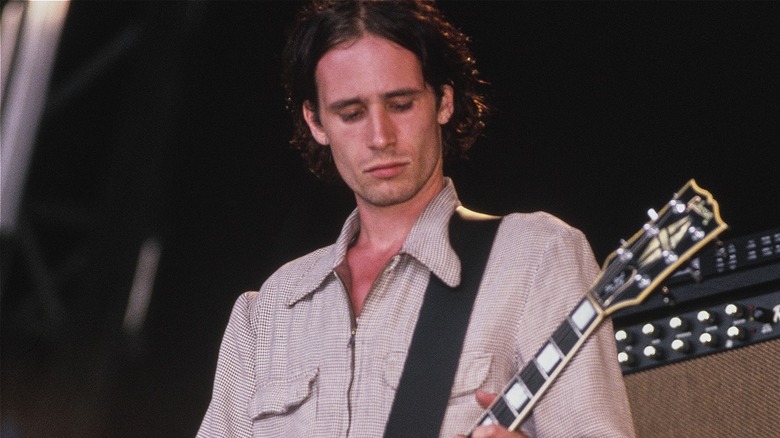
It can be hard to look at photos of Jeff Buckley, with his shock of dark hair and intense stare. He looks so alive, so present, but it's an illusion. Born in Orange County in 1966, he was 8 years old when his singer dad Tim died after a drug overdose, but that didn't stop him from following in his father's footsteps. During the early 1990s, Jeff built a reputation as an impressive artist, and in 1993, Columbia Records released his EP "Live at Sin-é."
The following year, Buckley released his first studio album, "Grace," which included a cover of Leonard Cohen's "Hallelujah." He spent the next few years touring in the United States and around the world while also working on a second album, provisionally called "My Sweetheart, the Drunk." The 30-year-old Buckley would never live to see it completed.
While in Memphis on May 29, 1997, the singer-songwriter waded into Wolf River Harbor, something he'd done often. This time, he was dragged under the water by a passing boat's wake, his leg became caught in debris, and he drowned. Buckley's tragic death naturally led to revived interest in "Grace," but his reputation has been burnished by his second album and the live performances that have been released over the years. His song "Lover, You Should've Come Over" became a TikTok sensation, bringing Buckley to an audience that wasn't even born when he died, while the official documentary "It's Never Over, Jeff Buckley" hit U.S. cinemas in 2025.
Bradley Nowell
Rock 'n' roll, addiction, and excess have been too-easy bedfellows for a long time. While some '80s musicians may have been wasted on stage, they cleaned up and lived to tell the tale. The same can't be said for Bradley Nowell, who died in May 1996 after taking a stronger type of heroin than the Sublime frontman was used to. While he became another tragic casualty of drugs, his band went on to chart success, fame, and fortune.
Nowell had been writing and performing music since his teens, but when he met Eric Wilson and Bud Gaugh, they clicked, and the trio put together the 1992 album "40 Oz. to Freedom," releasing it on their own label. The band's second disc, "Robbin' the Hood," was recorded at a crack house, and by 1995, amid preparations for their third, self-titled album, Nowell's attempts to free himself from the devastating effects of drugs had failed.
Around two months after his death, "Sublime" hit stores, spawned three chart hits, and racked up more than 6.5 million sales by 2026. Live releases and "3 Ring Circus," which marked the 25th anniversary of the band's inaugural live show, continued to showcase their infectious sound. As well as creating an army of fans who wore out copies of their albums, Sublime's blend of ska, rock, and reggae that Nowell helped create has left a profound impression on a generation of music lovers.
If you or anyone you know needs help with addiction issues or is struggling or in crisis, contact the relevant resources below:
- Visit the Substance Abuse and Mental Health Services Administration website or contact SAMHSA's National Helpline at 1-800-662-HELP (4357).
- Call or text 988 or chat 988lifeline.org