

'70s Bands Whose Careers Ended Too Soon
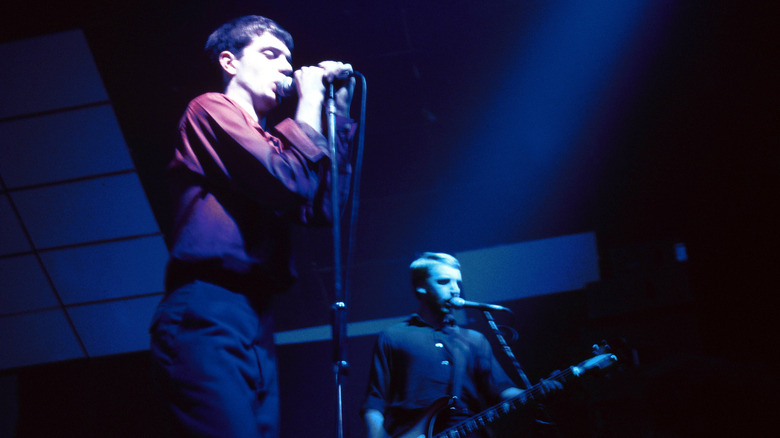
The 1970s saw some major musical artists dominate the airwaves. Bands like the Eagles and Fleetwood Mac put out a slew of records, solidifying their place in history as the most important rock bands of the decade, and they have continued to perform together years after they made it big. Then there were some groups that for various reasons — internal tensions, poor sales, lousy representation, exhaustion, drugs, or death — just couldn't last.
Bands like Big Star and Joy Division put out a few albums before imploding way too soon even as their reputations and influence continued to grow. In some cases, '70s acts like Labelle, Ram Jam, and the Raspberries managed to have hits during their heyday before breaking up. And while some of the band members may have gone on to have success, whether as solo artists or in other bands, the magic that made the original acts so special died the day they called it quits. One can only imagine where these groups may have gone musically if only they'd managed to stick it out.
Big Star, little sales
Big Star formed in Memphis, Tennessee in 1971 and brought together the dynamic interplay between guitarist-songwriters Chris Bell and Alex Chilton, whose divergent styles helped make this power-pop band so special. Big Star's first album, 1972's "#1 Record," clicked with critics, but it had lackluster sales due to poor distribution by the band's parent record company Stax. Bell left the band after the first record, feeling defeated by the lack of sales — and possibly in part because of the focus on Chilton, who already had name recognition as the lead singer for The Box Tops before he'd joined Big Star.
Chilton, bassist Andy Hummel, and drummer Jody Stephens soldiered on without Bell, although Bell's presence remained on the second album, "Radio City," having co-written two of the songs. More critical acclaim followed, as did poor sales, again due to distribution issues. A third album was shelved by the record company before finally being released in 1978. Big Star ended up breaking up just before their fame exploded in 1974. Bell died in a single-car accident in 1978 at age 27, destroying any chance of a reunion with all the original members. By the 1980s, bands like REM and The Replacements were loudly proclaiming their love for Big Star, helping to revive interest in the group. A later incarnation of Big Star that included Chilton and Stephens released a fourth album, "In Space," but it couldn't recapture the fire of Bell and Chilton.
Labelle needed a break
Labelle, made up of Patti LaBelle, Nona Hendryx, and Sarah Dash, was a groundbreaking musical group that combined rock, soul, and R&B with elements of glam. The band's music touched on social issues like racism, sexism, and self-identity before it was common. Labelle started out as a traditional 60s girl group called Patti LaBelle and the Blue Belles. But in the early 1970s, after becoming a trio when Cindy Birdsong left to join The Supremes, the act rebranded as Labelle and broke the mold with a new musical direction. After going through several labels, the band's manager, Vicki Wickham, secured a deal with Epic Records, which released its fourth album, "Nightbirds." With legendary New Orleans producer Allen Toussaint on board and backed by the Meters, the album shot up the charts thanks in part to the proto-disco rendition of "Lady Marmalade."
The next album, "Phoenix," didn't sell as well, and artistic differences and internal tensions also took their toll. The members of Labelle ultimately went their separate ways after the band's 1976 album "Chameleon" received a lukewarm reception. All three members went on to solo careers, with Patti LaBelle finding the most success. In 2025, Hendryx began working on a rock opera about Labelle with Pulitzer Prize-winning playwright Lynn Nottage that is currently in development. Labelle has reunited briefly over the years and released one more album, 2008's "Back to Now." Still, you have to wonder what the seminal group's musical trajectory would have been if it had remained together through the decades.
Joy Division's troubled frontman
Joy Division only released two studio albums in its short tenure that lasted from 1978 to 1980. Yet the Manchester-based post-punk band's sound has been arguably the most influential in modern rock history and continues to be felt more than four decades on. The band began in 1976 as Warsaw, inspired by the Sex Pistols. By 1978, singer Ian Curtis, guitarist Bernard Sumner, and bassist Peter Hook were joined by drummer Stephen Morris and had changed the group's name to Joy Division. The band's first album, 1979's "Unknown Pleasures," was stark, atmospheric, bleak, and completely unlike anything before it. Masterfully shaped by producer Martin Hannett, the album transformed punk aggression into a minimalist soundscape that highlighted Curtis' dark poetry. The group's second album, again with Hannett as producer, took its music further into a dark industrial sound with the addition of synthesizers.
Curtis, who had epilepsy and depression, died by suicide on May 18, 1980, not long before the band's first North American tour. With his death, Joy Division came to an end. In the wake of this tragedy, the rest of the group continued on as New Order, with the addition of keyboardist Gillian Gilbert. New Order was very different from its predecessor and was driven by synthesizers and a more pop and dance-oriented sound. While New Order was also incredibly influential, it didn't have the same emotional depth Curtis' lyrics gave to Joy Division's music.
Ram Jam just stopped jamming
Ram Jam was a 1970s band full of contradictions, which may help explain why this New York-based group only lasted a little more than a year. To start, its biggest hit, "Black Betty" — a rendition of the traditional Black work song popularized by legendary bluesman Lead Belly (Huddie Ledbetter) in the late 1930s — wasn't actually recorded by the band. Ram Jam's singer and guitarist, Bill Bartlett (who had been a member of The Lemon Pipers of "Green Tambourine" fame), recorded "Black Betty" with his band, Starstruck, in 1975, which was a regional hit in Ohio. Two executives from Super K Records crafted Ram Jam around Bartlett's and Starstruck's version of "Black Betty."
They released the repackaged version as a single and included it on Ram Jam's self-titled 1977 debut album. The song went to No. 18 on the Billboard Hot 100 and helped push the album to No. 34 on the Billboard 200. The rest of the album veers from Allman Brothers' style of Southern rock to early '70s Stones. Released the following year, Ram Jam's second album, "Portrait of the Artist as a Young Ram," gets deep into proto-metal. Unfortunately, the second album didn't sell as well, and the band soon broke up. While both Ram Jam albums contain some good musicianship and fun moments, their sound never quite jelled into something unique enough to rise above the band's influences. But given more time together, Ram Jam's music might have coalesced into a more coherent vision and produced something truly unique.
The Raspberries withered
You may have completely forgotten about the Raspberries, but in the 1970s, this power-pop quartet out of Cleveland, Ohio was big. The band had a No. 5 hit on the Billboard Hot 100 with "Go All the Way," from its self-titled debut album of 1972. Over four albums, the Raspberries crafted gems that were laden with crunchy power chords and Beatlesque harmonies. The group's classic lineup included singer, guitarist, and keyboard player Eric Carmen; guitarist Wally Bryson; bassist David Smalley; and drummer Jim Bonfanti. By 1973, internal tensions over Carmen's creative control (especially involving Bryson), and frustrations over poor management, lackluster record company backing, and exhaustion from relentless touring helped pull the band apart.
In late 1973, Smalley and Bonfanti left the band, which recorded one more album, "Starting Over," before breaking up in 1975. Carmen went solo and had several hits, including "All by Myself," which was released in 1976. The band's original lineup regrouped in 2004, later toured together, and recorded a live album, 2017's "Pop Art Live." But there was no more new music or studio albums, and with the death of frontman Carmen in 2024, there won't be. Like the other musical artists in this story, the Raspberries created something unique that, due to various reasons, ended all too soon.