

Hit Songs That Only Exist Because Artists Didn't Back Down
Some of the most famous, beloved, and money-generating singles of all time might have been lost to history or buried on an album had the artists who recorded them not fought for their release. Sure, it eventually became extremely clear that these undeniable classic songs resonated with very large swaths of rock, pop, and country fans. But at first, they didn't thrill the music industry's gatekeepers, such as producers and record company executives. Some of them even drew anger, and sometimes, other people in the band didn't quite believe that their cohort's compositions were worthy of being released to radio or set out to compete for a slot on a music chart.
It's of great relief, then, that the musicians responsible for these singles refused to go along with the plans of others, and they did what they had to do to ensure that their masterful work received as large of an audience as possible. They argued with their producers and label bosses, threatened to quit or break their contracts, and engaged in other such hardball tactics. At the end, they were correct, because those tunes became hit, career-making singles — but only because they refused to be complacent.
Hey Jude
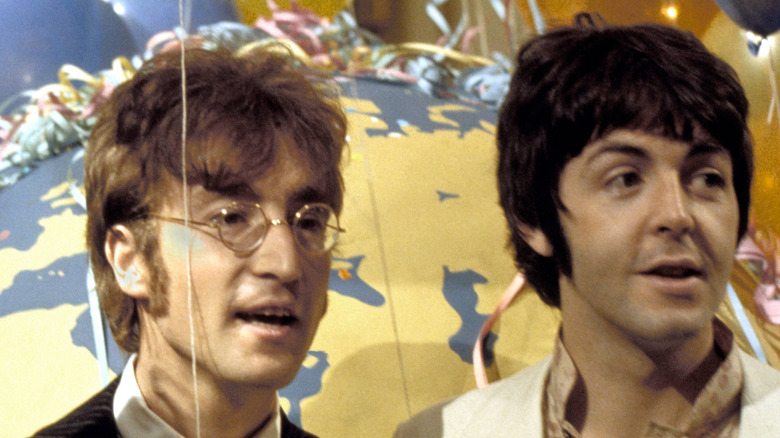
The Beatles' "Hey Jude" is a piano-driven rock anthem with a lengthy singalong section written primarily by Paul McCartney for the son of bandmate John Lennon, who at the time was in the middle of divorcing the child's mother. It's The Beatles' top chart hit in the U.S. — the most successful of its record 20 No. 1 hits — and the iconic ballad held the No. 1 spot the longest in 1968. In other words, it's the biggest smash by the best-selling band of all time, and it could've easily never even been released as a single.
The Beatles' biggest advocate was its producer and arranger of choice, George Martin, who presided over the recording of "Hey Jude." The use of a 36-member orchestra was Martin's idea — the final "na, na-na" section seemed flat and overlong to him, and he figured the additional musicians would add heft and credibility. After mixing the song, it still felt too long to Martin, and he told the Beatles that a 7:11 single wouldn't fly. "After I timed it, I actually said, 'You can't make a single that long.' I was shouted down by the boys," he recalled in "Sound Pictures: The Life of Beatles Producer George Martin — The Later Years, 1966 — 2016." Arguing that radio DJs wouldn't give "Hey Jude" any airtime, Lennon delivered the final words that made Martin back off: "They will if it's us."
Seven Nation Army
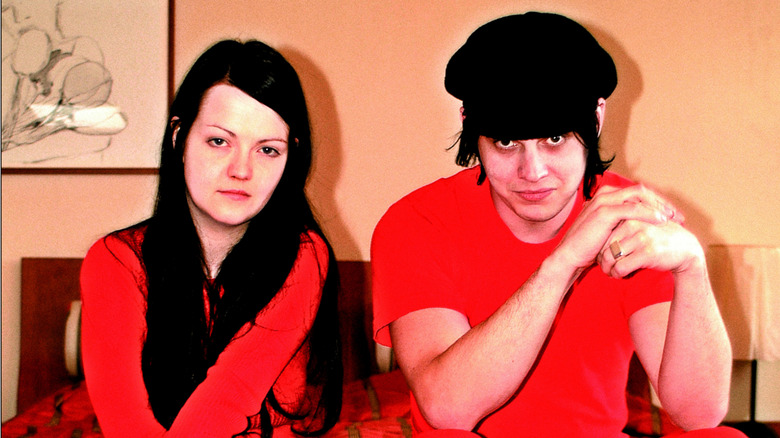
"Elephant," the fourth studio album by power duo The White Stripes, released in 2003, led off with "Seven Nation Army," a song very special to bandleader Jack White. With its title derived from the composer's incorrect childhood pronunciation of "Salvation Army," the riff came to White during a soundcheck, and he held onto it for a while, thinking it would be perfect to anchor a James Bond movie theme song. Figuring he'd never get the chance, he built the low and ominous motif into "Seven Nation Army," pairing it with some wailing solos and Meg White's propulsive and then thrashing drums. It became a major hit for the White Stripes, reaching the top 10 in the U.K. and topping the alternative rock chart in the U.S. It subsequently entered the rock canon as a song frequently played in sports stadiums.
White believed in "Seven Nation Army" so much that he had to argue with and convince multiple parties that it had hit single potential. "I can think back to when 'Elephant' came out," White told radio outlet XFM. "I wanted to put 'Seven Nation Army' out as a single. The label in England and the label in America both didn't want to." The preferred showcase song by both XL Recordings and V2, respectively: the bluesy "There's No Home For You Here."
What's Going On
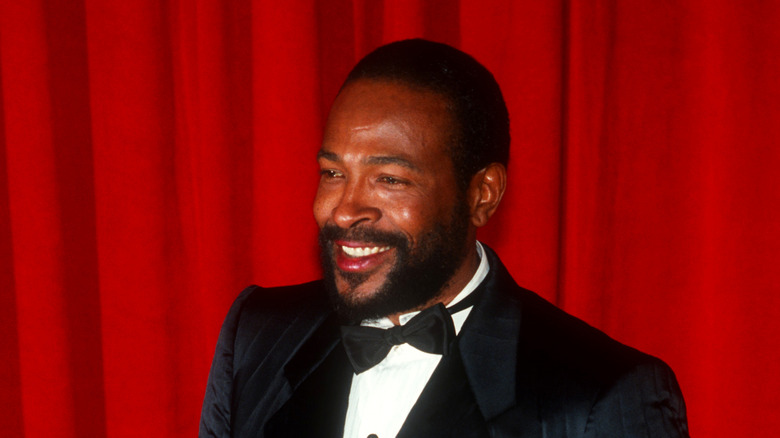
In the 1960s, Marvin Gaye dominated the R&B chart. He also frequently crossed over to the Hot 100 with his smooth and passionate hits recorded for the storied Motown Records, like "I Heard It Through the Grapevine," "Too Busy Thinking About My Baby," and "How Sweet It Is (To Be Loved by You)." Early in the next decade, Gaye found his political voice, and he co-wrote and recorded the issues-oriented meditation "What's Going On." That's a statement, not a question — the lyrics express an anti-war message and discuss the explosive protest climate of the era. Gaye gave the song to Motown boss Berry Gordy, who, afraid that his label's superstar was heading in an experimental and decidedly noncommercial direction, told Gaye he hated it. According to "33 Revolutions per Minute," Gordy deemed it "the worst thing I've ever heard in my life." There was no chance he'd let the public hear it.
But Gaye, as one of Motown's most notable and bankable talents, had leverage. If Motown didn't issue "What's Going On" as a single, Gaye wouldn't record any material at all for the company. Ending the impasse, the label finally caved and put out "What's Going On" as a single. It reached No. 2 on the Hot 100 in 1971.
Sweet Dreams (Are Made of This)
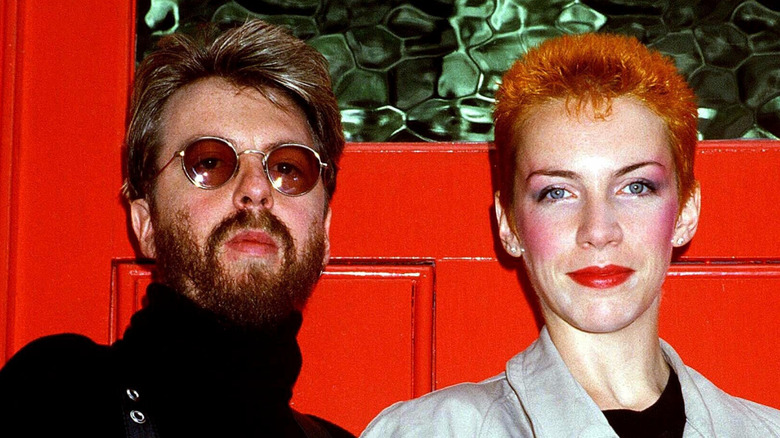
Sinister and robotic but also soulful and soaked in layers of lush synthesizers, Eurythmics' "Sweet Dreams (Are Made of This)" didn't fit the mainstream pop-rock sound of the mid-1980s. Composed and crafted by Eurythmics' instrumentalist Dave Stewart and vocalist Annie Lennox, "Sweet Dreams (Are Made of This)" doesn't employ a typical verse-chorus-verse structure. In fact, executives at RCA Records alleged that it didn't have a chorus at all, thus making it commercially unviable. For this reason, "Sweet Dreams (Are Made of This)" strangely wasn't picked as a single to promote the 1983 Eurythmics album of the same name. "We thought we'd done something miraculous," Stewart told The Guardian.
Fortunately for the Eurythmics, a disc jockey in Cleveland took it upon himself to play "Sweet Dreams (Are Made of This)" on the air, and it became a local smash before it took off elsewhere. "The label relented, it was a global hit, and No. 1 in the U.S.," Steward pointed out. A strange thing from the early days of MTV is that the network was instrumental in Eurythmics' success. "People went bonkers for the video, which was constantly on MTV," Stewart said of the "Sweet Dreams (Are Made of This)" clip featuring a cow and mostly set in a conference room.
Bohemian Rhapsody
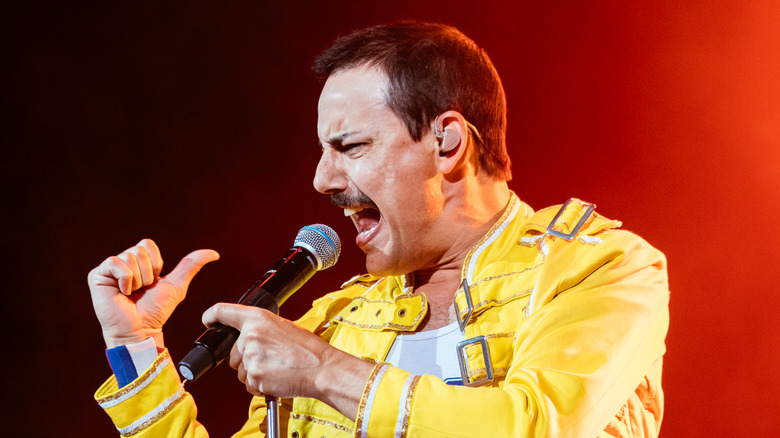
"Bohemian Rhapsody" is a '70s classic rock song worth a head-turning amount of money and a rock opera in miniature, but not that miniature. Just about six minutes long, Queen's epic, multi-part 1975 song was a technological marvel of its time. Studio wizardry created a virtual army of guitars and a simulated gigantic choir that bolsters singer Freddie Mercury telling a vague story about a murderer while also name-dropping Galileo and Beelzebub.
The person closest to "Bohemian Rhapsody" that had reservations about the song: Queen bassist John Deacon, who unsuccessfully tried to convince the rest of the band to cut it down, fearing that releasing it in full would be a major mistake. The band's label, EMI, wasn't sure of the song's prospects and hesitated to give it a single release. Mercury then set into motion some events that would force its hand. He took a demo of "Bohemian Rhapsody" to popular U.K. radio disc jockey Kenny Everett to see what he thought. Instead, he played "Bohemian Rhapsody" on the air — 14 times in a weekend. The public enjoyed the song, and EMI agreed to let "Bohemian Rhapsody" be a single. When it was put up for sale, it shot to No. 1 on the U.K. pop chart and stayed there for nine weeks.
More Than Words
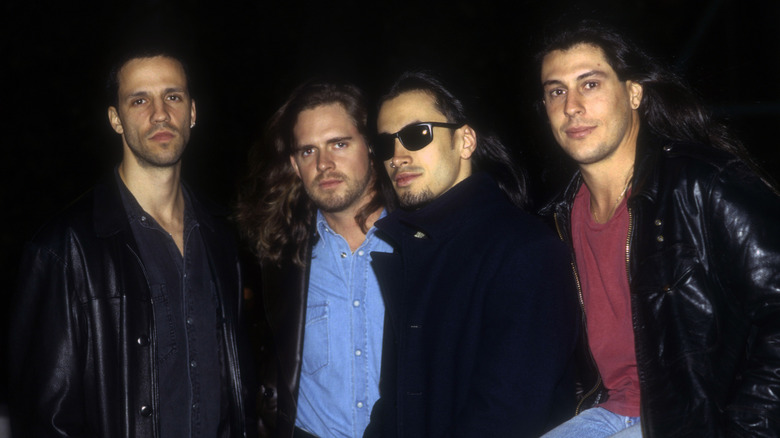
A loud, funky, and fast-playing hard rock band, Extreme released its first, self-titled album in 1989, and the singles "Kid Ego" and "Play with Me" found a receptive audience (the latter was even featured in the metalhead comedy "Bill and Ted's Excellent Adventure"). A&M Records quickly released a follow-up, "Extreme II: Pornograffitti (A Funked up Fairytale)" in 1990, but the singles "Decadence Dance" and "Get the Funk Out" didn't bring a lot of mainstream attention. Guitarist Nuno Bettencourt thought the time was right for Extreme to roll out something different. "More Than Words" was a stripped-down love ballad consisting essentially of Bettencourt playing acoustic guitar and singing backup to lead singer Gary Cherone. "When we performed it for an audience, they told us it was a hit. Onstage, before we even got a word out, the whole crowd would be singing it — before it was even a single!" Bettencourt told Billboard. "So that right there told us: 'Go for it, take that risk.'"
A&M Records strongly disagreed. "Our label at the time didn't want to release 'More Than Words' as a single because there was nothing on the radio like that at the time," Bettencourt said. He added: "Everybody was doing big power ballads at the time, and this was more like an Everly Brothers or Beatles track. But we fought for it." He went so far as to threaten to leave Extreme if "More Than Words" wasn't a single. A&M gave in, and "More Than Words" hit No. 1 in June 1991.
Home Sweet Home
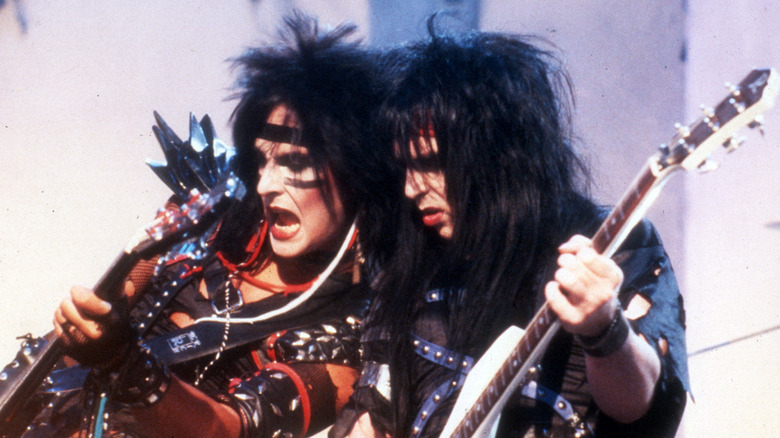
In 1983, Motley Crüe embarked on its first major tour, an 18-month jaunt. At tour's end, the band returned to Los Angeles and began work on the "Theater of Pain" album, and in particular the song "Home Sweet Home." "The lyrics came out of that feeling of being gone so long and wanting to come back, which is ironic ... because all you ever want is to get in a band and go on the road, but then you're on the road and you want to come home," leader Nikki Sixx said in "The End — Live in Los Angeles" (via Ultimate Classic Rock).
Elektra Records refused "Theater of Pain" because of "Home Sweet Home" — the piano-based power ballad was too different from the hair metal Motley Crüe usually produced. The band's response: It would jump to another label and take "Theater of Pain" along. Elektra called its bluff and released the LP with "Home Sweet Home" included but still dismissed the idea of putting out the ballad as a single. Without any resources from Elektra, Motley Crüe self-funded and self-produced a video for "Home Sweet Home" and sent it to MTV. It got such a great response from fans that Elektra pretty much had to issue a single version of "Home Sweet Home," which made the Hot 100 in October 1985 and the Top 40 upon re-release in 1991.
Hallelujah
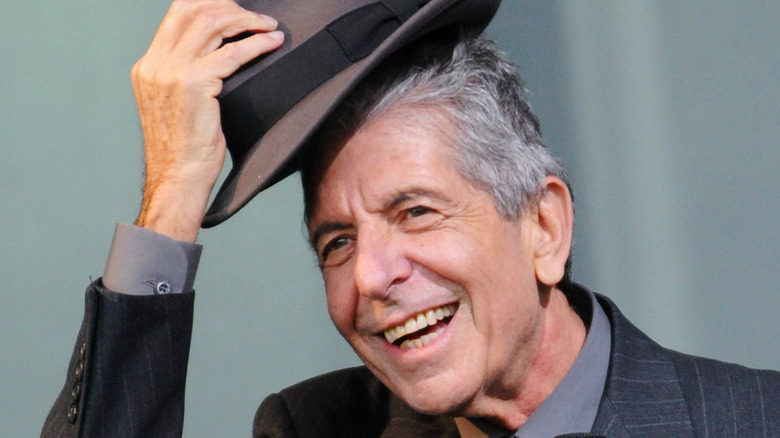
A complex and baffling ballad that takes a dark trip into the human psyche, the haunting "Hallelujah" is the signature work of singer-songwriter and poet Leonard Cohen. He wrote and recorded it for his 1984 album "Various Positions," but his longtime label, CBS/Columbia Records, didn't want any part of the LP and wouldn't make it available to American record buyers. The company did issue the record in other countries, and Cohen was permitted to shop it around in the U.S., where he found a willing partner in the small indie label PVC Records.
"Hallelujah" was never a big hit single. It peaked at No. 59 in the U.S. in December 2016 — weeks after Cohen's death — but by that point it had become entrenched in the cultural firmament. After Jeff Buckley recorded an affecting cover in 1994 and raised its profile, it was employed to soundtrack sad and heartbreaking moments on numerous television shows. Cohen even jokingly mentioned wanting to get rid of the song he had to fight for in the 1980s. "Once or twice I've felt maybe I should lend my voice to silencing it, but on second thought no, I'm very happy that it's being sung," Cohen told The Guardian in 2012.
Beth
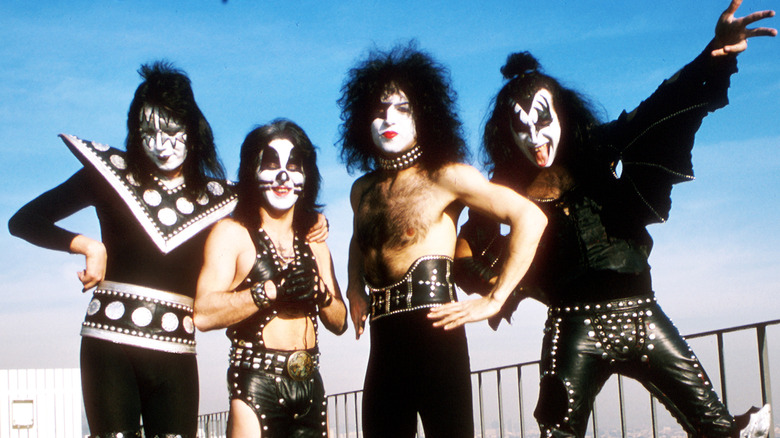
For his previous band Chelsea, Kiss drummer Peter Criss wrote a folk-rock song called "Beck," a teasing of his bandmate Mike Brand, whose wife Becky often interrupted group rehearsals with telephone calls. Criss presented it to Kiss in the mid-1970s as a potential album track, and bassist Gene Simmons thought that "Beck" ought to become "Beth," so nobody thought that Kiss was singing a love song to famous rock guitarist Jeff Beck. Producer Bob Ezrin reworked it into a slow and soft number with piano and a string section.
At the time, Kiss was engaged in tense negotiations with its label, Casablanca Records, headed by Neil Bogart, who was also in the midst of a divorce from a woman named Beth. Bogart interpreted the name change as a direct insult, so he didn't care for "Beth." And at first, neither did some other members of Kiss. After a reportedly hostile recording session, Simmons and Paul Stanley voiced their concerns that the gentle ballad was antithetical to everything Kiss stood for.
But in part because Criss was allowed one song on every Kiss LP, "Beth" was included on 1976's "Destroyer" and used as the B-side of the single "Detroit Rock City." Then, a curious radio DJ, not thrilled with the A-side, flipped over the record and found "Beth." The notion spread, and in December 1976, "Beth" reached No. 7 on the Hot 100, the biggest hit Kiss would ever have.
Highwayman
Country crossed over to the pop chart in a big way in the 1970s, thanks to Glen Campbell. He was a touring guitarist for the Beach Boys before becoming a solo superstar, and he scored two No. 1 pop hits with country songs, "Rhinestone Cowboy" in 1975 and "Southern Nights" in 1977. That should've proved to Capitol Records that Campbell had a profitable sound, but an executive at the time was too fixated on another late '70s trend: new wave. Campbell finished the 1979 album "Highwayman" and wanted to release the title track as a single, but Capitol refused. "They said, 'We don't want that, why don't you do something more like this?' and they played me 'My Sharona' by The Knack," Campbell told Record Collector.
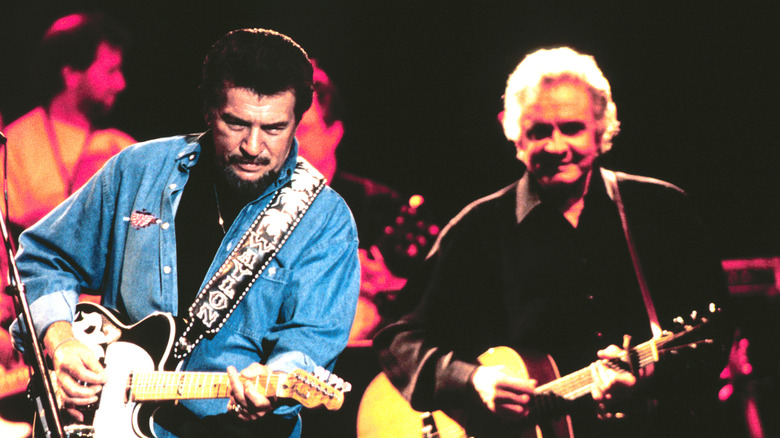
Unable to get his version of "Highwayman" issued as a single, Campbell recommended the song to Johnny Cash. When Cash taped a TV special with Waylon Jennings, Kris Kristofferson, and Willie Nelson, it went so well they made plans to make an album. The whole foursome was down to cut a new version of "Highwayman," including Jennings, who'd turned down the chance to record the song a few years earlier when approached by its writer, Jimmy Webb. Not only did the four country legends record "Highwayman," they named their supergroup after it. The Highwaymen released the "Highwayman" LP in 1985, and the titular song, finally a single, became a No. 1 hit on Billboard's country chart.
Man in the Box
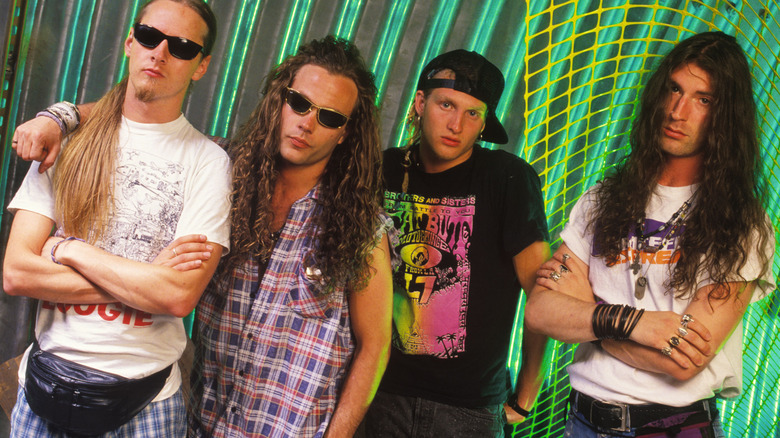
"Man in the Box" is vital to the story of Alice in Chains and the history of grunge music. Alice in Chains was the first band with that feedback-drenched, metal-adjacent, down-tuned, melancholy Seattle sound to notch a national hit single. The group's first major-label LP, "Facelift," reached stores in 1990, and in the summer of 1991, "Man in the Box" peaked at No. 18 on Billboard's rock chart.
The grunge era was underway, and that might not have occurred had members of Alice in Chains not stood up to Columbia Records executives apprehensive about unleashing "Man in the Box" to radio. "We picked all our singles and we fought with them over a couple of early ones," guitarist Jerry Cantrell told interviewer Rick Beato. "I remember when we were picking 'Man in the Box,' they were like, 'It's too long, it's too slow,' we're like, 'This is the single, man,'" he later recalled. The contextual, questioning references to Jesus Christ also made the label nervous, and there was concern that the band could attract protesters. But Cantrell insisted that "Man in the Box" succeed "We Die Young" as a single. "It was huge. That's the song that got us a gold record," Cantrell said.