

What Happened To The Grateful Dead After Jerry Garcia's Death
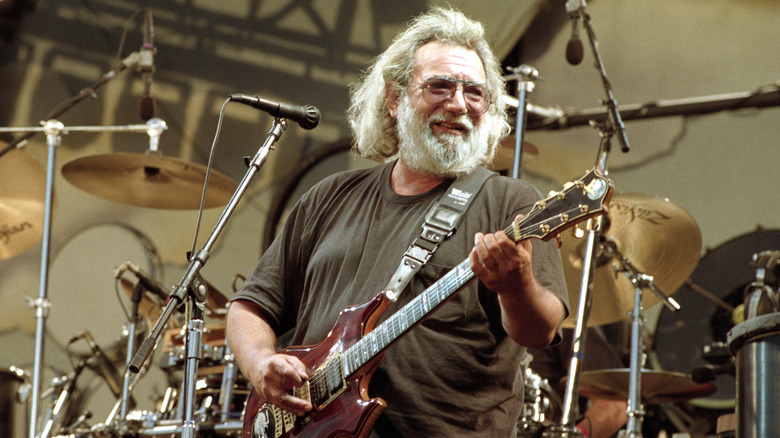
The music world lost a true original with the tragic death of the Grateful Dead's Jerry Garcia. A guitar innovator with a distinct style whose playing was immediately identifiable to fans, Garcia's improvised solos were legendary. They took off on surprising musical tangents that incorporated blues, jazz, bluegrass, rock, folk, and pretty much everything in between. By the mid-1990s, Garcia's health had become a concern. Years of drug abuse and poor dietary choices had left him overweight and in terrible shape. Knowing he needed to make a change, he checked himself into rehab in August 1995. Sadly, there would be no comeback. During his stint in rehab, Garcia took his final breath in 1995 at the far-too-young age of 53, dying in his sleep after suffering a fatal heart attack. "He was being aggressive about cleaning up," Grateful Dead guitarist Bob Weir told Rolling Stone, "and his body just couldn't handle it."
Deadheads mourned the loss of the band's musical virtuoso and de facto leader, but the other members of the band were blindsided. The group that they'd founded in the mid-1960s and then transformed into an enduring cultural phenomenon was no more, the Dead's three-decade run seemingly coming to a sad and sudden halt. Yet that wasn't the end of the band, nor the collection of songs that had become beloved by fans.
The Grateful Dead disbanded after Jerry Garcia's death
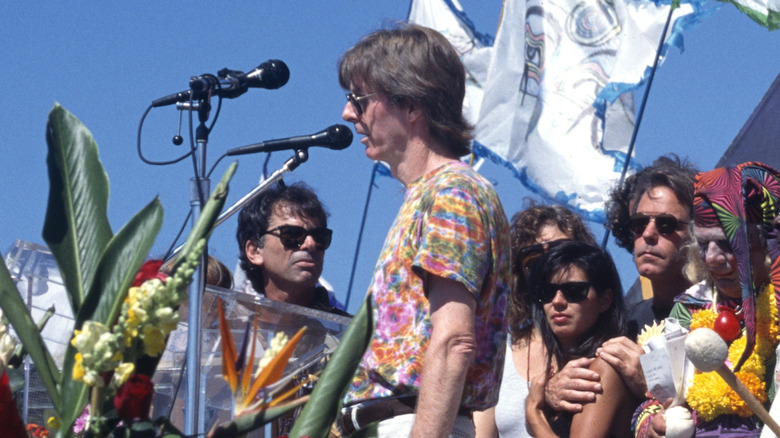
The untold truth of Jerry Garcia ended with his death, leaving fans wondering what the future held for the Grateful Dead. In December 1995, just a few months after his death, band publicist Dennis McNally issued a statement. "What they decided was that the live performances of the Grateful Dead are over," McNally said, as reported by UPI. "Without Jerry Garcia, the band is not going to continue as the Grateful Dead ... There are five remaining members who are going to be making music in the future. Under what name that will be is something that will be decided later."
That left the surviving "Core Four" — guitarist and vocalist Bob Weir, bassist Phil Lesh, and drummers Mickey Hart and Bill Kreutzmann — uncertain about how to proceed. "We're going to take time and regroup and make an attempt to reinvent ourselves," Weir told the San Jose Mercury News (via UPI). Ultimately, this proved to be the real reason the Grateful Dead broke up, as the band members went their separate ways to indulge in solo projects. Drummer Mickey Hart, for example, focused on his burgeoning interest in world music, resulting in his 1996 album "Mickey Hart's Mystery Box." Fellow drummer Bill Kreutzmann, on the other hand, retreated to Hawaii, burned out from decades of touring. "I had to take that time after Jerry was gone," Kreutzmann told Magnet. "I was pretty tired from being on the road all the time. I needed to not be in the Dead."
Bob Weir's side project RatDog became his main gig
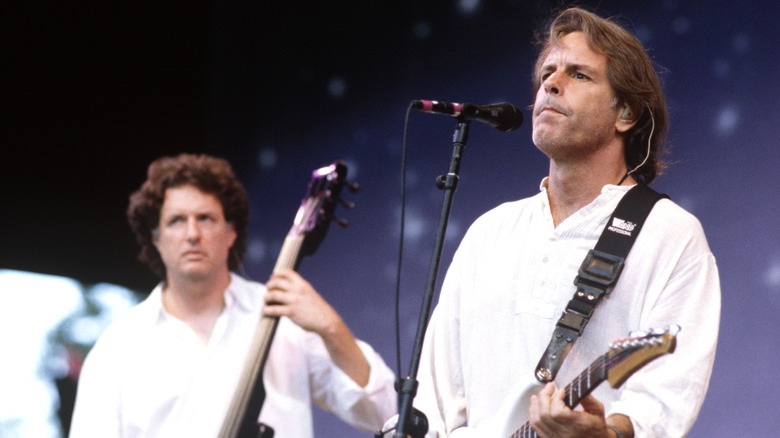
Bob Weir and Jerry Garcia's bond went way beyond the Grateful Dead, but Weir was the first member of the group to move on. As it happened, he was already in the midst of his first tour with RatDog — the band he'd formed earlier in 1995 with bassist Rob Wasserman and drummer Jay Lane as a side project — to keep him occupied when the Dead was inactive. "RatDog took its time coming into being," Weir recalled in an interview with The Aquarian. "It started as a little side duo, just as sort of a vacation from the Grateful Dead and it has just grown and evolved from there."
After the Grateful Dead disbanded, RatDog transformed from Weir's side gig to his primary vocation. The band continued that tour, performing throughout the remainder of 1995, and remained on the road with various permutations as musicians came and went. In 1999, Weir, Lane, and Wasserman toured as a pared-down, three-piece version of RatDog under a new name, RD3, before RatDog issued its first studio album, 2000's "Evening Mode."
Over the years, Weir continued to perform sporadically with RatDog, which reverted to a side gig while he ultimately focused on other projects. By the time Wasserman (who left in 2003 but returned in 2013) died in 2016, the band was already on a hiatus that never did end.
Three of the four surviving members formed The Other Ones
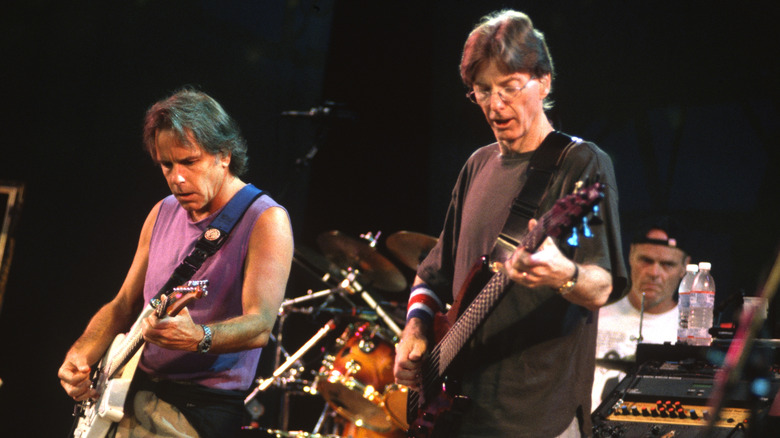
In the summer of 1998, Bob Weir reunited with bassist Phil Lesh and drummer Mickey Hart to continue the spirit of the Grateful Dead in a new offshoot band, The Other Ones. This new iteration made its onstage debut in June, performing in a benefit for the Rainforest Action Network. Afterward, it hit the road to headline the Furthur Festival, an annual jam-band tour established after Jerry Garcia's death.
That original lineup of The Other Ones didn't last long. Later that same year, Lesh — then in his late 50s — experienced a near-fatal bout of hepatitis C. He would have been a goner had it not been for successful liver-transplant surgery, which literally saved his life.
Bill Kreutzmann had been asked to join The Other Ones for the 1998 Furthur tour. "But I wasn't ready to go out," he told the Hartford Courant. While the band prepared for a subsequent Furthur tour in 2000, Kreutzmann learned they were auditioning drummers. Feeling ready to return to the stage, he made a bold move. "So I didn't tell anybody, I just showed up the next day for the audition," he recalled. "Passed it."
Phil Lesh exited The Other Ones and hit the road as Phil Lesh and Friends
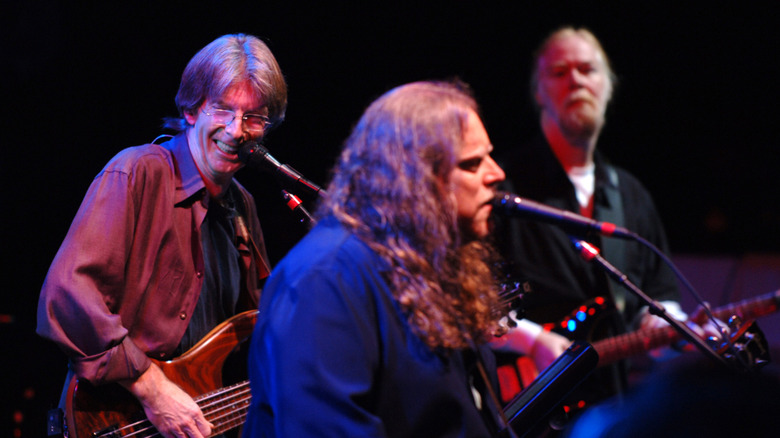
After Phil Lesh recovered from his transplant surgery, there were hopes that he'd rejoin The Other Ones. He did not and instead decided to strike out on his own. Four months after his liver transplant, Lesh emerged with a new project, joined by Phish guitarist Trey Anastasio and keyboardist Page McConnell for a series of shows under the name "Phil Lesh and Phriends." That evolved into what became his ongoing musical mission for the next few decades, Phil & Friends, in which he was accompanied by a constantly rotating lineup of musicians. In 1999, that lineup solidified for a brief period with the addition of guitarists Warren Haynes (who would go on to further fame with the Allman Brothers Band and then Gov't Mule) and Jimmy Herring (who later joined Widespread Panic).
Understandably, Lesh fronting his own band while The Other Ones embarked on a competing tour irked the other members of the band — particularly drummer Mickey Hart. During an interview with IndyStar reporter David Lindquist (via Relix), Hart slammed Lesh. "He's totally alienated everyone in the band," Hart declared. According to The Guardian, he even publicly said that "Phil might have gotten the liver of a a******."
The hatchet was buried, however, when Lesh returned to the fold in 2001, joining The Other Ones for a New Year's Eve show. Lesh remained in this new iteration. However, with the Core Four back together, the stage was set for a name change.
Everyone reunited for The Dead, but it all imploded quickly
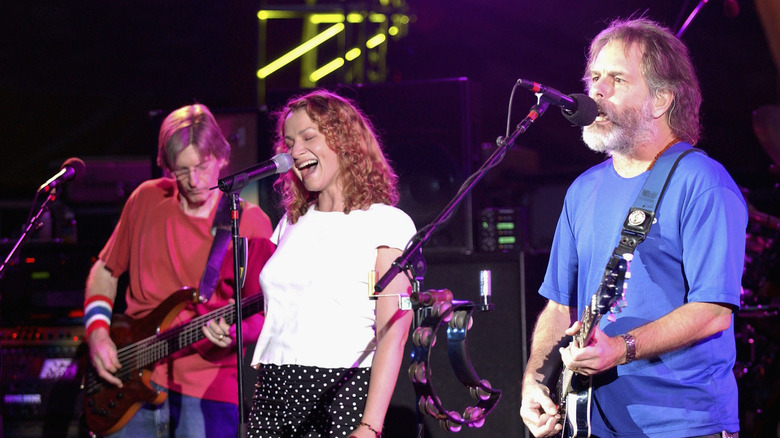
In 2003, the surviving members of the Grateful Dead decided to change their group's name, with The Other Ones becoming The Dead. As Bob Weir told SFGate, changing the name was not a unanimous decision. "At least a couple of the guys really wanted to do it," he said. "I think it's a bit premature. I was just fine being The Other Ones ... I'm clearly out-voted on this." Weir continued by wryly joking, "As long as we're changing names, let's roll up our sleeves — I'm thinking about changing RatDog to Chew Toys."
The Dead toured in 2003 and hit the road again in 2004, with the Core Four joined by Phil & Friends guitarists Jimmy Herring and Warren Haynes, along with singer Joan Osborne. That was followed by a lengthy hiatus until The Dead reunited to perform at a 2008 benefit for presidential candidate Barack Obama. That went well enough that The Dead announced plans to tour in 2009. Demand for those shows was huge — a single ticket cost nearly $100, and some were being scalped for more than $1,000. When the 2009 tour ended in July, so too did The Dead — or at least that particular version. That fall, a new iteration would emerge.
Bob Weir and Phil Lesh teamed up for Furthur
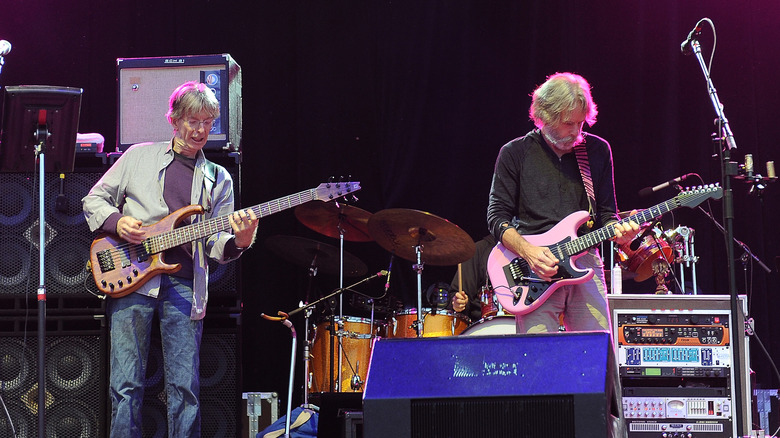
With Mickey Hart and Bill Kreutzmann exiting the Dead, September 2009 saw Bob Weir and Phil Lesh joining forces in a new band, Furthur. Its name taken from the Furthur Festival, the duo enlisted keyboardist Jeff Chimenti, guitarist John Kadlecik, and drummers Jay Lane and Joe Russo. The band proved to be hugely popular and toured relentlessly for the next few years. Despite any misgivings the two may have had personally, when it came to music, they were surfing the same wave. "Phil and I can hear each other thinking," Weir told the Denver Post in 2011. "That's what you get from working with somebody for a few decades."
In 2013, Furthur issued a statement on social media to announce that the band would be taking a hiatus the following year. The reason was simple: Weir and Lesh wanted to spend some time focusing on their respective solo projects. "In the 18 years since the Grateful Dead stopped being a touring entity, Furthur has proven to be the longest-tenured, and most active band featuring two or more members of the Grateful Dead," the statement read (via jambands.com).
The surviving members of the Grateful Dead reunited for Fare Thee Well 50th anniversary shows
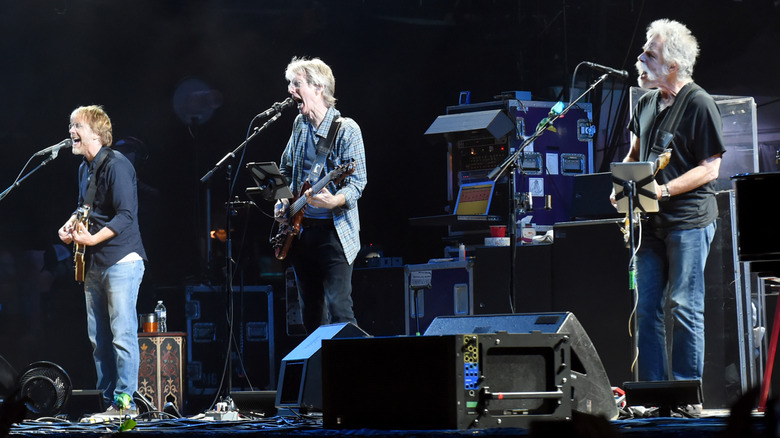
A half-century after the formation of the Grateful Dead, 2015 marked the band's 50th anniversary. To celebrate this milestone, surviving band members Bob Weir, Phil Lesh, Mickey Hart, and Bill Kreutzmann reunited for three anniversary shows at Chicago's Soldier Field. Dubbed "Fare Thee Well," those shows enlisted Phish guitarist Trey Anastasio to handle Jerry Garcia's vocals and guitar solos. "He's the guy," Weir told Rolling Stone of Anastasio. "There are a couple of other guitarists who might be able to handle that load, and one of the guitarists we considered is real good but doesn't sing. Trey really does the whole thing."
While it's true that the Grateful Dead didn't achieve mainstream success, the original band and its later offshoots generated big audiences when on tour. To say that interest was high was an understatement. When all three shows sold out, two extra "warm-up" concerts were added in Santa Clara, California. Those also sold out. All told, 362,000 fans saw the trio of shows, which grossed over $50 million, while pay-per-view broadcasts drew 175,000 viewers.
Weir, however, wasn't thrilled with the band's uneven performance, believing they were out of practice. "We hadn't been on tour," he told the Chicago Tribune. "We'd done a couple of warmup dates and that was it. ... I kind of lament not having [put] in more rehearsal time for the Fare Thee Well shows, but it just wasn't possible given everybody's schedules."
The success of Fare Thee Well led Bob Weir to recruit John Mayer for Dead & Company
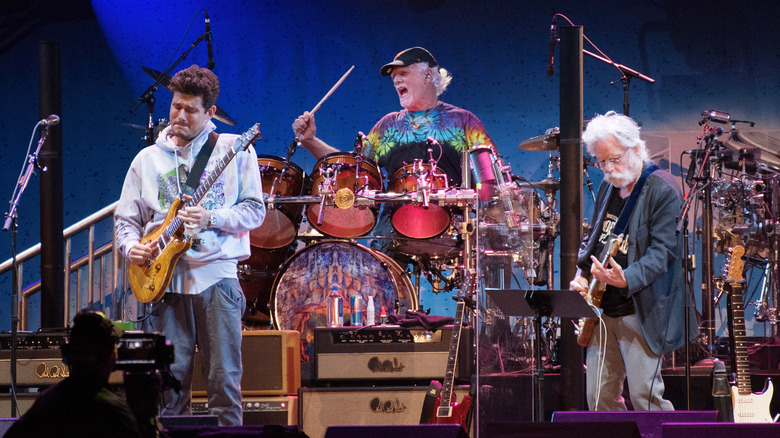
Given the enthusiastic success of those Fare Thee Well shows — and Bob Weir's belief that the band could have done better had they been better rehearsed — ideas began to firm up to hit the road for a tour. However, with Trey Anastasio committed to Phish, this new band was in desperate need of a guitar wizard. The final piece of the puzzle fit into place when John Mayer, working in a studio in the Capital Records building, was invited by producer Don Was to meet with Bob Weir and Mickey Hart.
Mayer, who had recently stumbled upon the Grateful Dead via Spotify and had started to immerse himself in their music, jumped at the opportunity. "I couldn't resist, and I sat down and sort of professed my love," Mayer told Billboard. "I told them how this music had hit me. ... I told them that those songs take me to places I've never been to that I visit daily and I love going there. ... Bob said, 'What are you doing first week of March?' My answer: Whatever you ask — that simple."
They all came together and jammed, and Weir quickly realized that Mayer was the secret sauce that had been missing. Dead & Company was born, and Mayer agreed to join this new band on its maiden tour. Ultimately, Mayer and Weir played together in 10 Dead & Company tours over the next decade.
Bob Weir joined forces with Don Was for Wolf Bros
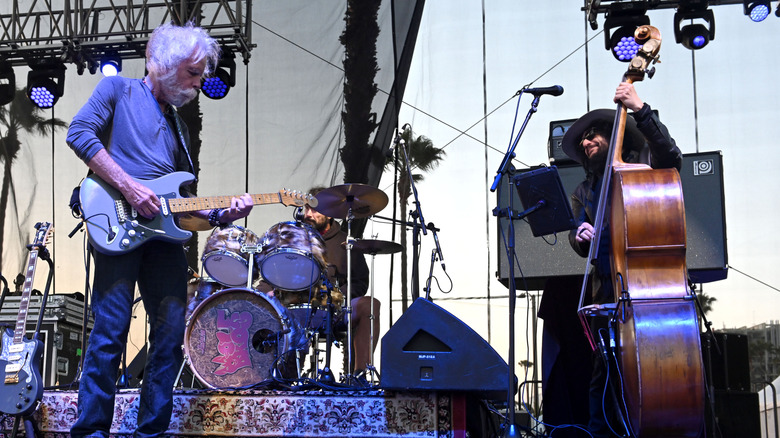
Energized by performing to huge, enthusiastic crowds, Bob Weir was looking for a side project he could throw himself into when Dead & Company wasn't on the road. In 2018, he decided to form a new trio with Don Was (on standup bass) and drummer Jay Lane. Dubbed "Wolf Bros," this new group performed stripped-down, jazz-inflected versions of Grateful Dead songs and remained a going concern, performing regularly for the next few years.
Both Mickey Hart and Bill Kreutzmann came and went from Dead & Company, with Kreutzmann dropping out of a 2023 tour amid murky circumstances. He later emerged by resurrecting his own group, Billy & the Kids, which he initially formed back in 2014. Meanwhile, Phil Lesh continued to mount successful Phil & Friends shows, often performing at his own California venue, Terrapin Crossroads. Though he was forced to cancel some shows to undergo treatment for bladder cancer, he eventually returned to the stage. In 2023, Phil & Friends delivered its landmark 100th performance.
Dead & Company made millions on the road
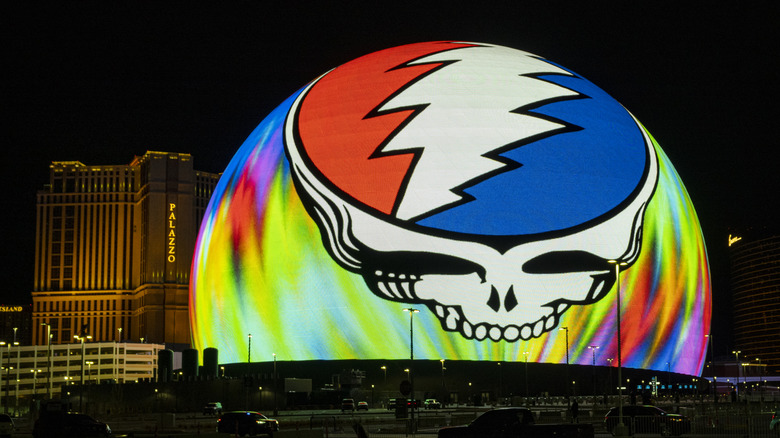
Since launching in 2015, Dead & Company has proved to be massively successful, generating millions of dollars during 10 extensive tours. In 2023, the band embarked on a farewell tour, which ended up raking in nearly $115 million. That farewell, however, wasn't as final as anticipated. In 2024, the group completed a 30-show residency at The Sphere in Las Vegas, reportedly generating more than $130 million from those dates alone. Dead & Company returned to The Sphere in 2025 for a second residency, this one featuring 18 shows, to celebrate the act's 10th anniversary.
Over the years, with Bob Weir and John Mayer leading Dead & Company, the band expanded its repertoire, delving deep into the Grateful Dead's catalog to resurrect its most underrated rock songs. The saga of Dead & Company concluded in 2025 with a three-night run in San Francisco, the city where it all began.
Over the course of that decade, Weir and Mayer had developed a musical kinship that was not unlike the one Weir had experienced with Jerry Garcia. "I feel like the two of us now have a very deep relationship, almost like a telepathic relationship," Mayer told Guitar World. "I know where I stand with him in the best of ways. He knows where he stands with me in the best of ways. And we don't have to talk about it."
Phil Lesh's 2024 death quashed plans for a 60th anniversary reunion show in 2025
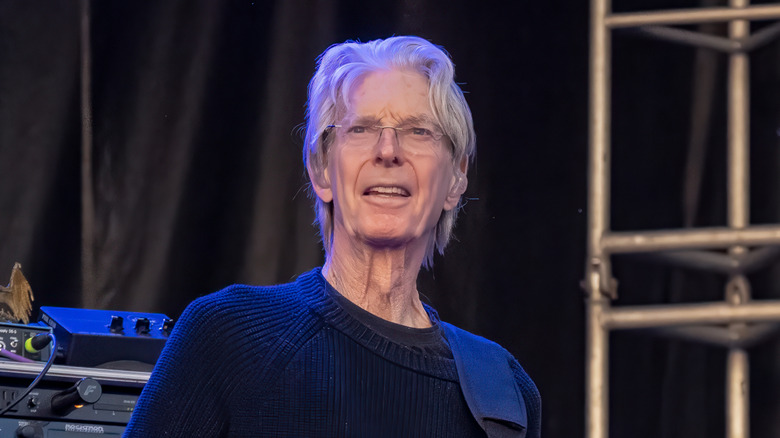
In October 2024, Grateful Dead fans were hit with the gut-punch news that Phil Lesh had died at age 84. What those heartbroken fans didn't know at the time was that his death slammed the brakes on plans that had been underway for another reunion of the Core Four. The tour was set to commemorate the band's 60th anniversary in 2025.
When the Grateful Dead was honored by the Kennedy Center, weeks after Lesh passed, Bob Weir and Bill Kreutzmann revealed that there had been discussions underway with Lesh, who was open to rejoining the others for a reunion show. "I was hoping that we could play with him again one more," Kreutzmann recalled in an interview with "CBS Mornings." "That was my sadness on that one. Because I know he wanted to play with us again, too." Weir confirmed: "We were kicking it around. In fact, we were going to get together and kick some songs around." Meanwhile, Lesh's legacy with Phil & Friends continued. The bassist's son, Graheme Lesh, had been a member of his dad's band and has kept the jam-band institution going as Graheme Lesh and Friends, continuing to celebrate the music of the Grateful Dead.
The death of Bob Weir in 2026 seemingly closed the book on the Grateful Dead story
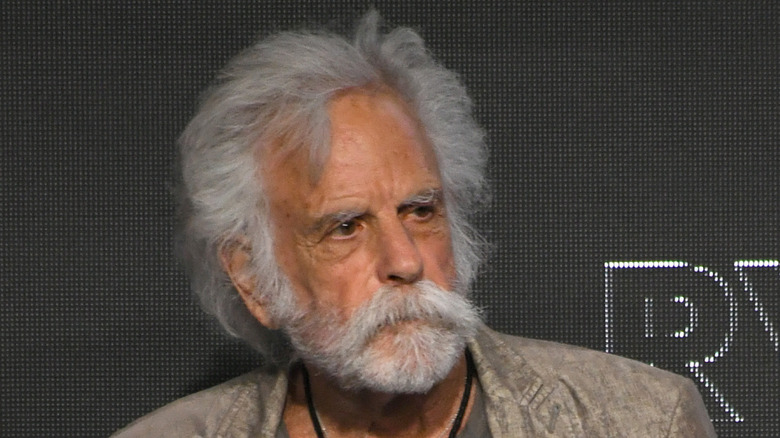
After Dead & Company played its final show in the summer of 2025, Bob Weir planned to tour with Wolf Bros and also expected to pursue his passion of performing with symphony orchestras. "That's what I do," Weir told Rolling Stone in March 2025. "That's what I'm here for." Beyond that, though, Weir was content to go with the flow. "The interesting thing is, I've never made plans," he explained. "And I'm not about to, because I'm too damn busy doing other stuff, trying to get the sound right, trying to get the right chords, trying to get the right words ... making plans seems like a waste of time. Because nothing ever works out like you expected it to, no matter who you are. So why bother?"
Less than a year later, Weir was gone, dying unexpectedly in January 2026 at the age of 78. His death reduced the Core Four to just two elderly drummers, Mickey Hart and Bill Kreutzmann, making it unlikely that another iteration of the Grateful Dead would ever appear — although, given the band's post-Jerry Garcia history, anything is possible. Thankfully, no band in rock history has been as meticulously recorded as the Grateful Dead and its offshoots. If Weir's death does indeed bring the band's long, strange trip to an end, fans have more than enough music to appreciate the 60-year legacy of the Grateful Dead.